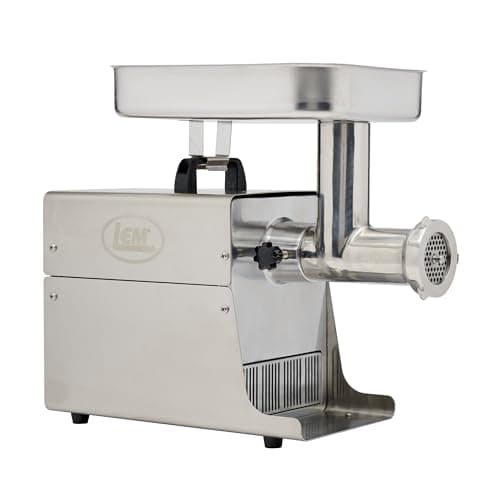
LEM vs Weston Meat Grinders: Horsepower Is Not the Number That Decides It
At the #8 and the #12, Weston publishes more horsepower than LEM and a lower pounds-per-minute rating. That contradiction is the whole decision, and it only resolves at the #22.
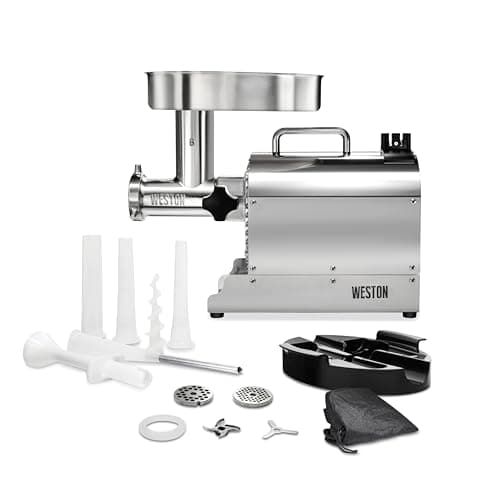
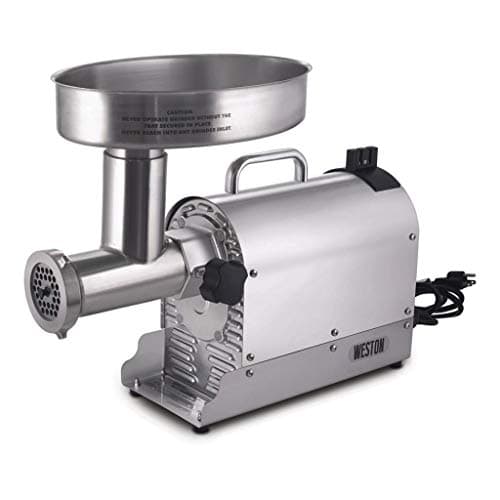
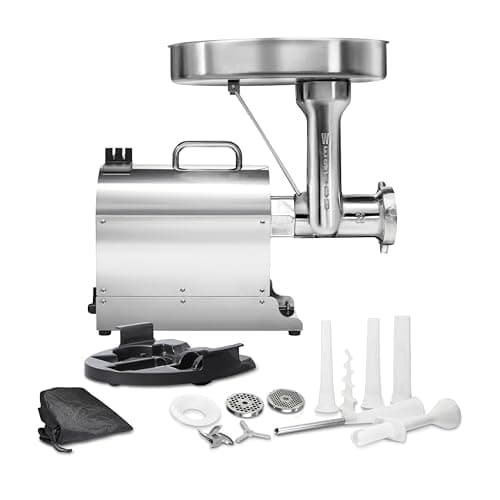
#ad · Price as of Sep 24, 2026 · Affiliate disclosure for the link to Weston Pro Series #22 Electric Meat Grinder (1.5 HP)
These two brands own the home game-processing aisle, and the usual way of choosing between them is to compare horsepower. That is the one method guaranteed to mislead you. At the #8 and the #12, Weston's Pro Series publishes a bigger motor than the LEM BigBite of the same size and a lower pounds-per-minute rating. Both numbers come from the maker. Both cannot be the thing that matters.
The short answer, by size
We do not think the brand is the decision. The size is, and then the brand within that size. Here is how we would spend the money at each rung of the ladder, with the reasoning in the sections below.
#8 (Light season, 1-2 deer): LEM. Its 0.5 HP motor is rated to pass up to 7 lb a minute against the Weston's 4-6 from a .75 HP motor. If you want the four stuffing funnels instead, take the Weston.
#12 (Moderate season, 3-5 deer): LEM, and it is the clearest gap on the page: about 11 lb a minute against 6-9, with all-metal gears on roller bearings. The Weston is usually the cheaper machine.
#22 (Heavy season, 6+ deer or a half beef): Weston. This is the one size where the bigger motor also carries the higher rating, and it is the only grinder on this page with a reverse.
Why horsepower does not settle it
Horsepower describes what the motor can draw. Pounds a minute describes what the machine will pass. They are related, but the gearing, auger pitch, head diameter and plate area all sit between them, and the two makers do not convert one to the other the same way.
Weston states .75 HP and 560 watts on the Pro Series #8 and rates it at 4 to 6 lb a minute. LEM states 0.5 HP on the BigBite #8 and rates it at up to 7. On the face of it a smaller motor moving more meat makes no sense. The likeliest explanation is that the two companies are not measuring the same thing: a maker can quote a best-case rate with coarse-plate, well-chilled, well-trimmed meat, or a conservative rate that holds up on sinewy trim, and neither has to say which it did.
That is also why we weight the rating more heavily than the horsepower in our scoring: a company is far likelier to be held to a throughput figure by an unhappy customer than to a motor label. But treat both as marketing until someone runs a controlled test, which to our knowledge nobody has published for these models.
The ladder, side by side
Everything below is from the maker's own spec page, listing or manual. Blank means the maker does not publish it, which is itself worth knowing.
A rating only matters as time at the machine. At the Ohio DNR average of 52.19 lb of venison per deer (they weighed 115 whitetails from the 2017 gun season), here is one grinding pass at each maker's figure. We use Weston's best-case end of its range, which is the kindest reading of its numbers.
Season
Venison lb
Size
LEM, per pass
Weston, per pass
Difference
2 deer (Light)
104
#8
15 min
17 min
2 min
5 deer (Moderate)
261
#12
24 min
29 min
5 min
6 deer (Heavy)
313
#22
24 min
22 min
2 min in Weston's favor
It is worth keeping the rest of the day in view too. Skinning, boning, trimming silver skin, cubing, chilling the meat so the fat stays firm, changing plates between passes and then washing every part take far longer than the feeding does, on either brand. Our how to grind deer meat guide walks that sequence, and it is where most of a processing day actually goes.
Gears: roller bearings vs hardened steel
This is the most substantive build difference, and it is the one a spec table flattens. LEM publishes all metal gears with roller bearings on the #12 and #22 spec pages. Weston publishes an all hardened steel gear transmission across the Pro Series. Both are metal gears; the LEM wording adds the bearings the gear shafts turn on, which is the part that reduces friction under load.
Weston is unusually candid about the trade-off in its own manual: the steel gearing runs louder and warmer than other grinders. That is Weston describing Weston, not us editorializing, and it is a fair warning rather than a defect. A grinder that runs warm is doing work. But if you grind in an attached garage on a quiet morning, it is a real consideration that no photograph conveys.
Neither company publishes a duty cycle on these models — no "30 minutes on, 30 minutes off" figure. So the honest position is that we cannot tell you which gearbox survives longer, and anyone who tells you they can, without a test, is guessing. What we can say is that LEM states it stocks replacement parts for past and present models, which is the thing that decides whether a ten-year-old grinder is repairable or scrap.
Reverse: Weston has it, with a catch
A reverse is the feature upgraders ask about most, because the failure they remember is a knife wrapped in silver skin halfway through a shoulder. Weston puts a forward-reverse mode on the Pro Series #22 and #32 and pitches it specifically for tougher meats and meat with connective tissue. LEM does not list a reverse on any BigBite spec page we cite here.
The catch is in Weston's manual: reverse is capped at about five seconds at a time. It is a jam-clearing function, not a second grinding direction. That is still worth having — five seconds often beats stopping, unplugging and opening the head — but it does not make a #22 immune to binding, and it is not a substitute for trimming silver skin out before it reaches the auger.
If jamming is your main complaint, read why a meat grinder keeps clogging before you buy hardware to fix it. Meat temperature and trimming solve more jams than any switch does.
Warranty, parts and support
Both brands land on five years, so the difference is in the terms around it. LEM pairs its five years with lifetime customer support and says it carries replacement parts for discontinued models as well as current ones. Weston's Pro Series manual, in the copy we cite, ties the warranty to mailing the registration card with a receipt within 30 days of purchase. If you buy a Weston, do that on day one and keep a photograph of the card and the receipt.
Neither of those is a reason on its own to pick a brand. Together they are a reason to keep paperwork: a five-year warranty you cannot prove you registered is a one-year warranty with extra steps.
What you can actually buy
One practical note, checked on 1 October 2026. The LEM BigBite #8 and #12 and all three Weston Pro Series grinders were live on Amazon with a featured offer and an add-to-cart button. The LEM BigBite #22 listing had no featured offer — the page loads and the product is not discontinued, but Amazon was showing only "See All Buying Options" rather than a buy box, so you may need to work through the offer list or buy it from LEM directly.
That is a snapshot, not a verdict on the machine, and buy boxes come and go. It does mean that on the day we wrote this, the Weston Pro #22 was the easier #22 to actually purchase — which, if you are buying this week, matters more than a two-pound-a-minute rating gap. Prices on this page come from Amazon's API and are stamped with the date they were pulled; where you see "check price" instead of a number, the data was too old to show and we would rather print nothing than a stale figure.
Choose LEM if... choose Weston if...
Choose LEM if
You are buying a #8 or a #12, where LEM rates 2 to 4 lb a minute more than the Weston of the same size.
You want all-metal gears on roller bearings, published as such, and the quieter running that implies.
You expect to own the machine for a decade and want a maker that states it stocks parts for discontinued models.
You would rather not depend on mailing a registration card to keep a warranty alive.
Choose Weston if
You are buying a #22 and grind sinew-heavy trim: it is the only grinder here with a forward-reverse switch.
You want the largest stated motor at a given size, and usually a lower price at the #12.
You stuff sausage off the grinder and want the four funnels from 10 to 40 mm that Weston lists at the #8, which covers snack sticks through lunch meat.
A built-in knife sharpener and a tapered throat that needs no tray guard appeal to you.
+7 lb a minute on LEM's figure: a 2-deer season (about 104 lb) is roughly 15 minutes of feeding per pass
+Stainless motor housing, knife and plates; stuffing tubes and stomper included
+5-year warranty, and LEM says it carries replacement parts for past and present models
What it doesn't
−No reverse function is listed on LEM's spec page, so a knife wrapped in silver skin means stopping and opening the head
−LEM's listing says it is not for bones
−At 3-5 deer you feed about 60% longer than on LEM's own #12 (7 vs 11 lb a minute)
Skip this if…
…you regularly process three or more deer or split beef with family. LEM rates its own #12 at about 11 lb a minute and its #22 at 13, against this one's 7.
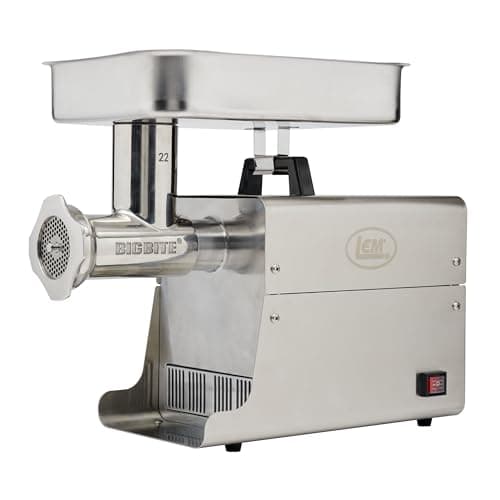
+The highest maker-rated output of any #12 we cover (11 lb a minute, against MEAT!'s 7-10 and Weston Pro's 6-9)
+All metal gears with roller bearings; stainless head, auger, knife and meat pan
+Storage drawer under the head keeps plates and the knife with the machine
What it doesn't
−The dearest #12 we list, and LEM's rated output is the reason to pay it
−No reverse function listed on LEM's spec page
−LEM says not to use an extension cord with its 6-foot cord, so plan the bench near an outlet
Skip this if…
…you'd rather have a lifetime warranty. The MEAT! #12 is rated slower (7-10 lb a minute) and carries MEAT!'s lifetime warranty against LEM's five years.
+13 lb a minute on LEM's figure: a 6-deer season (about 313 lb) is roughly 24 minutes of feeding per pass
+All metal gears with roller bearings, and a stainless motor housing, head, auger and knife
+LEM's listing says it handles raw chicken bones as well as venison and beef
What it doesn't
−49.6 lb: this lives on a bench or a cart, not in a kitchen cabinet
−Only 2 lb a minute faster than LEM's own #12 on paper, for a heavier machine
−No reverse function listed on LEM's spec page
Skip this if…
…you process five or fewer deer. LEM rates its #12 at about 11 lb a minute, close enough that the #22's extra weight rarely pays back below a Heavy season.
#ad · Price as of Sep 24, 2026 · Affiliate disclosure for the link to Weston Pro Series #22 Electric Meat Grinder (1.5 HP)
How we picked
Units we claim to have bench-tested: none
Plenty of sites say they ground two hundred pounds through every grinder. We didn't, and we say so. What we do instead: read the maker's spec sheet, manual and warranty terms, record the figures that decide whether a machine keeps up with your season (size number, motor rating, rated pounds per minute, capacity, duty cycle, gearing), check parts availability, and score each pick on a published rubric. Then we show the season math — pounds per deer from the Ohio Division of Wildlife's yield study — so you can redo it with your own numbers.
On published specs, yes. The Pro Series uses an all hardened steel gear transmission, carries a five-year warranty, and the #22 is the only grinder in this comparison with a forward-reverse switch. Weston's own manual notes the steel gearing runs louder and warmer than other grinders, and the Pro Series warranty terms we cite require mailing a registration card with a receipt within 30 days.
LEM or Weston for deer processing?+
LEM at the #8 and #12, Weston at the #22. LEM rates its #8 at up to 7 lb a minute against Weston's 4-6, and its #12 at about 11 against 6-9. At the #22 that flips: Weston publishes 14 lb a minute against LEM's 13, and adds the reverse.
Why does the Weston have more horsepower but a lower pounds-per-minute rating?+
Because the two makers are almost certainly not measuring throughput the same way, and neither publishes its method. Horsepower describes the motor; pounds a minute describes the whole machine, including gearing, auger and plate area. Treat both as maker claims rather than test results — nobody has published a controlled head-to-head on these models that we can cite.
Does the LEM BigBite have a reverse function?+
Not on any BigBite spec page we cite here. If a knife wraps in silver skin you stop and open the head. Weston lists forward-reverse on the Pro Series #22 and #32 only, and its manual caps reverse at about five seconds at a time, so it clears a wrap rather than grinding backward.
Can either brand grind deer bones?+
No. LEM's #8 listing says it is not for bones; its #22 listing allows raw chicken bones. Weston's #22 manual says to use smaller, softer bones such as rabbit and poultry only, and to avoid large, dense bones like those in large game. Deer bones are exactly what both are warning you away from.
How long can you run a LEM or Weston grinder without stopping?+
Neither company publishes a duty cycle for these models, which is why we will not print one. Weston's listings claim the air-cooled motors "continuously grind bulk loads of meat without stopping"; that is a marketing phrase, not a run limit. If the motor housing gets hot, give it a rest.
We haven't bench-tested this gear and we don't pretend to. Specs come from the maker's own pages, manuals and maker-supplied listing copy (labeled as such); food-safety figures from USDA and university extension publications; yield from the Ohio Division of Wildlife; prices live from Amazon. Where a figure isn't published, we say so. Read the full method.