The 1-2 Deer Setup: Home Processing Gear for a Light Season
One or two deer is about 52 to 104 pounds of venison at the Ohio DNR average. Here's one pick per stage, sized to that, and the point where each piece runs out of room.
#ad · Prices come live from Amazon, last checked Sep 19, 2026; where we have no verified live price we show none. Scores are ours, compiled from published specs, manuals and warranty terms, not bench tests. Tap a row for the full write-up.
This setup at today's prices
$1,163.99
The sum of the 6 live Amazon prices on this page, last checked Sep 19, 2026. It moves when they do, and it disappears if any one of them goes stale.
For one or two deer a season you need less machinery than the catalogs suggest, but more than a kitchen knife and a box of zipper bags. This setup is one pick per stage: a knife kit that goes from skinning to boning, a #8 electric grinder, a meat lug, an external vacuum sealer with a published continuous-seal rating, a 7 cu ft chest freezer and a dehydrator for jerky. The grinder is listed first because it's the piece people outgrow first, and the one that tells you whether this is really your tier.
We haven't bench-tested any of it. Every sizing call below comes from the maker's own figure (motor rating, pounds per minute, continuous seals, cubic feet) run against published yield data, and the arithmetic is on the page so you can redo it with your own deer.
Your season in pounds
What a light season asks of your gear
At this size the limit isn't horsepower. A deer or two arrives in one or two sessions, usually a long day or a weekend, and then the gear sits for most of a year. So the questions are different from the bigger setups. Will each piece finish the job in one sitting without stalling or needing a cool-down? Will it store in a closet? And are you paying for capacity you'll never touch?
That's why there's no stuffer, no mixer and no chamber sealer here. The BigBite #8 ships with stuffing tubes (per LEM) for the occasional small batch of links, mixing five or ten pounds of seasoned burger by hand in a lug is fine, and an external sealer is the right tool for dry, trimmed cuts at this volume. It's also why the hand grinder stays in the conversation. A #10 clamp-on is the honest answer for a single deer if you don't mind cranking, and we say so below.
What does trip up light-season processors is the one thing you can't fix halfway through a session: running out of room. The lug is full, the bag roll runs out, the freezer is already half full of pizza and ice cream. Most of the sizing on this page is about avoiding that, not about speed.
Why each pick fits 1-2 deer
Grind: LEM BigBite #8
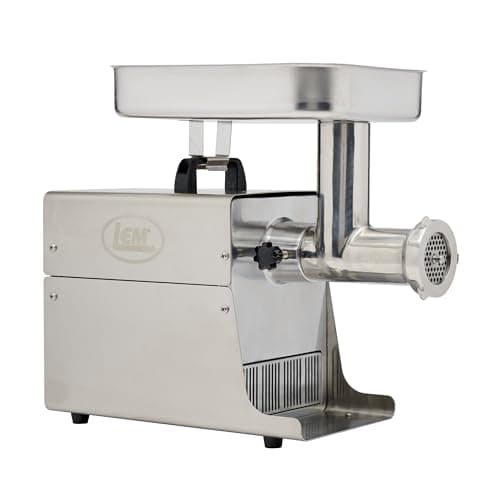
LEM lists the #8 with a 0.5 HP motor that "processes about 7 lbs of meat per minute," a stainless build, three plates, a knife, a stomper and stuffing tubes, and a five-year factory warranty. It also says plainly it's not for bones. At that rating, a two-deer season is about 15 minutes of feed time for a single pass and about 30 minutes if you grind everything twice. Real sessions run far longer than feed time, because you're trimming, chilling and cleaning, but the margin is the point: you want the grinder that finishes the second deer as cleanly as the first, not one working at its limit.
Two cheaper routes, both from LEM's own listings. The MightyBite #8 is a 500-watt aluminum machine rated at 4-5 lb a minute with a two-year warranty; it will do two deer, just slower and with a shorter warranty. The #10 clamp-on hand grinder is stainless, clamps to counters and tables up to 1-1/4 inches thick, comes with 3/8-inch and 3/16-inch plates and carries a one-year warranty. For one deer and a willing arm it's enough. Our best meat grinders for deer ranks the electric options by season, and the best manual grinders covers the hand-crank route.
Break down: Outdoor Edge WildPak
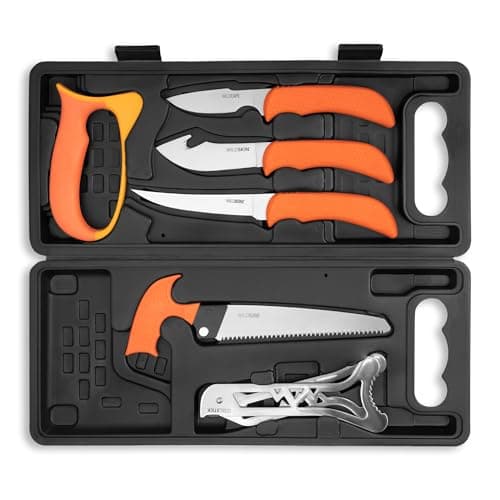
Outdoor Edge's 8-piece WildPak covers the field-to-table stage: caping knife, gut-hook skinner, boning knife, wood/bone saw, ribcage spreader, game-cleaning gloves and a tungsten carbide sharpener, all in a hard-side case, with full-tang 420J2 stainless blades per the maker. For one or two deer that's the right amount of kit. What it doesn't have is a long butcher blade for breaking down quarters on the table; the 12-piece PR-1 in the 3-5 deer setup adds one. The deer processing kit rankings put the two side by side with the rest of the field.
Hold: LEM heavy-duty meat lug
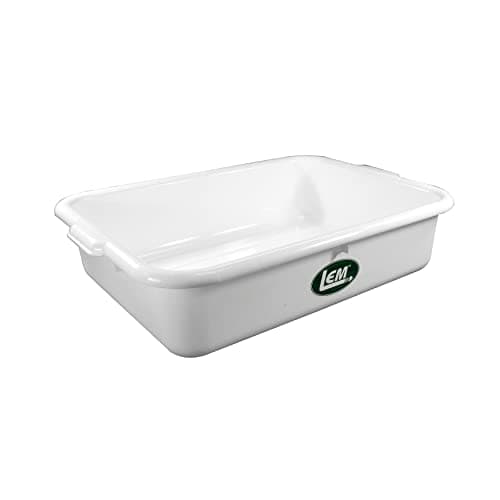
A lug sounds like an afterthought until you're boning out a hindquarter with nowhere to put the trim. LEM's heavy-duty lug is food-grade HDPE, 21-3/4 x 15-1/2 x 7 inches with handles, rated for up to 50 lb, and LEM says it won't crack, split or warp in the freezer across a -30°F to 183°F range. An average Ohio deer is 52.19 lb of venison, so one lug holds about one deer's worth. For two deer in one weekend, get a second, or run one for trim headed to the grinder and one for cuts headed to the sealer.
Seal: LEM MaxVac 250
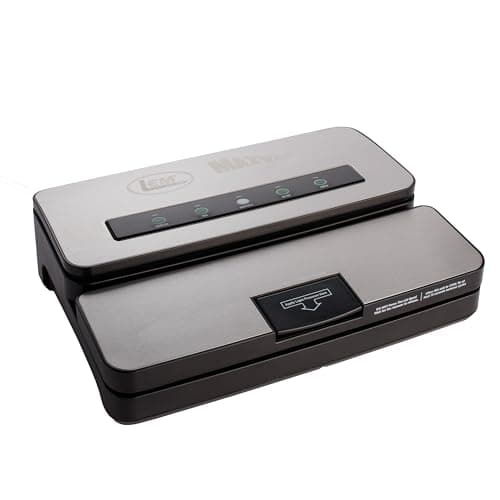
The question to ask of any sealer is how many bags it will do in a row before it needs a rest, and most makers don't answer it. LEM does. It gives the MaxVac 250 a built-in cooling fan and rates it for "up to 250 continuous seals (up to 2.5 hours)," with a 21 Hg vacuum, a 13.39-inch seal bar laying a 1/8-inch seal, a pulse function and a one-year warranty. Two deer in one-pound packs is about 104 bags; cut from a roll, that's about 208 seals, still inside the rating in one sitting. That published number is why it gets the nod over cheaper sealers such as the Nesco VS-12, whose listing gives a 130-watt double pump and dry, moist and double-seal modes but no continuous-seal figure. The best vacuum sealers for wild game ranks the full field on exactly this kind of duty-cycle data.
Freeze: Frigidaire 7.0 cu ft chest freezer
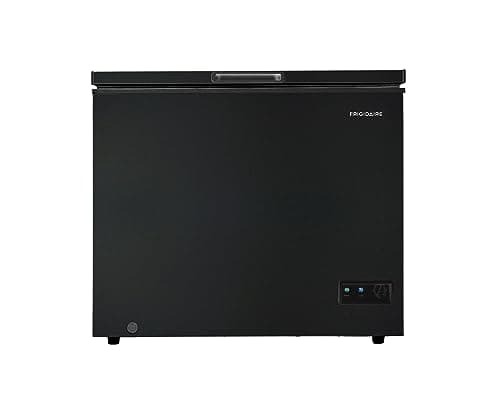
Two average deer need about 4.2 to 5.2 cu ft at realistic packing. A 7.0 cu ft chest holds roughly 140 to 175 lb by the same math, so two deer fit with room left for the rest of the household's frozen food. Frigidaire lists the EFRF7003 with a seven-setting adjustable thermostat, a removable vinyl-coated wire basket, an exterior defrost drain and an aluminum interior liner. Its 5.0 cu ft sibling, the EFRF5003, holds roughly 100 to 125 lb, which means two deer fill it. One detail if the freezer will live in an unheated garage: the 5.0's listing calls it garage-ready and the 7.0's listing doesn't make that claim, so confirm with Frigidaire before you put the bigger one out there. The best chest freezers for meat covers garage ratings and the larger sizes.
Jerky: NESCO FD-75A Snackmaster Pro
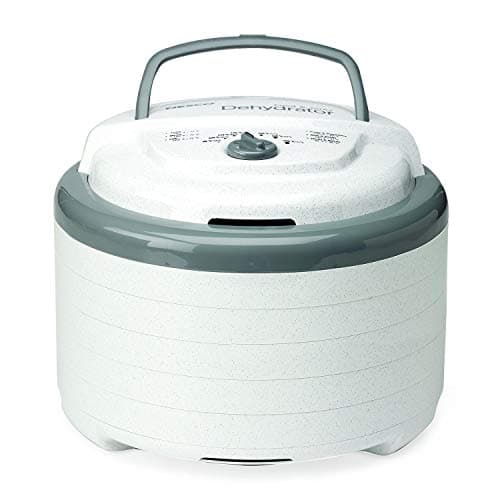
In a light season, jerky is the simplest way to turn trim into something better than more burger. NESCO lists the FD-75A at 600 watts with a top-mounted fan, an adjustable 95°F-160°F thermostat and five trays that expand to twelve. The range matters. The University of Georgia's National Center for Home Food Preservation dries jerky in a dehydrator preheated to 140°F and gets the meat to 160°F internal, either by boiling the strips in their marinade for 5 minutes before drying or by heating the dried strips for 10 minutes in a 275°F oven (for strips cut 1/4 inch thick or less). The best dehydrators for jerky ranks the alternatives if you want more tray area.
In detail
Every stage, in full
Grind
LEM BigBite #8 Electric Meat Grinder
7.5 /10
0.5 HP and about 7 lb a minute by LEM's figure: two average deer is roughly 15 minutes of feed time per pass, with a five-year warranty behind it.
+7 lb a minute on LEM's figure: a 2-deer season (about 104 lb) is roughly 15 minutes of feeding per pass
+Stainless motor housing, knife and plates; stuffing tubes and stomper included
+5-year warranty, and LEM says it carries replacement parts for past and present models
What it doesn't
−No reverse function is listed on LEM's spec page, so a knife wrapped in silver skin means stopping and opening the head
−LEM's listing says it is not for bones
−At 3-5 deer you feed about 60% longer than on LEM's own #12 (7 vs 11 lb a minute)
Skip this if…
…you regularly process three or more deer or split beef with family. LEM rates its own #12 at about 11 lb a minute and its #22 at 13, against this one's 7.
#ad · Price as of Sep 19, 2026 · Affiliate disclosure for the link to NESCO FD-75A Snackmaster Pro Food Dehydrator
When you've outgrown the 1-2 deer setup
You'll know, because the signs are specific:
A third deer in the same season. At 157 lb you need about 6.3 to 7.9 cu ft of freezer, which is most of a 7 cu ft chest before anything else goes in.
Two or three deer in one weekend. Three deer in one-pound packs cut from a roll is about 314 seals, past the MaxVac 250's 250-seal rating for a single sitting.
Sausage becomes the point. Stuffing through grinder tubes works for a few pounds of links. For 20-30 lb batches of summer sausage or snack sticks, a dedicated stuffer and a mixer save the afternoon; the best sausage stuffers is where to start.
The upgrade order that wastes the least money is freezer space first, then the sealer, then the grinder. The freezer is a hard ceiling: you can't process meat you have nowhere to put. The sealer's rating is per sitting, so you can split a big weekend into two sessions while you save up. And the #8, at about 7 lb a minute, has more headroom than the other two. The knife kit, the lug and the dehydrator all carry straight into the 3-5 deer setup, and the #8 can stay on as a second grinder for the fine pass or for stuffing.
What to skip at this size
A meat mixer. LEM's smallest manual mixer is a 10 lb unit. At one or two deer, working seasoning into 5-10 lb batches by hand in a lug does the same job.
A chamber sealer. Its strengths, liquids and cheaper pouches over hundreds of bags, pay off at volume. Our chamber vs external sealer comparison lays out where the line is.
A #22 grinder. At LEM's ratings, the #22's 13 lb a minute against the #8's 7 saves about 7 minutes of feed time on two deer. That's not what a light season is short of.
A bandsaw. The saw in the WildPak handles the few bone cuts a deer or two needs. Powered saws belong in the 6+ deer setup conversation.
DIY or processor at one deer?
At one deer a year, gear takes longer to pay back against a processor's fee, and it's worth knowing that before you buy. Our DIY vs processor cost breakdown divides this setup's live price by six named processors' published per-deer fees. At this tier the best argument for doing it yourself is often not the base fee at all. It's control: your cuts, your trim, your fat ratio, your jerky, and knowing the meat in the package came from your deer. If you want to check the yield assumptions behind every number here, how much meat you get from a deer walks through the Ohio data.
How we picked
Units we claim to have bench-tested: none
Plenty of sites say they ground two hundred pounds through every grinder. We didn't, and we say so. What we do instead: read the maker's spec sheet, manual and warranty terms, record the figures that decide whether a machine keeps up with your season (size number, motor rating, rated pounds per minute, capacity, duty cycle, gearing), check parts availability, and score each pick on a published rubric. Then we show the season math — pounds per deer from the Ohio Division of Wildlife's yield study — so you can redo it with your own numbers.
What equipment do you need to process a deer at home?+
The minimum: knives that cover skinning and boning, a clean place to put meat (a food-grade lug), a way to grind trim, packaging (a vacuum sealer or freezer paper) and freezer space, about 2.1 to 2.6 cu ft per average deer at realistic packing. This page gives one pick per stage for a one- or two-deer season, and our step-by-step guide covers the process itself.
Is a manual meat grinder enough for one deer?+
Yes, if you don't mind cranking. LEM's stainless #10 hand grinder clamps to counters up to 1-1/4 inches thick and comes with coarse and fine plates. What you give up is speed and an easy second pass; the electric BigBite #8 is rated at about 7 lb a minute, which puts an average deer at about 7 minutes of feed time.
How big a freezer do I need for two deer?+
About 4.2 to 5.2 cu ft for 104 lb of venison at 20-25 lb per cubic foot. A 7 cu ft chest holds roughly 140 to 175 lb, so two deer fit with room to spare; a 5 cu ft chest (100 to 125 lb) is full. See freezer space for a deer for the full math.
Do I need a vacuum sealer for one or two deer, or is freezer paper enough?+
Freezer paper works and costs less up front; a vacuum sealer removes the air from each package. At one deer either is defensible. Our freezer paper vs vacuum sealing comparison covers the trade-offs.
How long does it take to grind a deer with a #8 grinder?+
On LEM's figure of about 7 lb a minute, an average 52.19-lb deer is about 7 minutes of feed time per pass, and that assumes all of it goes to burger. A real session runs much longer once you add trimming, chilling the meat and cleanup. We haven't timed one; that's the spec math.
We haven't bench-tested this gear and we don't pretend to. Specs come from the maker's own pages, manuals and maker-supplied listing copy (labeled as such); food-safety figures from USDA and university extension publications; yield from the Ohio Division of Wildlife; prices live from Amazon. Where a figure isn't published, we say so. Read the full method.