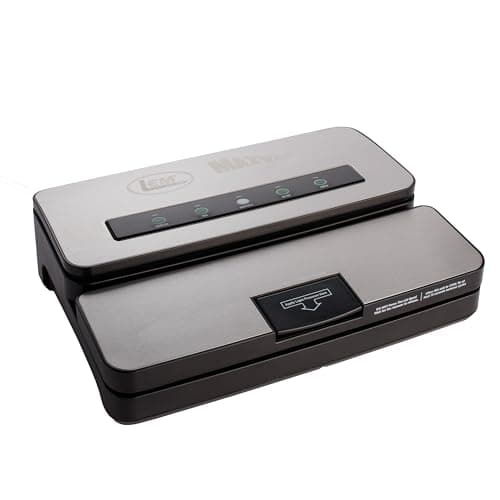
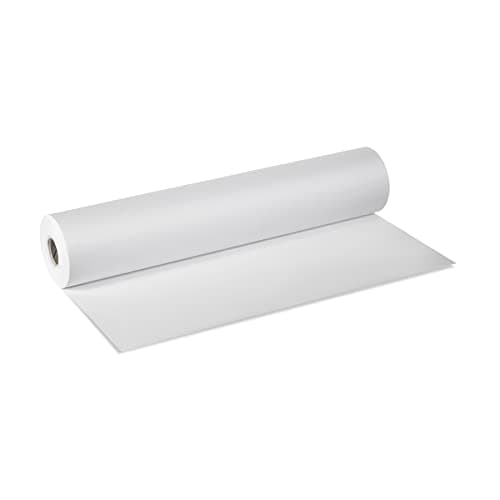
Vacuum sealing is the better default for venison, because it takes the technique out of keeping air off the meat. University of Illinois Extension calls home vacuum packaging a good way to reduce freezer burn. Freezer paper still wins on bone-in cuts, big roasts and cost per package, and a tight double wrap (plastic wrap, then coated freezer paper) protects the meat too. Most hunters who process their own end up using both.
We haven't run a months-long freezer trial. What follows is what USDA and university extension guidance say, plus the published specs of one good paper roll and one mid-range sealer.
What actually protects meat in the freezer
Two separate things are going on. Safety comes from temperature. The USDA says food stored constantly at 0°F will always be safe; only the quality suffers with long storage. Quality comes from the wrap. USDA describes freezer burn as grayish-brown leathery spots caused by air reaching the surface of the food, and says it does not make food unsafe, just dry in spots. Cut it away, or throw out heavily burned pieces for quality reasons.
So the question isn't paper or plastic. It's which method keeps air off the meat most reliably, package after package, for the months it sits in the chest. The National Center for Home Food Preservation accepts both: it says to package meat in freezer paper or wrap using the drugstore or butcher wrap, and to use freezer bags or containers for ground and stew meat. NDSU Extension adds a warning that matters for anyone raiding the kitchen drawer: ordinary waxed paper is not moisture-vapor resistant enough for long freezer storage. Buy paper sold as freezer paper, which is plastic-coated on one side.
Side by side
| Weston freezer paper (83-4000-W) | LEM MaxVac 250 vacuum sealer |
|---|
| What it is | 15 in x 150 ft roll, single-sided plastic coating, 50/15 paper | External vacuum sealer, 21 Hg vacuum, 13.39 in seal bar with a 1/8 in seal |
| Coverage / throughput | 187.5 sq ft per roll | Up to 250 continuous seals (up to 2.5 hours) with a built-in cooling fan |
| Air removal | As tight as your fold and tape | Machine vacuum; pulse function for delicate foods |
| What else you need | Freezer tape, a marker; plastic wrap for a double wrap | Heat-seal bags or roll (starter 8 in x 10 ft roll included) |
| Labeling | Write on the paper side | Write on the bag before or after sealing |
| Warranty | — | 1-year factory warranty |
Paper figures are from Weston's Amazon listing copy; sealer figures from LEM's. Both are linked in the sources below. The 187.5 sq ft is our arithmetic: 15 in (1.25 ft) × 150 ft.
Where vacuum sealing wins
Consistency. A sealer pulls its vacuum the same way on the last package as on the first. With paper, a loose corner at 11 p.m. is an air pocket in February. Illinois Extension lists home vacuum packaging as a good way to reduce freezer burn, and University of Maine Extension says vacuum sealing gives better preservation of color, texture and flavor for longer.
Ground meat and portions. A 1 lb flat pack of ground venison seals in seconds, freezes fast and stacks like a book. You can also see what's inside without unwrapping it.
Space. A vacuum pack hugs the meat, so there's less dead air per package. That helps you toward the upper end of the Good Meat Project's 20-25 lb per cubic foot.
The limits: vacuum sealing is not preservation on its own. UMaine Extension is explicit that it doesn't kill pathogens already present and doesn't make food shelf stable; the meat still goes in the freezer. Wet meat takes more effort, because moisture in the seal area stops the bag sealing. That is where a sealer's moist setting, or technique, matters. See how to vacuum seal wet meat.
Where freezer paper still wins
Bone-in cuts. Shanks, neck roasts and bone-in shoulders have points that punch through bags. Ohio State Extension's advice for bony packages is to pad protruding ends with freezer paper or foil before the outer wrap. Paper handles bone-in cuts without the worry.
Big roasts. A roll of paper wraps any size. Vacuum bags top out at the width of your seal bar and your roll.
Cost per package. A roll of paper is cheap per wrap; sealer bags are the recurring cost of vacuum sealing. We work through that cost at live prices in vacuum sealer bag cost per season.
The double wrap. Illinois Extension recommends double wrapping for best quality. With paper, that means pressing plastic wrap tight against the meat first, then a butcher wrap in coated freezer paper, coated side in, taped with freezer tape. NDSU notes freezer tape is designed so the adhesive keeps working at low temperatures; masking tape isn't.
A whole deer in one sitting
At the Ohio DNR average of 52.19 lb, a deer is 52 one-pound packages if you portion it all as ground meat. You'll mix roasts and steaks in, but the order of magnitude holds: dozens of packages, usually in one long evening.
That's where a sealer's duty cycle decides things. LEM rates the MaxVac 250 for up to 250 continuous seals, or 2.5 hours, with a built-in cooling fan. That covers a deer with room to spare. If a sealer's manual gives no continuous-use figure, you don't know where it stops, and bag 30 of a deer is an expensive place to find out. Our vacuum sealer rankings for wild game put the manual's duty cycle first for this reason.
Paper has no duty cycle, only your hands. It is slower per package, but it never overheats, and two people can wrap at once off one roll.
Does the wrap change how long venison lasts?
USDA's freezer chart gives uncooked wild game 8 to 12 months at 0°F for best quality, and uncooked ground meat 3 to 4 months. Ohio State Extension says venison can last six to nine months, and that most frozen wild game keeps up to a year without losing quality. Those are quality windows, not safety limits, and none of these sources gives a separate, longer window for vacuum-sealed meat. The wrap decides whether you actually reach the end of the window without freezer burn. More on storage times in how long vacuum-sealed meat lasts.
Choose paper if, choose a sealer if
Choose freezer paper if you mostly freeze roasts and bone-in cuts, you process one deer a year and don't want another machine on the counter, or you have extra hands at wrapping time. Do it right: plastic wrap first, coated side of the paper in, freezer tape, label.
Choose a vacuum sealer if you grind a lot, you process more than one deer, or you want every package sealed the same no matter who's doing the wrapping. Keep a roll of paper anyway for the bone-in cuts. Step-by-step for both methods is in how to package deer meat for the freezer.