Stage 03 · Dry
Jerky
Two paths, sliced and ground, and one rule that sits over both: the meat has to reach 160°F before it dries. We rank dehydrators, slicers and jerky guns on whether they fit that rule and how many pounds a batch they really hold.
We earn a commission if you buy through our links, at no extra cost to you. It never decides the ranking — the method is published · Affiliate disclosure
Start here
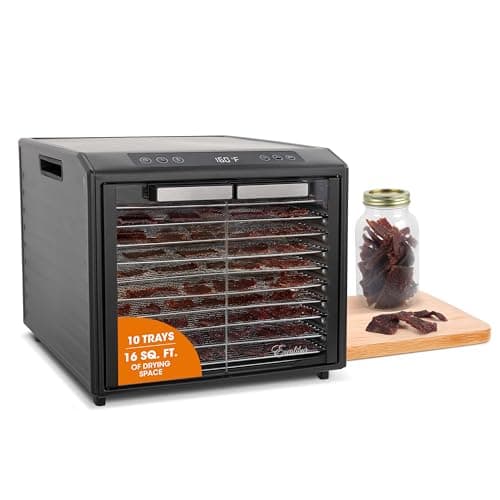
The Best Dehydrators for Jerky, Ranked on the 160°F Rule
Our top pick: Excalibur Select Series 10-Tray Food Dehydrator — Sixteen square feet of tray, a dial that runs to 165°F and horizontal airflow: the most jerky per load among the units that clear every temperature bar.
#ad · Price as of Sep 19, 2026 · Affiliate disclosure for the link to Excalibur Select Series 10-Tray Food Dehydrator
Jerky is the part of the season where a small spec decides whether the batch is safe. What separates dehydrators for jerky is whether the dial goes high enough to give you headroom, and how many square feet of tray you get per load. This hub covers the two ways to make jerky, the three appliances that can dry it, and the tools that hold a strip at ¼ inch.
Sliced or ground: pick your path first
Sliced (whole-muscle) jerky starts with a lean muscle, like a venison round or a beef flank, cut no thicker than ¼ inch. NCHFP sets that ceiling, and its 10-minute, 275°F post-bake is written for strips that thin. Your gear is a board or slicer, a dehydrator and a cure kit. Ground jerky uses meat at least 93% lean, per PNW Extension and Ohio State, mixed with cure and pushed through a jerky gun. It uses more of the deer and less knife work. It's also harder to make safe: NCHFP says bacteria are "more difficult to eliminate in ground meat than in whole meat strips," so the cure and the final bake aren't optional. Start with how to make deer jerky, which walks both paths. If you're going ground, our jerky gun rankings do the refill math for a 10 lb batch.
The 160°F rule decides the dehydrator
USDA's advice is to heat meat to 160°F (poultry 165°F) before drying, then hold the dryer at a steady 130°F to 140°F. PNW Extension says the dryer should be able to hold 145°F to 155°F. The catch is that the 160°F figure is a meat temperature, not a dial setting. Evaporation keeps the strips cool until they're nearly dry, so the heating happens separately: pre-cook the strips, or bake the finished jerky for 10 minutes at 275°F.
The dial still matters. PNW found home dehydrators whose air ran as much as 40°F away from the setting. A dial that reaches 160°F to 165°F lets you correct a unit that runs cool. One that stops at 155°F leaves you nowhere to go. In our dehydrator rankings, the Nesco FD-60 (155°F maximum) and the LEM 5-Tray (158°F) rank last for that reason. The Presto 06300 isn't ranked at all, because it runs at a fixed preset and PNW says not to use preset units for jerky. If you're choosing between the two best-known brands, Nesco vs Excalibur goes spec by spec.
Dehydrator, smoker or oven
PNW says an electric dehydrator produces the best-quality jerky, thanks to its thermostat and fan. A smoker adds smoke flavor, but only if it can idle at 145°F to 155°F. USDA's smoke-cooking range is 225°F to 300°F, so that's a big ask for some smokers. The oven works for a first batch if it can hold the band with the door propped, though PNW says it takes two to three times as long. Whichever you choose, you'll probably use the oven for the 10-minute, 275°F finish anyway. The trade-offs are laid out in dehydrator vs smoker for jerky, and the settings and drying times each source gives are in jerky time and temperature.
Slicer or board
Uniform thickness is a safety number, not just a texture preference, because the post-bake timing assumes ¼ inch or less. For a deer's worth of jerky a year, a board kit that sets ¼ inch is honest, inexpensive gear. For full 15 lb kit batches every season, a 10-inch electric slicer with a millimeter dial (¼ inch is 6.35 mm) turns a lot of knife work into feeding cold blocks. The Weston hand-crank sits in between, cutting up to 15 quarter-inch strips per pass. Compare them in jerky boards and slicers and meat slicers for jerky. Technique is covered in how to slice meat for jerky, and which muscles to save is in the best cuts for jerky.
Tray area is your batch size
USDA says a pound of meat makes about four ounces of jerky, so one 15 lb cure kit of sliced venison comes out around 3¾ lb. How many loads that takes depends on square feet of tray. A 16 sq ft Excalibur Select 10 has four times the tray of a stock Nesco FD-75A (five trays at 0.8 sq ft each), and NCHFP puts a load at 10 to 24 hours for strips not heated in marinade. No maker publishes pounds of raw meat per tray, so we compare the square feet they do publish. As a rough guide:
- One deer, jerky once a year: an expandable Nesco FD-75A or a Cosori 6-tray.
- Jerky from every deer, 3-5 a season: the 9.6 sq ft Excalibur Select 6 or a Nesco FD-1018A.
- 6+ deer or family batches: a 16 sq ft class unit such as the Excalibur Select 10 or Cosori 10-tray.
The mistake upgraders make
The usual mistake is buying on tray count and wattage and never checking the maximum temperature. The second is skipping the 160°F step because the dehydrator "goes to 160." USDA notes that E. coli in lab-inoculated venison survived drying times of up to 10 hours at temperatures up to 145°F. Buy a dial with headroom, confirm it with a thermometer on an empty run, cut at ¼ inch, and give every batch its 160°F step. Then seal what you won't eat in the next couple of weeks.
Ranked
Our picks
Our picks
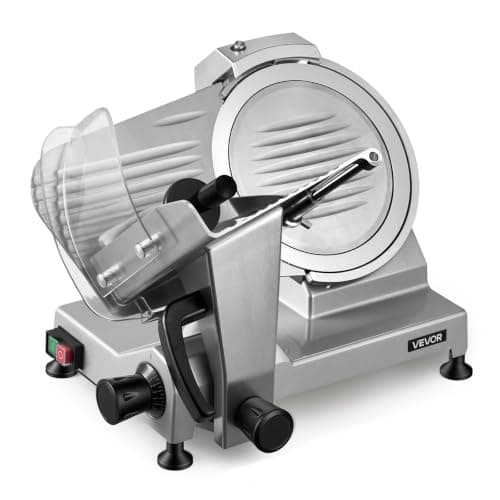
The Best Dehydrators for Jerky, Ranked on the 160°F Rule
Ten dehydrators ranked on maximum temperature against USDA jerky guidance, then on tray area per batch. The Excalibur Select 10 leads; the Nesco FD-75A is the budget pick.
Top pick: Excalibur Select Series 10-Tray Food Dehydrator · 10 picks
$279.99Amazon#ad · Price as of Sep 19, 2026 · Affiliate disclosure for the link to Excalibur Select Series 10-Tray Food Dehydrator
Our picks
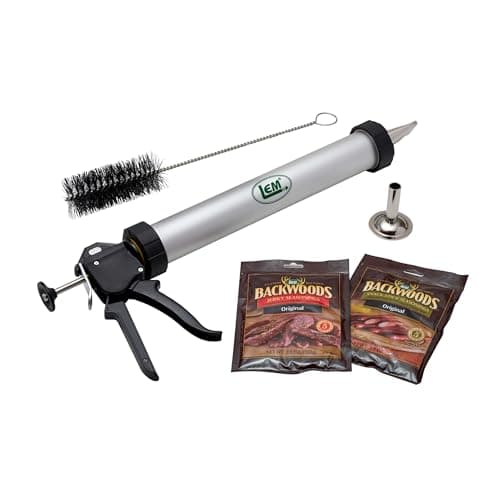
The Best Meat Slicers for Jerky and Home Use
Four slicers for jerky and home use, ranked on blade, motor, thickness range and cleanup. The VEVOR 10-inch leads; the Weston crank is the no-motor option.
Top pick: VEVOR 10-Inch Commercial Meat Slicer (240W) · 4 picks
$259.90Amazon#ad · Price as of Sep 19, 2026 · Affiliate disclosure for the link to VEVOR 10-Inch Commercial Meat Slicer (240W)
Our picks
The Best Jerky Guns for Ground Venison
Three jerky guns ranked on build and pounds per load, with the refill math for a 10 lb batch. The LEM Jerky Cannon leads.
Top pick: LEM Jerky Cannon · 3 picks
$59.99Amazon#ad · Price as of Sep 19, 2026 · Affiliate disclosure for the link to LEM Jerky Cannon
Our picks
Jerky Boards and Slicers That Hold a ¼-Inch Strip
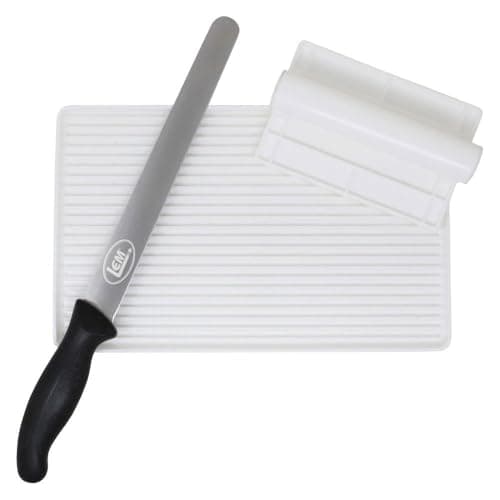
Two board kits, a hand-crank slicer and a grinder attachment, all able to hold ¼ inch. The LEM Jerky Knife and Board Kit leads.
Top pick: LEM Jerky Knife and Board Kit · 4 picks
$40.28Amazon#ad · Price as of Sep 19, 2026 · Affiliate disclosure for the link to LEM Jerky Knife and Board Kit
Head to head
Comparisons
Head to head
Nesco vs Excalibur for Jerky: Round Stack or Square Box
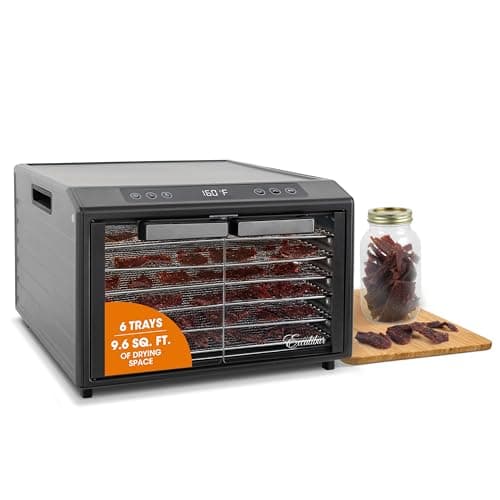
Nesco FD-75A vs Excalibur Select 6 on max temperature, tray area and airflow, with the Cosori 6-tray as a third option. Excalibur wins on headroom; Nesco on price.
Featured: Excalibur Select Series 6-Tray Food Dehydrator
$157.99Amazon#ad · Price as of Sep 19, 2026 · Affiliate disclosure for the link to Excalibur Select Series 6-Tray Food Dehydrator
Head to head
Should You Make Jerky in a Dehydrator, a Smoker or the Oven?
Dehydrator, smoker and oven compared on drying temperature, airflow, time and smoke flavor, with the 160°F step each one still needs.
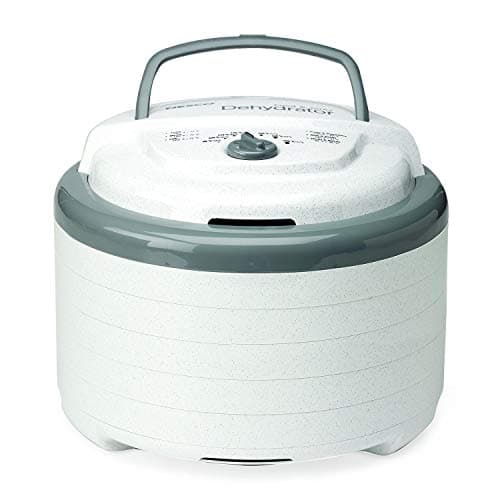
Featured: NESCO FD-75A Snackmaster Pro Food Dehydrator
$80.51Amazon#ad · Price as of Sep 19, 2026 · Affiliate disclosure for the link to NESCO FD-75A Snackmaster Pro Food Dehydrator
Know-how
Guides
Guide
How to Make Deer Jerky in a Dehydrator, Sliced or Ground
Deer jerky from field to jar: clean meat, lean cuts, ¼-inch strips or ground, the 160°F step, drying and storage, with every number sourced.
Featured: Excalibur Select Series 6-Tray Food Dehydrator
$157.99Amazon#ad · Price as of Sep 19, 2026 · Affiliate disclosure for the link to Excalibur Select Series 6-Tray Food Dehydrator
Guide
How Long to Dehydrate Jerky, and at What Temperature
Dehydrator settings and drying times for jerky, source by source, with what's actually published for 155°F, 160°F and 165°F.
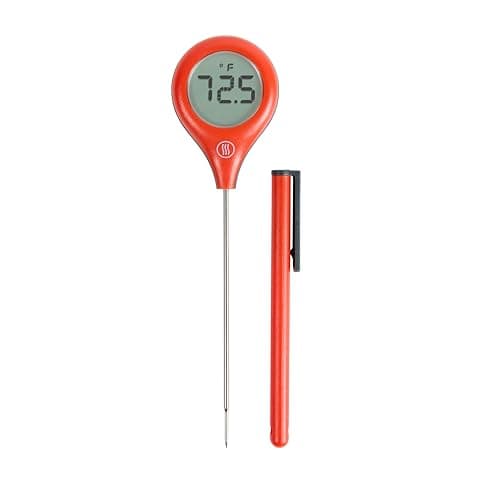
Featured: ThermoWorks ThermoPop 2 Instant-Read Thermometer
$47.00Amazon#ad · Price as of Sep 19, 2026 · Affiliate disclosure for the link to ThermoWorks ThermoPop 2 Instant-Read Thermometer
Guide
How to Slice Meat for Jerky: Thickness, Grain and Tools
Jerky thickness from five sources, grain direction, the firm-not-frozen trick, and how to hold ¼ inch with a knife, board or slicer.
Featured: LEM Jerky Knife and Board Kit
$40.28Amazon#ad · Price as of Sep 19, 2026 · Affiliate disclosure for the link to LEM Jerky Knife and Board Kit
Guide
The Best Meat for Jerky, From Beef Round to Venison Leg
The lean beef and venison cuts extension services name for jerky, how to trim them, and the 93% lean floor for ground jerky.
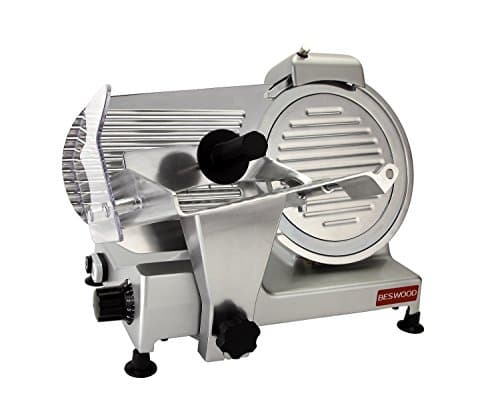
Featured: BESWOOD 10-Inch Electric Deli Meat Slicer (BESWOOD250)
$358.00Amazon#ad · Price as of Sep 19, 2026 · Affiliate disclosure for the link to BESWOOD 10-Inch Electric Deli Meat Slicer (BESWOOD250)
Filed elsewhere, written for you
Also worth reading
Sausage & Curing
Pink Curing Salt #1 vs #2, and When You Need Either
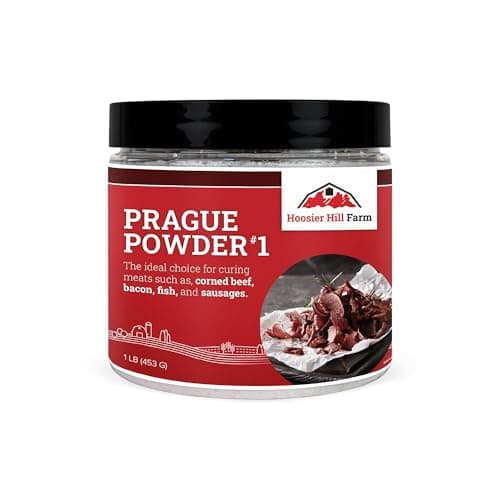
Cure #1 is 6.25% sodium nitrite for sausage, sticks and jerky that get cooked; Cure #2 adds nitrate for long, uncooked dry cures. The dose math, the table salt question and the jerky answer.
Featured: Hoosier Hill Farm Prague Powder No. 1 Curing Salt, 1 lb
$12.99Amazon#ad · Price as of Sep 19, 2026 · Affiliate disclosure for the link to Hoosier Hill Farm Prague Powder No. 1 Curing Salt, 1 lb
Vacuum Sealers
The Best Vacuum Sealers for Wild Game, Ranked on Back-to-Back Sealing
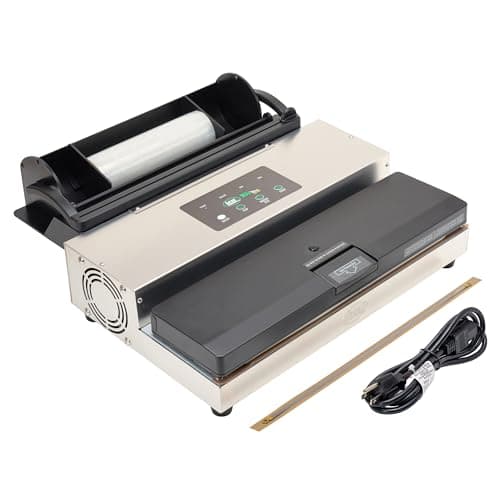
Seven vacuum sealers ranked for sealing a whole deer in one sitting, with a duty-cycle column taken straight from each manual.
Top pick: LEM MaxVac 500 Vacuum Sealer · 7 picks
$369.99Amazon#ad · Price as of Sep 19, 2026 · Affiliate disclosure for the link to LEM MaxVac 500 Vacuum Sealer
Home Processing
The 1-2 Deer Setup: Home Processing Gear for a Light Season
One pick per stage for a one- or two-deer season: knife kit, #8 grinder, lug, sealer, 7 cu ft chest freezer and a jerky dehydrator, with the season math shown.
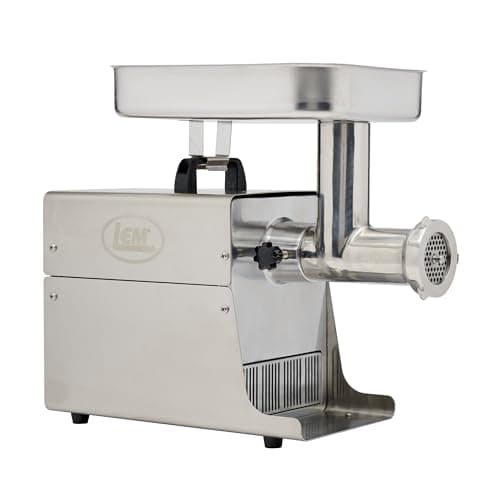
Featured: LEM BigBite #8 Electric Meat Grinder · 6 picks
$395.99Amazon#ad · Price as of Sep 19, 2026 · Affiliate disclosure for the link to LEM BigBite #8 Electric Meat Grinder