Should You Make Jerky in a Dehydrator, a Smoker or the Oven?
All three can dry jerky safely if they hold 145-155°F and the meat reaches 160°F. They differ on smoke flavor, airflow, and whether they can run that low at all.
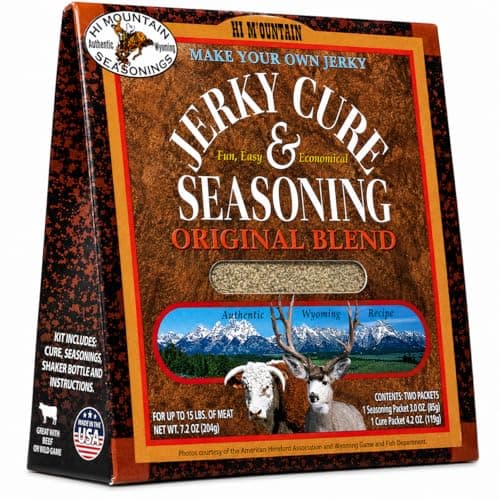
#ad · Price as of Sep 19, 2026 · Affiliate disclosure for the link to Hi Mountain Original Blend Jerky Seasoning and Cure Kit
A dehydrator is the easiest way to hold the 145-155°F drying band PNW Extension calls for. A smoker adds smoke flavor, if it can idle that low. An oven works for a trial batch, but PNW says oven drying takes two to three times longer and needs the door propped open. Whichever you use, the safety step doesn't change: the meat has to reach 160°F, either by pre-cooking or a 10-minute post-bake at 275°F.
This isn't a smoker roundup, and we don't rank smokers. It's a method comparison built from USDA and extension guidance. The two products are the dehydrator we'd add next to an existing smoker and a cure kit that works in any of the three.
Head to head
Dehydrator
Smoker
Oven
Drying temperature in the guidance
140°F (NCHFP, Penn State); 145-155°F (PNW, NDSU)
140°F (Penn State); 145-155°F (NDSU)
145-155°F (PNW); 145-170°F (Ohio State); not over 170°F (Penn State)
What it normally runs at
Built for this range
Smoke-cooking runs 225-300°F (USDA), so it has to idle far lower
Test first; if it can't hold 145-155°F, don't use it (PNW)
Air movement
Fan-driven
Depends on the smoker
No fan; PNW says quality is generally lower
Time
Baseline
Not published as a comparison
2-3 times a dehydrator (PNW)
Smoke flavor
No
Yes
No
160°F step still needed
Yes
Yes
Yes
The dehydrator case
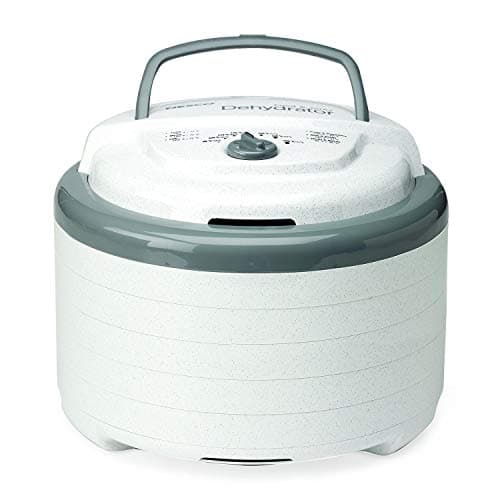
PNW 632 is direct about it: "An electric dehydrator produces the best-quality jerky, but you can also use a regular oven with the door propped open." PNW's explanation for ovens coming out lower in quality is that there's no fan moving air over the food. USDA adds the thermostat: it asks for a dehydrator "that has an adjustable temperature dial" and will hold 130-140°F throughout drying. That combination is built for a long, low run, and NCHFP's drying times reach 24 hours. USDA's jerky page even describes the appliance by its parts: a heat source, airflow to circulate the dry air, trays to hold the food, and mesh or leather sheets. The weak point is dial accuracy. PNW found dials can be off by as much as 40°F, so check an empty unit with a thermometer before the first batch. Our dehydrator rankings score each unit on how much headroom its dial has above that band.
The smoker case
Smoke is the reason to use a smoker, and USDA describes smoking as a way of imparting natural smoke flavor. The catch is temperature. USDA's smoking guidance is about smoke-cooking, and it says to keep the smoker between 225°F and 300°F (USDA: Smoking Meat and Poultry). Jerky needs the opposite: a long, low run. Penn State says to dry strips at 140°F "in a dehydrator, oven or smoker," and NDSU says 145°F to 155°F in any of the three. So the question isn't whether a smoker can make jerky. It's whether yours can hold 145-155°F steadily for hours. USDA's own smoking range starts 70°F above the top of that band.
Running hot has a specific failure. K-State Research and Extension warns against speeding up drying by raising the temperature, because higher temperatures cause "case hardening," which can trap moisture inside and lead to spoilage. PNW says the same about ovens that run too hot: the jerky forms a crust that doesn't let moisture out. If you smoke jerky, use the setup USDA recommends for any smoking: one thermometer for the air in the smoker and one for the meat. USDA's smoking guidance also says to marinate in the refrigerator, not on the counter, and not to reuse marinade from raw meat unless it's boiled first.
Before you trust a smoker with a batch, test it the way PNW 632 tests an oven. Run it for about an hour with an air thermometer at grate level and see whether it settles in the 145-155°F band. If it can't hold there, it isn't a jerky dryer, however good it is at ribs. Dry in the dehydrator or oven instead and save the smoker for smoke-cooking.
The oven option
Every kitchen already has one, and PNW calls oven drying "a good way to see if you like dried foods without investing in a dehydrator." The conditions are strict. Test the oven with a thermometer for about an hour with the door propped as you would for jerky. It has to hold 145°F to 155°F, and if it can't, PNW says not to use it for meat. Ohio State Extension allows 145°F to 170°F and suggests a fan near the propped door. Penn State says not to exceed 170°F and to prop the door 2 to 6 inches. PNW puts the cost at two to three times a dehydrator's drying time, and generally lower quality because there's no fan moving air over the meat. For the setup itself, NCHFP lays strips on cake racks set on baking sheets, close together but not touching or overlapping (NCHFP).
The step every method shares
Whichever box does the drying, the oven is probably doing the safety step. USDA's recommendation is to heat meat to 160°F (poultry 165°F) before drying, by steaming or roasting. NCHFP, PNW and K-State all give the post-drying alternative: 10 minutes in an oven preheated to 275°F, for strips cut ¼ inch or thinner. PNW calls that post-drying heat "the easiest way to produce safe jerky," and it keeps the most traditional texture. So a smoker-dried batch still gets its 10 minutes at 275°F, and so does a dehydrator batch that wasn't pre-cooked.
Cure and seasoning work in all three
The Hi Mountain kits are written for all three methods; the listing names oven, smoker and dehydrator. Each kit handles up to 15 lb of whole-muscle meat or 10 lb of ground. What the cure packet is and why it matters is covered in our curing salt guide.
Verdict by situation
You want smoke flavor and your smoker idles steadily at 145-155°F: dry in the smoker, then give the strips 10 minutes at 275°F in the oven.
Your smoker won't hold that low, or you don't want to babysit it for 10+ hours: buy a dehydrator. At our last price check, the Nesco FD-75A was the least expensive adjustable unit we rank that reaches 160°F.
You're trying jerky for the first time: test your oven with a thermometer. If it holds 145-155°F with the door propped, make one batch before buying anything.
#ad · Price as of Sep 19, 2026 · Affiliate disclosure for the link to Hi Mountain Original Blend Jerky Seasoning and Cure Kit
How we picked
Units we claim to have bench-tested: none
Plenty of sites say they ground two hundred pounds through every grinder. We didn't, and we say so. What we do instead: read the maker's spec sheet, manual and warranty terms, record the figures that decide whether a machine keeps up with your season (size number, motor rating, rated pounds per minute, capacity, duty cycle, gearing), check parts availability, and score each pick on a published rubric. Then we show the season math — pounds per deer from the Ohio Division of Wildlife's yield study — so you can redo it with your own numbers.
A smoker adds smoke flavor. A dehydrator holds the low 145-155°F drying range more easily and with less attention, and PNW Extension says an electric dehydrator produces the best-quality jerky. Both still need the meat to reach 160°F.
Can you make jerky in the oven?+
Yes, if it holds 145-155°F with the door propped open. PNW says to test it with a thermometer for about an hour first. Expect it to take two to three times as long as a dehydrator.
What temperature do you smoke jerky at?+
Extension guidance for drying jerky in a smoker is 140°F (Penn State) or 145-155°F (NDSU). That's far below the 225-300°F range USDA gives for smoke-cooking meat.
Do you still need to heat smoked jerky to 160°F?+
Yes. Either pre-cook the strips to 160°F or heat the dried strips for 10 minutes in a 275°F oven (NCHFP, PNW), for strips cut ¼ inch or thinner.
We haven't bench-tested this gear and we don't pretend to. Specs come from the maker's own pages, manuals and maker-supplied listing copy (labeled as such); food-safety figures from USDA and university extension publications; yield from the Ohio Division of Wildlife; prices live from Amazon. Where a figure isn't published, we say so. Read the full method.