Jerky and sausage each hang on one number: 160°F in the meat. A dehydrator dial won't tell you that, and neither will a smoker's lid gauge. We ranked seven thermometers on the accuracy their makers publish, then on build and how little they get in the way.
#ad · Prices come live from Amazon, last checked Sep 21, 2026; where we have no verified live price we show none. Scores are ours, compiled from published specs, manuals and warranty terms, not bench tests. Tap a row for the full write-up.
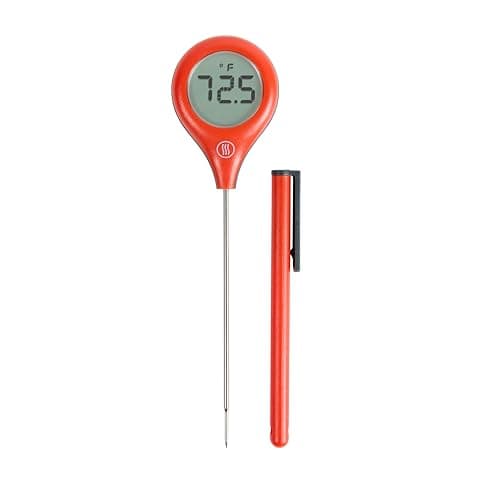
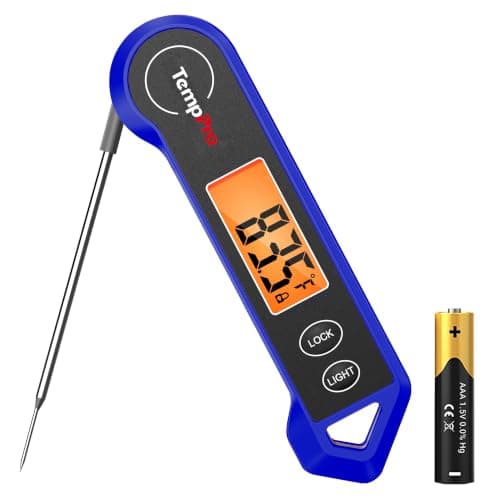
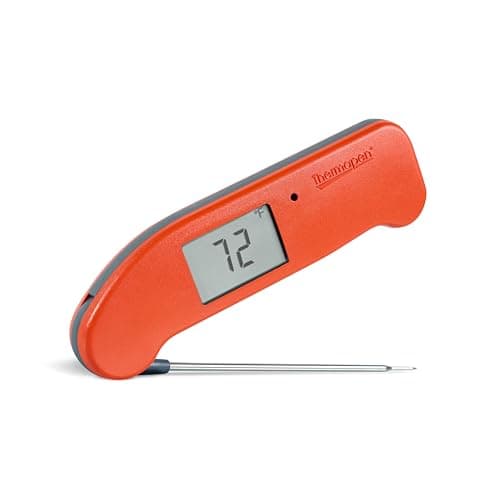
Buy the ThermoWorks Thermapen ONE if you want one thermometer for everything on this site. It reads in a second to a published ±0.5°F, it's IP67 rated and it carries a five-year warranty. If you'd rather spend that money on casings, the ThermoPop 2 reads to ±1°F in 2-3 seconds and the TempPro TP19H claims ±0.9°F in one second for still less. Those three are instant-reads: you push them into a strip or a chub, read, and pull them out.
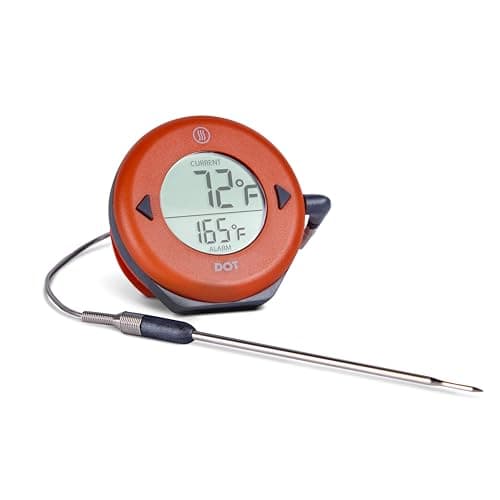
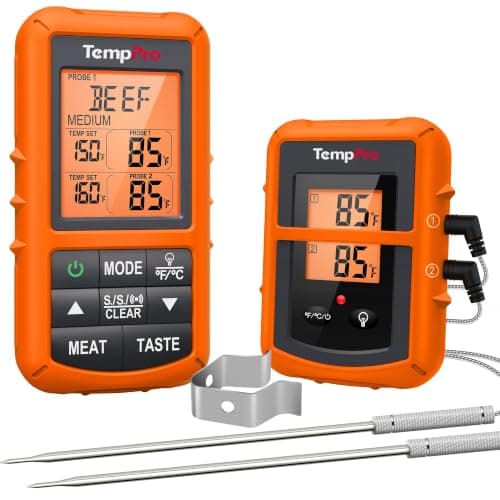
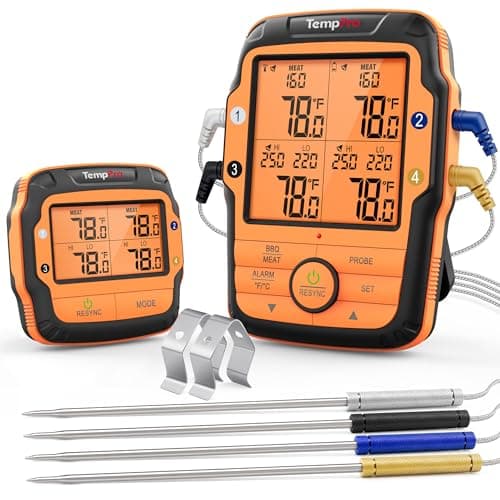
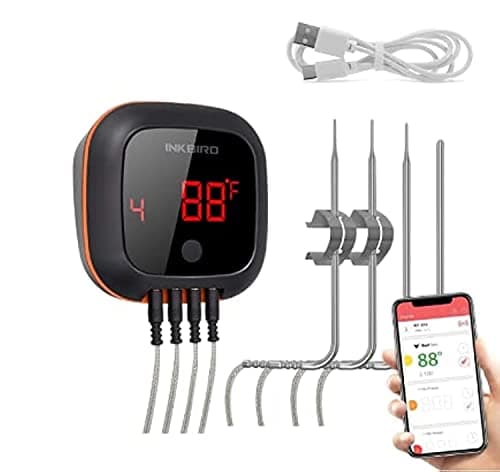
The other four stay in the meat or the air while it cooks. The ThermoWorks DOT is a one-probe alarm with two buttons and no app. The TempPro TP20 adds a second probe and a radio receiver you carry into the house, which is the classic setup for a smoker run of summer sausage. The TP27 does the same with four probes, and the Inkbird IBT-4XS puts four probes on your phone with a graph.
These rankings come from the accuracy, range and warranty figures each maker publishes, not from a bench test. We scored speed and accuracy per maker (35), build (20), ease of use (20) and value at the live price (25). One note on names: ThermoPro became TempPro in March 2026, per the company's own announcement. The TP20, TP27 and TP19H are the same model numbers under the new brand, and you may get either name on the box.
The three temperature jobs in jerky and sausage
A thermometer earns its place in a processing kit by answering three different questions, and no single type answers all of them well.
Is the meat at 160°F? USDA's safe minimum internal temperature chart puts ground meats at 160°F, and USDA's jerky guidance says to heat meat to 160°F (poultry 165°F) before drying (USDA FSIS). That's a reading you take in the meat, quickly, in several places. It's an instant-read job.
What is the air actually doing? PNW 632 reports that the air temperature inside a home dehydrator "can vary by as much as 40°F" from the dial setting, and that some units fluctuate 30-40°F while running (PNW 632). WSU Extension says a sausage maker needs an oven thermometer to check the smokehouse or oven, on top of the meat thermometer (EB1661). That's a probe you leave in the air for an hour.
Has the chub hit its number without me opening the door? WSU's smoked sausage recipes run in a 185°F smokehouse until the sausage reaches its internal target. Opening a smoker to spot-check drops the pit. That's a leave-in probe with an alarm, ideally one you can read from the house.
Sort the picks by which job you actually have. A hunter who makes jerky in a dehydrator and fresh sausage for the freezer needs one good instant-read and, once, a probe to check the dryer. A hunter who smokes summer sausage every season needs the leave-in probes more than the fastest pen.
Instant-read vs leave-in: which job each does
Thermometer
Type
Published accuracy
Probes
Reads where
Thermapen ONE
Instant-read
±0.5°F
1, folding
On the unit
ThermoWorks DOT
Leave-in alarm
±1.8°F at 32°F
1, corded
On the unit
TempPro TP20
Leave-in, radio
±1.8°F
2, corded
Receiver, 500 ft
ThermoPop 2
Instant-read
±1°F
1, fixed
On the unit
TempPro TP19H
Instant-read
±0.9°F
1, folding
On the unit
TempPro TP27
Leave-in, radio
±1.8°F
4, corded
Receiver, 1,000 ft
Inkbird IBT-4XS
Leave-in, Bluetooth
±2°F
4, corded
Phone app, 150 ft
Accuracy figures are the makers' own: ThermoWorks states the Thermapen ONE reads within ±0.5°F of 32°F and the DOT within ±1.8°F of 32°F in an ice bath (ThermoWorks help center); TempPro and Inkbird publish theirs as a general tolerance. A radio receiver's range is quoted in the open; walls and a steel smoker cut it.
The instant-reads win on tolerance because that's what they're built for. The leave-in units trade a degree or two for the ability to sit in a 185°F smokehouse for six hours. For summer sausage, where the kit's finish temperature and USDA's 160°F can sit a few degrees apart, our summer sausage guide makes the case for confirming the leave-in's number with a fast pen at the end.
Checking a dehydrator's real temperature
This is the job most jerky makers skip. PNW 632's dehydrator checklist says to "use a thermometer to determine that the empty, operating dryer can maintain a temperature of at least 145°F," and its drying step says to preheat the dehydrator or oven to 145-155°F for 15-30 minutes and "use a thermometer to monitor the circulating air temperature" (PNW 632). The same publication says either a dial or a digital instant-read can be used to measure air temperature in the dehydrator.
A leave-in probe does this check better than a pen, because you can clip the probe in the tray space, close the door, and read it through an hour of running. The DOT's probe range covers it with a magnet to hold the unit on a steel cabinet. The IBT-4XS ships with an ambient probe and clips, and its app graphs the hour, which is the only record on this page of how a dehydrator held its band. If all you own is an instant-read, PNW's method still works: open the door, read the air at tray level, close it, and repeat a few times over the preheat. Our dehydrator rankings explain why we want a dial with headroom to 160-165°F in the first place, and jerky time and temperature collects the settings each source publishes.
Sausage: 160°F, the chub and the cold end
WSU Extension is blunt about the tool: "You need an accurate meat thermometer that can measure the coldness of your raw materials and the final internal temperature of cooked sausages. This is essential to produce safe, high quality products. A temperature range of 30-200°F is required" (EB1661). Every thermometer here covers that range. Two of them, the TP20 and TP27, bottom out at 14°F, so they can't check a 0°F freezer, but they clear WSU's 30°F floor.
The cold end matters as much as the hot end. WSU says grinder knives must be kept sharp and the meat very cold, 32°F, to prevent smearing. A fast pen pushed into a lug of trim tells you whether the meat has warmed past that before the second grind. Our venison sausage guide builds the whole process around that cold chain.
At the hot end we go with USDA's 160°F for ground meats. WSU's own smoked recipes finish at 150-155°F in a 185°F smokehouse, which is where the accuracy rating starts to matter: with targets only a few degrees apart, ±1.8°F on a leave-in probe is a real share of the margin. Probe the center of the thickest chub, and if the leave-in says 160°F, confirm with the pen before you pull the rack. If a casing maker prints 165°F, as LEM does on its fibrous casings, go to 165°F.
Measuring a ¼-inch strip
A jerky strip is thinner than any probe is designed for, and PNW addresses it directly. Its Figure 1 notes that a dial instant-read senses temperature in the bottom 2 inches of its stem, a digital instant-read in the bottom half inch, and that a thin-tipped digital thermometer "senses the temperature in thin meat" (PNW 632). For its oven-baking precook, PNW says to heat strips of beef or game to an internal 160°F "as measured by a thermometer," and to use a thin-tipped thermometer only when measuring baked strips.
In practice that rules out the dial thermometers in the grocery aisle for jerky and favors the pens here: the sensor sits near the tip, so you can slide it lengthwise into a strip or stack two strips and probe between them. For the post-drying bake, 10 minutes in a 275°F oven per PNW, you're checking time and oven temperature rather than the strip itself. Our deer jerky guide walks through where each check falls for the sliced and ground paths.
The 32°F check, and why the accuracy rating is the spec that matters
Every maker here rates accuracy, but only ThermoWorks tells you how to test it: its help pages say an accurate Thermapen reads within ±0.5°F of 32°F (31.5 to 32.5°F) in an ice bath, and an accurate DOT probe within ±1.8°F of 32°F (30.2 to 33.8°F) (ThermoWorks help center). A glass packed with crushed ice and topped with water is the check. Do it when the thermometer arrives and again at the start of the season, and do it with the leave-in probes too, since PNW's finding was about air readings that drifted.
The TP19H publishes a calibration function, which is a large part of why it's the budget pick here; if the ice bath reads 34°F, you can correct it. The two ThermoWorks pens ship with a NIST-traceable certificate, which is the reason to pay more if you want a documented reading rather than a corrected one.
In detail
The picks, in full
1
Best overall
ThermoWorks Thermapen ONE Instant-Read Thermometer
9.1 /10
One-second reads to ±0.5°F, IP67 and a five-year warranty: the instant-read for checking strips, sticks and chubs.
#ad · Price as of Sep 21, 2026 · Affiliate disclosure for the link to Inkbird IBT-4XS Bluetooth Meat Thermometer, 4 Probes
What to look for in a thermometer for jerky and sausage
Published accuracy, and how it's stated. ±0.5°F, ±0.9°F and ±1°F on the three pens; ±1.8°F on the DOT, TP20 and TP27; ±2°F on the Inkbird. Prefer a maker that tells you the ice-bath tolerance, because that's a number you can check.
Range that covers 30°F to 200°F. WSU's requirement. All seven clear it; the two TempPro radio units start at 14°F, the Inkbird at 32°F, the rest at -58°F.
Sensor position. For a ¼-inch strip you want the sensor near the tip, which is the digital pens. PNW says a dial instant-read senses across 2 inches of stem.
Probe count for leave-ins. One probe watches a chub or the dryer air. Two watch a chub and the pit. Four watch a rack. Count your chubs before you pick.
How you read it. The DOT and the pens read on the unit. The TP20 and TP27 send to a receiver by radio with no pairing. The IBT-4XS needs your phone within Bluetooth range.
Water resistance. IP67 on both ThermoWorks pens, IP65 on the TP19H and the DOT's body. Leave-in cables are heat-rated (572°F on the TP20's, per TempPro), not waterproof.
Warranty. Five years on the Thermapen ONE, two on the DOT unit (six months on its probe), one year on the Inkbird, and one year extendable to three on registration for the TempPro units.
Whatever you buy, treat it like any raw-meat tool. WSU and PNW both give the same sanitizer: 1 tablespoon of chlorine bleach in a gallon of water, then air-dry. Wipe the stem between the raw lug and the cooked chub, not just at the end of the day.
What to pair it with
A thermometer is the cheapest piece of a sausage or jerky setup and the one that decides whether the rest was safe. For sausage, it goes with a stuffer and cure: see best sausage stuffers and the curing salt guide. For jerky, it goes with a dehydrator whose dial has headroom above 160°F. Holding a fridge at a set temperature for a curing project is a controller job, not a thermometer job, and none of these seven does it; the curing salt guide covers where a home cure stops and why.
How we picked
Units we claim to have bench-tested: none
Plenty of sites say they ground two hundred pounds through every grinder. We didn't, and we say so. What we do instead: read the maker's spec sheet, manual and warranty terms, record the figures that decide whether a machine keeps up with your season (size number, motor rating, rated pounds per minute, capacity, duty cycle, gearing), check parts availability, and score each pick on a published rubric. Then we show the season math — pounds per deer from the Ohio Division of Wildlife's yield study — so you can redo it with your own numbers.
A digital instant-read with the sensor near the tip. The ThermoWorks Thermapen ONE (±0.5°F, one-second reads) is our top pick; the ThermoPop 2 and TempPro TP19H do the same job for less. PNW 632 says a thin-tipped digital thermometer is what senses temperature in thin meat, and that dial thermometers read across the bottom 2 inches of the stem.
What temperature should sausage be cooked to?+
160°F internal for ground meats, per USDA's safe minimum internal temperature chart. Probe the center of the thickest link or chub. If a casing maker prints 165°F, go to 165°F.
Do I need a thermometer if my dehydrator has a temperature setting?+
Yes. PNW 632 found the air temperature inside home dehydrators can vary from the dial by as much as 40°F and says to use a thermometer to confirm an empty, running dryer holds at least 145°F. The dial is a request; the thermometer is the answer.
Instant-read or leave-in probe for summer sausage?+
Both, if you smoke it. A leave-in probe such as the TempPro TP20 or ThermoWorks DOT watches the chub without opening the smoker; an instant-read confirms the final number. If you cook summer sausage in the oven and can check it freely, an instant-read alone works.
How do I check whether my thermometer is accurate?+
An ice bath: crushed ice topped with water should read 32°F. ThermoWorks publishes the tolerance for its units (within ±0.5°F for the Thermapen, ±1.8°F for the DOT probe). The TP19H can be recalibrated if it reads off; the ThermoWorks pens ship with a calibration certificate.
Is ThermoPro the same company as TempPro?+
Yes. ThermoPro announced in March 2026 that it was becoming TempPro, with the same product line, warranty and support. The TP20, TP27 and TP19H are the same model numbers, and packaging may carry either name during the transition.
We haven't bench-tested this gear and we don't pretend to. Specs come from the maker's own pages, manuals and maker-supplied listing copy (labeled as such); food-safety figures from USDA and university extension publications; yield from the Ohio Division of Wildlife; prices live from Amazon. Where a figure isn't published, we say so. Read the full method.