Sausage & Curing ◆ Guide
How to Make Venison Sausage: Fat, Cold Meat, Cure and 160°F
Venison is too lean to make good sausage on its own. Add pork fat, keep everything near freezing, cure it if it's going in the smoker, and cook it to 160°F. Here's the process with every number sourced.
We earn a commission if you buy through our links, at no extra cost to you. It never decides the ranking — the method is published · Affiliate disclosure
To make venison sausage, grind cold venison with pork fat or fatty pork trim, mix in salt and seasoning, regrind, stuff, and cook to an internal temperature of 160°F. Extension recipes land around 20-25% fat by weight. Add Cure #1 only if the sausage will be smoked or cured; fresh links don't need it. Keep the meat at 40°F or below the whole way, and near 32°F when it goes through the grinder.
The upgrade most hunters are making here is from "dry, crumbly deer sausage" to sausage that holds together and stays juicy. Nearly all of that comes down to three things you control: fat, temperature and the mix. The steps below come from USDA and four university extension services; we cite each one where it applies.
What do you mix with venison to make sausage?
Fat, mostly pork. Venison is lean, and Washington State University Extension notes that all fat is often removed from game meat, and pork fat added for proper texture and juiciness. Pork fat is WSU's preference, though it notes beef fat is often easier to buy. Penn State Extension's instructions for canning venison sausage call for one part high-quality pork fat to three or four parts venison before grinding.
Salt. Salt isn't just flavor. WSU explains that salt draws soluble proteins to the surface of the meat, where they trap fat and water and bind the sausage together when cooked; most sausages contain 2-3% salt. That bind is what stops the crumble.
Seasoning and a little water. Water helps the seasoning and cure spread; Penn State suggests dissolving the dry ingredients in water for even distribution. WSU puts added water at roughly 3% for uncooked fresh sausage and about 10% for cooked sausage.
Cure, only for cured or smoked sausage. More on that below and in our curing salt guide.
Fat ratios from extension recipes
These are published formulas, not our invention. The fat percentage is our arithmetic from each recipe's ingredients, counting only the pork fat (venison adds a little of its own).
| Source and recipe | Venison | Pork | Pork fat as share of batch |
|---|---|---|---|
| Penn State Extension, venison sausage for canning | 3-4 parts | 1 part pork fat | 20-25% |
| NDSU, venison summer sausage | 15 lb | 10 lb pork trim, 50/50 | 5 of 25 lb = 20% |
| NDSU, venison garlic sausage | 10 lb (+ 2 lb beef trim) | 12 lb pork trim, 60/40 | 4.8 of 24 lb = 20% |
| NDSU, "Lar's Super Garlic Sausage" | 17 lb (beef or venison) | 33 lb pork trim, 50/50 | 16.5 of 50 lb = 33% |
The consistent answer is about one-fifth to one-quarter fat. Go leaner and the sausage crumbles; go much fatter and it's closer to a pork sausage with some venison in it, which is a fine thing to make but a different product.
The gear, by job
- Grinder with a coarse and a fine plate. WSU grinds through a 3/8 or 1/2 inch plate first and regrinds through 3/16 or 1/8 inch; Mississippi State uses 1/2 to 3/4 inch, then 3/16 inch. WSU adds that the knives must be very sharp. Plate choices are covered in our grinder plate sizes guide.
- A way to mix. Hands work for small batches, per WSU; a crank mixer takes over around 20 lb. See best meat mixers.
- A stuffer. Your grinder's tubes can do fresh links; a piston stuffer does it better and is essential for summer sausage and sticks. See best sausage stuffers.
- Casings. NDSU calls hog casings generally the most suitable for home use, and says they work well for Polish and breakfast-type sausages. Collagen and fibrous casings are for sticks and summer sausage.
- A thermometer. WSU calls an accurate meat thermometer essential, reading from about 30°F to 200°F: you use it for the cold end as much as the cooked end.
Picks for this job
The gear for a first proper venison sausage batch
A two-speed stuffer with a stick tube, a 20 lb mixer, natural casings for about 30 lb of links, and a fast thermometer.
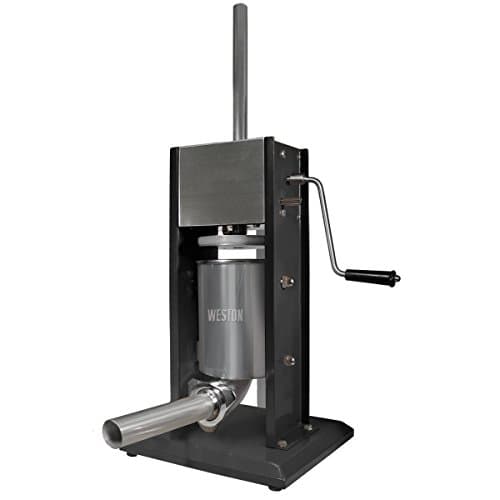
Best for 1-2 deer
Weston 7 lb Dual-Speed Vertical Sausage Stuffer (86-0701-W)
Steel two-speed gears, a pressure release valve and tubes from 13 mm (sticks) to 40 mm.
$252.95Amazon#ad · Price as of Sep 19, 2026 · Affiliate disclosure for the link to Weston 7 lb Dual-Speed Vertical Sausage Stuffer (86-0701-W)
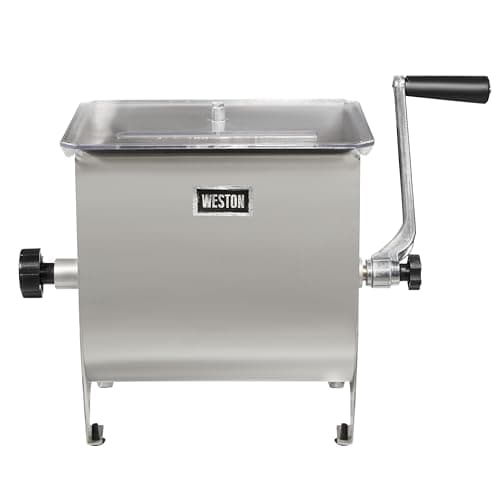
Best for 3-5 deer
Weston 20 lb Stainless Steel Meat Mixer (36-1901-W)
Holds 20 lb, takes seasoning through a slot in the lid without stopping, and the paddles pull out for the sink.
$149.99Amazon#ad · Price as of Sep 19, 2026 · Affiliate disclosure for the link to Weston 20 lb Stainless Steel Meat Mixer (36-1901-W)
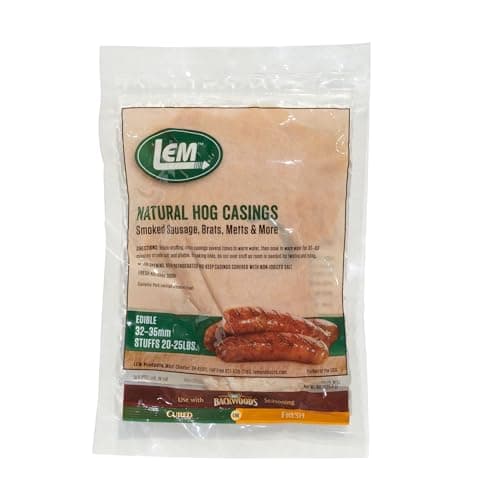
Best natural casing
LEM Natural Hog Casings, 32-35 mm (Stuffs about 30 lb)
32-35 mm hog casings, about 30 lb per pack; rinse, flush and soak 2-8 hours in cold water, per LEM.
$13.99Amazon#ad · Price as of Sep 19, 2026 · Affiliate disclosure for the link to LEM Natural Hog Casings, 32-35 mm (Stuffs about 30 lb)
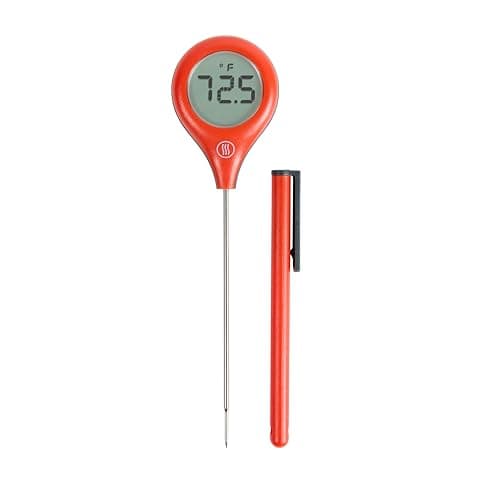
Best value thermometer
ThermoWorks ThermoPop 2 Instant-Read Thermometer
Reads in 2-3 seconds to ±1°F, which is all the thermometer most sausage makers need.
$47.00Amazon#ad · Price as of Sep 19, 2026 · Affiliate disclosure for the link to ThermoWorks ThermoPop 2 Instant-Read Thermometer
Step by step
- Start clean. Wash hands and equipment, and sanitize surfaces with 1 tablespoon of chlorine bleach per gallon of water, per NDSU and Penn State. USDA notes venison can be heavily contaminated depending on the hunter's skill and the wound location, and deer carcasses are typically held at ambient temperatures, so hygiene matters more than with store meat.
- Chill everything. Keep meat at 40°F or below throughout (NDSU, Penn State). Before grinding, get it as close to freezing as possible, 30-32°F (WSU); Mississippi State says about 32°F to minimize fat smearing. Thaw frozen meat in the refrigerator, not on the counter.
- Trim and cube. Remove sinew and silver skin from the venison, cut venison and pork fat into pieces that fit your grinder throat, and weigh them to your ratio.
- Coarse grind. Through a 3/8 to 3/4 inch plate, per the ranges above.
- Mix. Add salt, seasoning and water (with cure dissolved in it, if using). WSU says mix thoroughly, 2-5 minutes, and warns that overmixing makes it rubbery.
- Regrind. Through the fine plate. NDSU: mixing should be done before the final grind.
- Prep casings. Salted natural casings soak in lukewarm water at least 30 minutes and get flushed with cold water (NDSU); LEM's hog casings call for a rinse and flush, then a 2-8 hour cold-water soak.
- Stuff. Load as much casing as you can onto the horn, hold it firmly, and fill fully with no air pockets (Mississippi State). Twist or tie links.
- Rest, if cured. Cured sausage should sit about 24 hours before smoking, per Mississippi State.
- Cook to 160°F internal, checked with a thermometer. Then cool quickly and refrigerate or freeze (WSU).
Fresh or smoked: when cure goes in
Mississippi State Extension puts it simply: cure is used routinely in smoked sausage products, but usually not in fresh sausage. The same bulletin gives the level used in sausage: 156 parts per million of sodium nitrite, based on total meat weight. Penn State says to buy cure (sodium nitrite) from a reputable source; it gives sausage its pink color, improves flavor and inhibits Clostridium botulinum.
In practice: fresh breakfast links, brats and Italian-style venison sausage that you'll cook in a pan don't need cure. Smoked links, snack sticks and summer sausage do. Never guess the dose; use Prague Powder #1 at the package rate or a kit with the cure pre-portioned. The curing salt guide linked above shows how the common package rate works out to that same 156 ppm.
Cooking temperature and storage
USDA's rule for uncooked sausage is direct: sausages containing ground beef, pork, lamb or veal should be cooked to 160°F; those containing ground turkey or chicken to 165°F. USDA's chart puts all ground meats at 160°F, and Penn State Extension uses 160°F for cooked game sausage. Venison sausage made with pork fat is a ground-meat sausage: cook it to 160°F, measured in the thickest link.
| Sausage (USDA storage chart) | Refrigerator | Freezer |
|---|---|---|
| Fresh sausage, uncooked | 1-2 days | 1-2 months |
| Fresh sausage, after you cook it | 3-4 days | 2-3 months |
| Hot dogs and other cooked sausage (unopened / opened) | 2 weeks / 7 days | 1-2 months |
USDA frames those times as quality guidance and notes that food kept continuously frozen stays safe indefinitely. For homemade cured and smoked sausage, WSU gives up to 6 months at 0°F in a moisture-vapor-proof bag. Packaging decides how well it holds up: see how long vacuum-sealed meat lasts.
Ready for the cured version? Venison summer sausage is the natural next batch.
Questions
Frequently asked
What do you mix with venison to make sausage?
Can you make venison sausage without pork?
What temperature should venison sausage be cooked to?
Do I need curing salt for venison sausage?
How long does homemade venison sausage last?
Keep going down the chain
Related
Receipts
Sources
- USDA Food Safety and Inspection Service — Sausages and Food Safety
- USDA Food Safety and Inspection Service — Safe Minimum Internal Temperature Chart
- USDA Food Safety and Inspection Service — Jerky and Food Safety
- Penn State Extension — Proper Processing of Wild Game and Fish
- Washington State University Extension — Homemade Meat, Poultry, and Game Sausages (EB1661) [PDF]
- North Dakota State University Extension — The Art and Practice of Sausage Making (FN176, rev. Oct. 2022)
- Mississippi State University Extension — Making Sausage at Home (P2692)
- Amazon listing, manufacturer-supplied copy — LEM Natural Hog Casings 32-35 mm (141)
We haven't bench-tested this gear and we don't pretend to. Specs come from the maker's own pages, manuals and maker-supplied listing copy (labeled as such); food-safety figures from USDA and university extension publications; yield from the Ohio Division of Wildlife; prices live from Amazon. Where a figure isn't published, we say so. Read the full method.