The Best Vacuum Sealers for Wild Game, Ranked on Back-to-Back Sealing
A deer is about 52 packages at a pound apiece. We ranked seven sealers on what their own manuals say about sealing that many in a row, then on wet meat, bag width and bag cost.
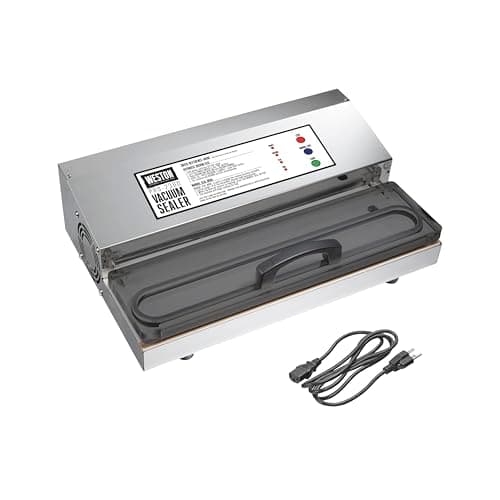
Fan-cooled, 1,020 watts and it takes the widest bags in this group (up to 15 inches), but the Pro-2300 manual still asks for 20 seconds between cycles.
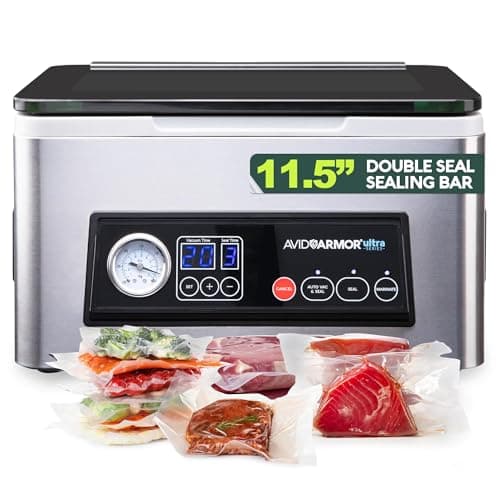
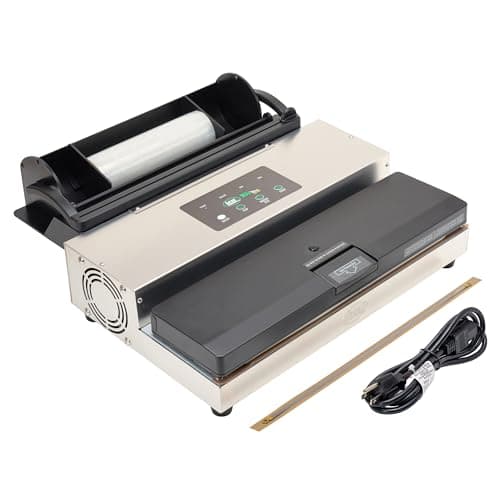
A compact chamber sealer with a dry pump and an 11.5-inch bar that seals wet game and liquids without pulling juice toward the pump, on cheaper smooth pouches.
The most hands-off sealer here, with automatic bag and moisture detection and a five-year warranty, but its manual wants 20 seconds between seals and warns it shuts down under heavy use.
Dry, Moist and Double seal modes in a compact 130-watt unit that suits a single deer, with a manual that plainly says it isn't built for continuous use.
#ad · Prices come live from Amazon, last checked Sep 19, 2026; where we have no verified live price we show none. Scores are ours, compiled from published specs, manuals and warranty terms, not bench tests. Tap a row for the full write-up.
If you seal a whole deer in one sitting, buy the LEM MaxVac 500. LEM rates it for 500 consecutive seals, up to five hours of use, which is more than nine deer of one-pound packages before you reach the maker's own limit, and it takes bags up to 14 inches wide. If your trim comes off the bench wet, the Avid Armor USV20 chamber sealer handles juice better than any suction machine here. For three to five deer a season, the LEM MaxVac 250 and its 250-seal rating is enough.
Most people shopping for this have already met the failure: the sealer that shuts itself off somewhere in the middle of the deer, with a tray of steaks warming on the counter. It isn't bad luck. FoodSaver's own V4400 manual says the machine shuts off automatically under heavy use and needs 20 minutes to cool. NESCO's manuals for the VS-12 and VS-22LB say both are not designed for continuous use and are approved for one operating cycle every two minutes. Those limits are printed in the manuals. They just never make it onto the box, so that's what we ranked on first.
How we ranked them
We haven't bench-tested these sealers, and we won't pretend otherwise. Every score comes from what the maker publishes: owner's manuals, spec pages and the maker-supplied Amazon copy, each linked from the product cards below. The rubric is the one on our how we pick page: duty cycle, meaning back-to-back seals per the manual (30%), wet-meat handling (20%), bar width and maximum bag (15%), bag cost per season (20%) and build, including warranty (15%).
Duty cycle carries the most weight because it's the spec that decides whether a machine finishes the deer. Where a maker publishes a seal count or a run time, we use it. Where it publishes a rest rule between cycles, we do the arithmetic for a whole deer. Where it publishes nothing, we say "not published" and score it neutral, because an unpublished limit is not the same thing as no limit.
The duty-cycle column, straight from the manuals
Here's what each maker says about sealing many bags in a row, turned into one deer's worth of work at 52 one-pound packages (the arithmetic is in the box below the table).
Sealer
What the maker publishes
What it means for 52 packages
LEM MaxVac 500
500 consecutive seals, up to 5 hours of use (LEM spec page)
About 9.6 deer's worth before the rated limit
LEM MaxVac 250
250+ consecutive seals, up to 2.5 hours (LEM spec page)
About 4.8 deer's worth
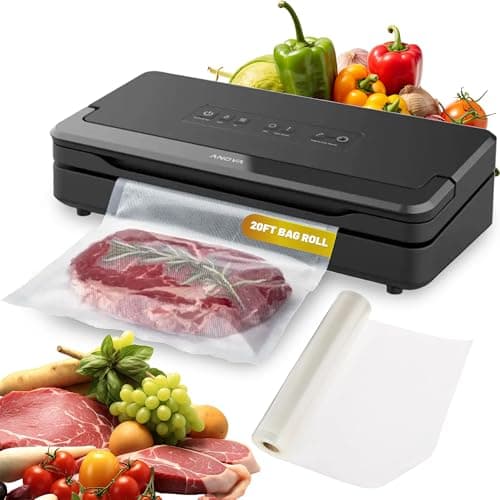
Anova Precision Vacuum Sealer Pro
"Built to handle over 100 continuous vacuum seals" (Anova product page)
About 1.9 deer's worth
Weston Pro-2300
Wait at least 20 seconds between cycles with the lid open; thermal cutoff, resume after about 20 minutes (Pro-2300 manual, 65-0201 edition)
51 rests × 20 s = 17 minutes of required rest, plus cycle time Weston doesn't publish
FoodSaver V4400
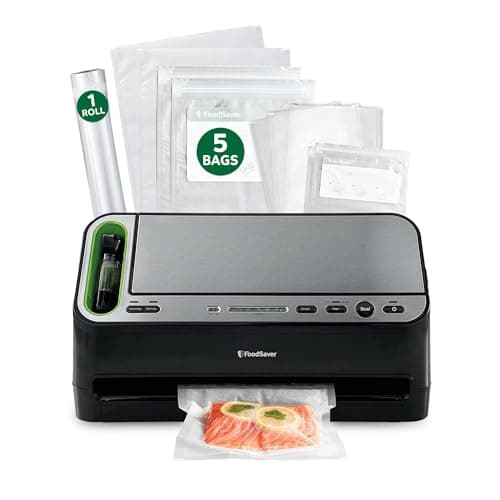
Wait at least 20 seconds between seals; under heavy use it shuts off and needs 20 minutes to cool (owner's manual)
The same 17 minutes of rest at minimum; one shutdown adds 20 more
Avid Armor USV20 (chamber)
Can run continuously; manual advises a 1-minute cool-down between cycles for best results
About 72 minutes if you follow the advice: 24-second cycles at the factory defaults (20 s vacuum, 4 s seal) plus 51 one-minute pauses
NESCO VS-12
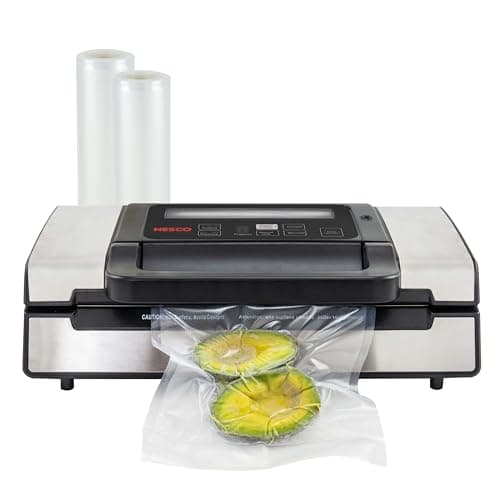
Not designed for continuous use; one operating cycle every two minutes (care/use guide)
At least 104 minutes for the deer
Two things stand out. First, the makers with the most useful numbers are the ones selling to hunters: LEM publishes a seal count because a long session is the whole point of the product. Second, the 20-second rules on the FoodSaver and Weston aren't deal-breakers if you follow them; twenty seconds with the lid open is a pause you can spend loading the next bag. Where people get into trouble is skipping the rest, tripping the thermal cutoff and losing 20 minutes. The NESCO rule is different in kind: one cycle every two minutes is a hard ceiling on pace, which is why we rate the VS-12 for a single deer.
Every bag is a cycle, and a roll bag is two
Rest rules count seals, not packages. If you cut bags from a roll, each package takes two seals: one to close the bottom of the tube, then the vacuum-and-seal on the filled bag. FoodSaver words its rule as 20 seconds "between seals," so a deer's worth of roll bags is closer to 104 seals than 52. There are two easy ways around it: seal the bottoms of a stack of bags the night before, or use pre-cut bags for the burger and save the roll for roasts and backstraps. Our page on vacuum sealer bag cost per season runs the per-deer cost of both formats at live prices.
Bag width matters for the same reason. Eleven inches is the common ceiling on countertop sealers: the FoodSaver V4400 takes 8- and 11-inch rolls, both NESCO units store an 11-inch roll, and the MaxVac 250 takes bags up to 11 inches. The MaxVac 500 goes to 14 inches and the Weston Pro-2300 to 15. Wider bags don't make anything faster, but they let a big roast or a bone-in cut go in whole instead of being trimmed to fit.
Wet meat is where suction sealers struggle
An external (suction) sealer pulls air out through the open end of the bag, so anything loose in the bag, juice included, travels toward the seal bar and the pump. Every manual we read says so in its own way. NESCO warns that liquid pulled into the vacuum chamber can clog the pump and damage the appliance, and that wet bags may be difficult to seal. Weston's manual says not to let liquids be sucked into the vacuum port and to use the Manual Seal button for liquids. FoodSaver builds in a removable drip tray and a moisture sensor that switches the machine to its moist setting.
The makers' fixes line up too: firm the meat before it goes in. FoodSaver and Weston both say to freeze meat for 1-2 hours before sealing, NESCO says to partially freeze meats, and FoodSaver's fallback is a folded paper towel between the meat and the top of the bag, below the seal area. The full routine is in our guide to vacuum sealing wet meat.
A chamber sealer sidesteps the problem. Avid Armor's description of the USV20 puts it plainly: the whole chamber is evacuated, so liquid is never pulled toward a suction port. That's why it scores 10 on wet-meat handling and none of the external machines do.
Chamber or external for a deer?
It comes down to three published numbers. The USV20 takes pouches up to 11 x 10 inches, weighs 17.55 lb on Avid's spec sheet and seals liquids. The MaxVac 500 takes 14-inch bags and publishes a 500-seal run. The Weston takes 15-inch bags. If your trim is wet or you care what bags cost over a season, the chamber wins; Avid says its smooth pouches run cheaper per seal than suction bags because they need no embossed channels. If you want to seal big cuts whole and run a long session on one machine, the heavy external sealers win. We go deeper on the trade in chamber vs external vacuum sealers.
Whatever you buy, the sealed packages need somewhere cold to go the same day. At the Ohio DNR average, one deer packs into roughly 2.1-2.6 cubic feet of freezer at the 20-25 lb per cubic foot the Good Meat Project calls realistic, which is why the next stop after this page is usually the best chest freezers for meat.
In detail
The picks, in full
1
Best for 6+ deer
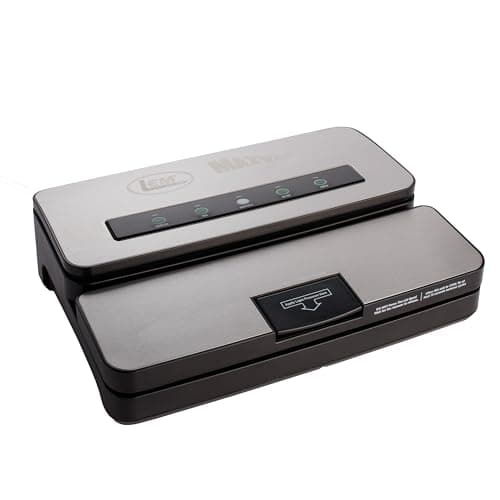
LEM MaxVac 500 Vacuum Sealer
7.9 /10
The only external sealer here whose maker puts a number on a long session: 500 consecutive seals, up to five hours, and bags up to 14 inches wide.
#ad · Price as of Sep 19, 2026 · Affiliate disclosure for the link to LEM MaxVac 500 Vacuum Sealer
2
Best for wide cuts
Weston Pro-2300 Vacuum Sealer
7.6 /10
Fan-cooled, 1,020 watts and it takes the widest bags in this group (up to 15 inches), but the Pro-2300 manual still asks for 20 seconds between cycles.
+15-inch bag capacity is the widest of any external sealer we list
+5 mm seal bar and a double-piston pump rated to 28 in. Hg
+Manual mode lets you seal early; the manual says to use Manual Seal for liquids
What it doesn't
−No roll storage or cutter listed, so you cut bags off a separate roll
−Weston hasn't posted a manual for this 65-0220-W version that we could fetch; the rest rule comes from the 65-0201 manual
Skip this if…
…your packages are one-pound bricks of burger — you're paying for a 15-inch bar you'll never fill, and the MaxVac 500 publishes a longer continuous rating
#ad · Price as of Sep 19, 2026 · Affiliate disclosure for the link to Weston Pro-2300 Vacuum Sealer
3
Best for wet meat (chamber)
Avid Armor USV20 Chamber Vacuum Sealer
7.6 /10
A compact chamber sealer with a dry pump and an 11.5-inch bar that seals wet game and liquids without pulling juice toward the pump, on cheaper smooth pouches.
#ad · Price as of Sep 19, 2026 · Affiliate disclosure for the link to Anova Precision Vacuum Sealer Pro
6
Best for 1-2 deer, hands-off
FoodSaver V4400 2-in-1 Vacuum Sealer
6.4 /10
The most hands-off sealer here, with automatic bag and moisture detection and a five-year warranty, but its manual wants 20 seconds between seals and warns it shuts down under heavy use.
+Drops the bag in, detects it and seals without a button press
+Switches to its moist setting on its own when the drip tray sees liquid
+Five-year limited warranty, the longest of any sealer we list
What it doesn't
−The manual's own troubleshooting page says it overheats and shuts off under heavy use
−Bags top out at the 11-inch roll width
Skip this if…
…you plan to seal a whole deer in one sitting — FoodSaver's manual prescribes a 20-minute cool-down when it overheats, and the LEM MaxVac 250 publishes a rating built for that job
#ad · Price as of Sep 19, 2026 · Affiliate disclosure for the link to FoodSaver V4400 2-in-1 Vacuum Sealer
7
Best budget pick for 1 deer
NESCO VS-12 Deluxe Vacuum Sealer
5.2 /10
Dry, Moist and Double seal modes in a compact 130-watt unit that suits a single deer, with a manual that plainly says it isn't built for continuous use.
#ad · Price as of Sep 19, 2026 · Affiliate disclosure for the link to NESCO VS-12 Deluxe Vacuum Sealer
What to look for in a sealer for game
A published duty figure. A seal count (LEM), a continuous-seal claim (Anova) or a rest rule (FoodSaver, Weston, NESCO, Avid Armor). Treat "not published" as unknown, not unlimited.
The bag width you'll actually use. Eleven inches covers one-pound packages and steaks. Pay for 14-15 inches only if you seal large roasts or bone-in cuts whole.
A way to deal with moisture. A moist or liquid mode, a drip tray, or at minimum a manual seal button so you can close the bag before juice reaches the bar.
Roll storage and a cutter on the machine. On processing day that's one less loose tool on a wet counter. The MaxVac 250 and 500, the FoodSaver V4400, both NESCOs and the Anova have one; the Weston's listing doesn't mention one.
Seal width. Weston lists a 5 mm seal bar, LEM a 4.8 mm seal on the 500 and 3 mm on the 250. NESCO and Anova use a double seal, and NESCO's copy claims that's stronger than a single seal. We have no independent data on that, so it doesn't move the scores.
Warranty length. FoodSaver gives the V4400 a 5-year limited warranty; LEM gives 2 years on the 500 and 1 on the 250; Anova 2 years; NESCO 1 year; Avid Armor 1 year, excluding the seal bar and gaskets.
Matching a sealer to your season
Here's how the published duty figures line up with our season tiers, at the Ohio DNR average and one-pound packages.
Season
Venison (Ohio DNR average)
One-pound packages
Sealers whose published limits fit
Light: 1-2 deer
52-104 lb
52-104
Anova Pro (100+ continuous seals); FoodSaver V4400 with its 20-second rests; NESCO VS-12 for one deer
Moderate: 3-5 deer
157-261 lb
157-261
LEM MaxVac 250 (250+ seals per run); Avid Armor USV20 if your trim is wet
Heavy: 6+ deer or a half beef
313 lb and up
313 and up
LEM MaxVac 500 (500 seals per run); Weston Pro-2300 for 15-inch bags
You won't seal a whole season in one sitting; you seal each deer as it's processed. The tiers still matter, because a machine that barely survives one deer is working at its limit every weekend of the season. If you're building the whole bench at once, our 3-5 deer processing setup pairs a sealer with the grinder, stuffer and freezer sized to the same season.
Running a whole-deer session without cooking the sealer
Chill everything first. Meat that's spent 1-2 hours in the freezer seals cleaner, per the FoodSaver and Weston manuals, and it keeps juice away from the pump.
Batch by package type. All the burger, then the steaks, then the roasts, so you aren't changing rolls or bag sizes mid-run.
Keep the seal line clean and flat. FoodSaver's manual says wrinkles in the seal can leak; NESCO's says leaks along the seal come from wrinkles, crumbs, grease or liquid, and to wipe the inside top of the bag before sealing.
Take the rest the manual asks for. Weston wants 20 seconds with the lid open between cycles, FoodSaver 20 seconds between seals, NESCO one cycle per two minutes. Load the next bag during the pause.
Empty the drip tray. On the FoodSaver, a full tray turns the unit off until you do.
Freeze in a single layer. USDA's Food Safety and Inspection Service says to spread packages out in one layer and stack them only once they're frozen solid; a food 2 inches thick should freeze completely in about 2 hours (FSIS, Freezing and Food Safety).
If you're still deciding whether some cuts even need the machine, freezer paper vs vacuum sealing lays out where paper holds its own.
How we picked
Units we claim to have bench-tested: none
Plenty of sites say they ground two hundred pounds through every grinder. We didn't, and we say so. What we do instead: read the maker's spec sheet, manual and warranty terms, record the figures that decide whether a machine keeps up with your season (size number, motor rating, rated pounds per minute, capacity, duty cycle, gearing), check parts availability, and score each pick on a published rubric. Then we show the season math — pounds per deer from the Ohio Division of Wildlife's yield study — so you can redo it with your own numbers.
For six or more deer a season, the LEM MaxVac 500: LEM rates it for 500 consecutive seals and bags up to 14 inches wide. For three to five deer, the MaxVac 250 (250+ consecutive seals, bags to 11 inches). If your trim runs wet, the Avid Armor USV20 chamber sealer, which seals liquids without pulling them toward the pump.
Why does my vacuum sealer stop working halfway through a deer?+
Most likely it overheated. FoodSaver's V4400 manual says heavy use triggers an automatic shutoff and a 20-minute cool-down. Weston's Pro-2300 manual describes a thermal cutoff with about 20 minutes to recover. NESCO's VS-12 guide approves one cycle every two minutes and says an overheated unit needs 15 minutes. Taking the rest each manual asks for between bags is what keeps the cutoff from tripping.
How many vacuum sealer bags do I need for one deer?+
About 52 one-pound bags at the Ohio DNR average of 52.19 lb of venison per deer: roughly 63 for an average antlered deer and 45 for an antlerless one. Package at two pounds and the count halves.
Is a chamber vacuum sealer worth it for wild game?+
If your trim runs wet or you seal several deer a year, yes. It seals liquids without pulling them toward the pump, and it uses smooth pouches that Avid Armor says cost less per seal. Skip it if you want to seal big roasts whole: the USV20's largest pouch is 11 x 10 inches.
Do I have to freeze venison before vacuum sealing it?+
No, but the manuals recommend it for wet cuts. FoodSaver and Weston say 1-2 hours in the freezer; NESCO says to partially freeze meats. FoodSaver's alternative is a folded paper towel between the meat and the top of the bag, below the seal area.
We haven't bench-tested this gear and we don't pretend to. Specs come from the maker's own pages, manuals and maker-supplied listing copy (labeled as such); food-safety figures from USDA and university extension publications; yield from the Ohio Division of Wildlife; prices live from Amazon. Where a figure isn't published, we say so. Read the full method.