Vacuum Sealers ◆ Guide
FoodSaver V4400 Review: The Easiest Sealer to Use, and the Rule in Its Manual
Drop a bag in and the machine grabs it, pulls the air, seals it and shuts off. That is the whole appeal, and it is real. Then the manual asks for 20 seconds between seals, and a deer is 52 packages.
We earn a commission if you buy through our links, at no extra cost to you. It never decides the ranking — the method is published · Affiliate disclosure
Buy the FoodSaver V4400 if you want a sealer that makes every decision for you and you are packaging food, not processing a season. Auto bag sensing means you insert the open end of the bag and the machine senses it, grasps it, vacuums, seals and shuts off without a button press. Sensors in the removable drip tray watch for liquid. There is a retractable handheld sealer in the body for zipper bags and jar accessories, a 12-minute marinate cycle, and a five-year limited warranty - the longest term on any sealer we cover.
Skip it if your sealing day is a whole deer in one sitting. The manual's own guidelines say to wait 20 seconds between seals so the appliance can cool, and its troubleshooting page says that under heavy usage the machine shuts off automatically, flashes a red light and needs 20 minutes to cool down. FoodSaver publishes no continuous-seal rating at all. LEM's MaxVac 250 publishes 250+ consecutive seals for a similar kind of money, and that difference is the whole reason this page exists.
We have no test bench and we do not claim one. Every figure below comes from the V4400 owner's manual or the maker-supplied Amazon listing copy, both cited under Sources.
What auto bag sensing actually does
Most external sealers ask you to lower a lid, choose a mode and press vacuum, then press seal. The V4400 removes all four steps. The manual describes the Auto Bag Sensing feature plainly: insert the open end of the bag into the vacuum channel and the machine senses and grasps the bag, vacuums, seals and shuts off automatically. The manual prints “AUTOMATICALLY SEALS! Do Not Press Button!” next to the diagram.
That is worth more than it sounds for anyone who seals a few bags at a time, several times a week, with one hand occupied. It is worth considerably less on a processing day, when you are standing at the machine anyway and the limiting factor is heat rather than keystrokes.
Two details from the manual make the automatic behavior easier to live with. The Seal button can be pressed at any point during a cycle to stop the vacuum and start the seal, which is how you protect something soft from being crushed - the closest thing this machine has to the pulse control on a MaxVac. And the appliance turns itself off after 12 minutes of non-use, so a machine left in Operate does not sit powered.
One ownership note the manual is firm about: never store the lid in the Operate position, because the gaskets may become compressed. Gaskets are the part that decides whether a two-year-old sealer still pulls vacuum.
The 20-second rule, in deer
FoodSaver does not publish a duty cycle. What it publishes instead is a rest rule, item 10 in the manual's own usage guidelines: wait 20 seconds between seals to allow the appliance to cool. The troubleshooting section states the consequence of ignoring it - the unit overheats, shuts off automatically, flashes a red light, and wants 20 minutes.
That rule only becomes a buying decision when you convert it into packages. At the Ohio Division of Wildlife's measured average of about 52.19 lb of venison per deer, one deer packaged into one-pound bags is 52 bags.
One deer is therefore an evening on this machine if you follow the manual, and a longer evening if you make your own bags. Two or more deer in a day is where the rest rule stops being an annoyance and starts being the reason you are waiting. For the machines that publish a number for exactly this job, see best vacuum sealers for heavy use, and the LEM MaxVac 500 review for the one rated at 500 consecutive seals.
Moist and dry, and what the drip tray really does
Wet meat is the thing that defeats external sealers, so it is worth being precise about what this one does. FoodSaver's listing copy calls it automatic moisture detection. The manual is more specific, and the distinction matters: food-sealing sensors sit in the removable drip tray, and when they detect moisture or liquid in the tray, the Moist indicator light flashes. You then press the Adjustable Food Settings button to put the machine on Moist. The default setting is Dry.
So the machine notices the liquid and tells you; choosing the setting is still yours. That is a genuinely useful feature - most sealers in this class give you no warning at all - but it is a prompt, not an autopilot.
The manual's advice for meat is the part worth copying onto a sticky note: pre-freeze meat and fish for one to two hours before sealing, which it says helps retain juice and shape and guarantees a better seal. If you cannot pre-freeze, fold a paper towel between the meat and the top of the bag, below the seal area, and leave it in to absorb juice during the cycle. It also notes that beef may look darker after sealing because the oxygen is gone, and that this is not spoilage - which saves one panicked search per freezer.
Empty the drip tray after each use; the manual asks for it, and a tray left full is how liquid reaches the vacuum channel. Our how to vacuum seal wet meat guide covers the same problem on machines that offer less help, and chamber vs external covers the design that removes it entirely.
What the “2-in-1” on the box is
The listing title calls this a 2-in-1 vacuum sealer. The second machine is a retractable handheld sealer built into the body, and the manual says it can be used with all FoodSaver accessories, including FoodSaver zipper bags. You press the handheld over the bag's gray valve and press the Accessory button.
There is a limit on that feature which no listing puts up front, and the manual does: zipper bags are safe for pantry and fridge use only. The handheld is for keeping coffee, cheese or leftovers for a week, not for putting venison in a chest freezer. For the freezer you are back to a bag in the channel, which is what the rest of this review is about.
The handheld is also the fitting that drives FoodSaver's jar sealers: remove the clear bottom portion and insert the tip into the port on a jar sealer or bottle stopper. If you intend to seal mason jars, the attachment with both mouth sizes and the hose in the box is the one to buy - the cheaper wide-mouth-only sealer leaves the hose out. We rank the whole jar-sealing setup in sealers with a mason jar attachment.
Marinate mode, and whether it earns its button
The V4400 has a dedicated Marinate button. The manual defines it exactly: a twelve-minute predetermined sequence of vacuum-pulse to rest, intended to infuse flavor in less time. It runs in a FoodSaver container or accessory, not a bag.
For jerky that is a real use case rather than a gimmick, because jerky marinade time is the slowest part of a batch. It does not change the food-safety arithmetic: a 12-minute vacuum cycle is not a cure, and it is not a substitute for the 160°F step in USDA's jerky guidance. What goes in the dehydrator afterwards is covered in how to make deer jerky, and the machine that dries it in dehydrators under $300.
Bags, rolls and the brand question
The V4400 takes FoodSaver 8-inch and 11-inch rolls, with roll storage, a roll cutter bar and a bag cutter inside the door - so you can make a bag the length of a backstrap instead of forcing it into a stock size. The sealing strip is extra-wide with a non-stick coating, which the manual describes as a seal two times wider than standard.
Three manual rules decide whether your bags hold:
- Leave 3 inches of bag above the food, plus one extra inch for every time you plan to reuse the bag. Less than that and the manual warns the bag can pull out of the vacuum channel mid-cycle.
- Do not make your own side seams on a FoodSaver bag - they are manufactured with a side seam sealed to the outer edge, and a home-made one is a leak.
- Use FoodSaver bags, rolls and containers for best results, in the manual's own words. That is the brand's position, and it has a warranty consequence - see below.
The 11-inch ceiling is the other quiet limit. It is enough for a one-pound package or a backstrap section, and it is not enough for a whole loin laid flat. The MaxVac 250 is also an 11-inch machine; the Weston Pro-2300 and the MaxVac 500 take 15- and 14-inch bags respectively. What a season of bags costs either way is worked out in vacuum sealer bag cost per season, and the bags themselves are ranked in best vacuum sealer bags for meat.
Five years, and the thing that limits it
The warranty is the V4400's strongest published number: five years, limited, from the date of original retail purchase, covering defects in material and workmanship when the product is used according to the instructions. For comparison, LEM publishes one year on the MaxVac 250 and two on the MaxVac 500.
Read the qualifier, though - “when used in accordance with the instructions provided.” An earlier edition of this manual tied the warranty to the use of FoodSaver-brand bags, and the current edition still says to use FoodSaver bags, rolls and containers for best results. Generic rolls are usually cheaper per foot and plenty of people run them without incident, but if a five-year warranty is why you are buying this machine, that is the trade to understand before you buy a case of someone else's rolls.
Who should buy it
The V4400 is the right machine for the household that seals constantly in small amounts: bulk-buy portions, leftovers, cheese, garden produce, sous vide, a few packages of venison at a time out of a bigger freezer. It asks nothing of you, it warns you about liquid, it marinates, it seals jars and zipper bags, and if it breaks in year four it is covered.
It is the wrong machine for a processing day. A season's worth of packaging in one or two long sittings wants a published continuous rating, and FoodSaver does not offer one at any price in this line. For three to five deer, the LEM MaxVac 250 publishes 250+ consecutive seals, a 13.39-inch bar and a pulse function. For six or more, the MaxVac 500 doubles that. Both are ranked against the V4400 on exactly this measure in best vacuum sealers for wild game, and the head-to-head with a chamber machine is in Avid Armor vs FoodSaver.
Whichever you buy, the packaging matters as much as the machine: USDA's position is that freezing keeps food safe indefinitely while packaging protects quality, which is the whole argument for a good seal. How to package deer meat is the next thing to read.
Picks for this job
The V4400 and what goes with it
The machine this review covers, the jar attachment its handheld sealer drives, and the alternative for a real processing day.
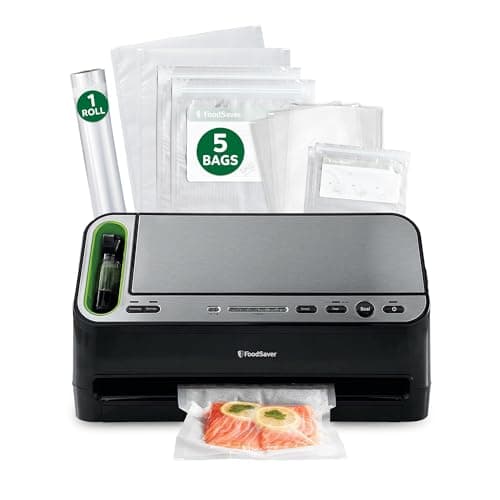
Best for 1-2 deer, hands-off
FoodSaver V4400 2-in-1 Vacuum Sealer
The subject of this review: auto bag sensing, moist and dry settings with drip-tray sensors, retractable handheld sealer, 12-minute marinate cycle, five-year limited warranty.
$234.99Amazon#ad · Price as of November 4, 2026 · Affiliate disclosure for the link to FoodSaver V4400 2-in-1 Vacuum Sealer
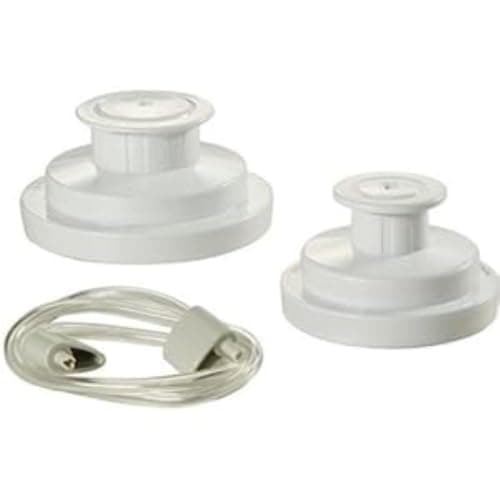
Best jar sealer overall
FoodSaver Jar Sealer with Accessory Hose (Regular and Wide Mouth)
Fits both jar mouths with the accessory hose in the box. Needs a sealer with an accessory port, which the V4400's handheld provides.
$19.99Amazon#ad · Price as of November 4, 2026 · Affiliate disclosure for the link to FoodSaver Jar Sealer with Accessory Hose (Regular and Wide Mouth)
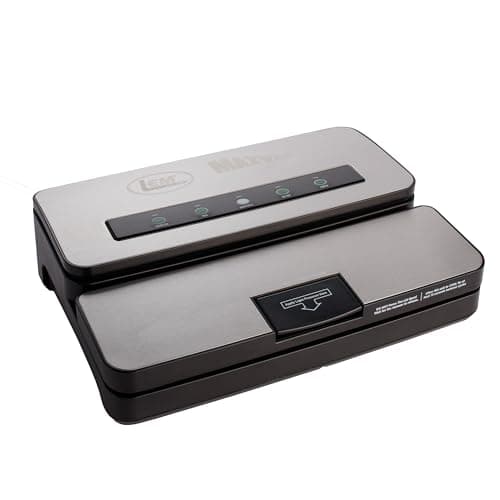
Best for 3-5 deer
LEM MaxVac 250 Vacuum Sealer
The processing-day alternative: 250+ rated consecutive seals, a 13.39 in. bar and a pulse function, with a one-year warranty instead of five.
$219.99Amazon#ad · Price as of November 4, 2026 · Affiliate disclosure for the link to LEM MaxVac 250 Vacuum Sealer
Questions
Frequently asked
Is the FoodSaver V4400 good for deer meat?
Does the FoodSaver V4400 overheat?
What does 2-in-1 mean on the FoodSaver V4400?
Does the V4400 switch to moist mode by itself?
Can I use generic bags in a FoodSaver V4400?
FoodSaver V4400 or LEM MaxVac 250?
Keep going down the chain
Related
- Avid Armor vs FoodSaverThe V4400 against a chamber machine and the Nesco VS-12.
- Best vacuum sealers for wild gameWhere the V4400 lands once duty cycle is the ranking.
- LEM MaxVac 500 reviewThe machine that publishes a 500-seal continuous rating.
- How to vacuum seal wet meatWhat the drip-tray sensors are warning you about.
- Sealers with a mason jar attachmentWhat the retractable handheld sealer can drive.
Receipts
Sources
- FoodSaver V4400 Series owner's manual (Sunbeam / Newell Brands PDF) — controls, auto bag sensing, food settings, 20-second rest rule, heavy-use shutdown, five-year warranty
- FoodSaver V4400 series User Manual & Recipe Book (earlier edition, PDF hosted on Amazon)
- LEM Products — MaxVac 250 Vacuum Sealer product page (250+ consecutive seals, 13.39 in. bar, one-year warranty)
- LEM Products — MaxVac 500 Vacuum Sealer product page (500 consecutive seals, 14 in. bar, two-year warranty)
- Weston Pro-2100 / Pro-2300 owner's manual (models 65-0101 / 65-0201), PDF hosted on Amazon — 15 in. seal bar, 20-second rest between cycles
- USDA Food Safety and Inspection Service — Freezing and Food Safety
- Ohio Department of Natural Resources, Division of Wildlife — Venison Meat Yield (115 deer, 2017 gun season) [PDF]
- Amazon listing, manufacturer-supplied copy — FoodSaver V4400 2-in-1 vacuum sealer
- Amazon listing, manufacturer-supplied copy — FoodSaver jar sealer with accessory hose
- Amazon listing, manufacturer-supplied copy — FoodSaver T03-0023-01P wide-mouth jar sealer
- Amazon listing, manufacturer-supplied copy — LEM MaxVac 250 Vacuum Sealer (1393)
Specs come from the maker's own pages, manuals and maker-supplied listing copy (labeled as such); food-safety figures from USDA and university extension publications; yield from the Ohio Division of Wildlife; prices live from Amazon. Where a figure isn't published, we say so. Read the full method.