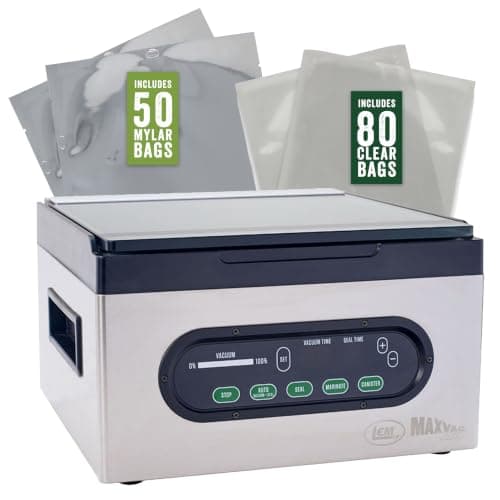
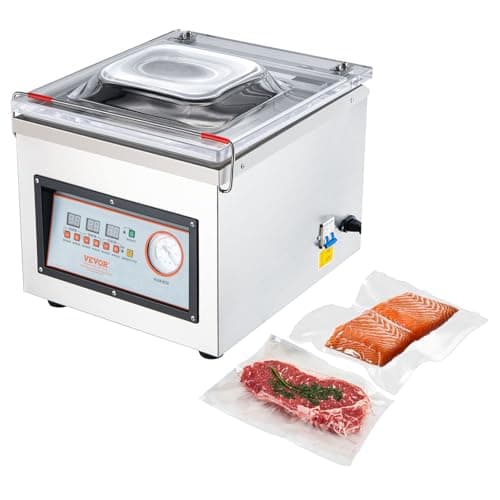
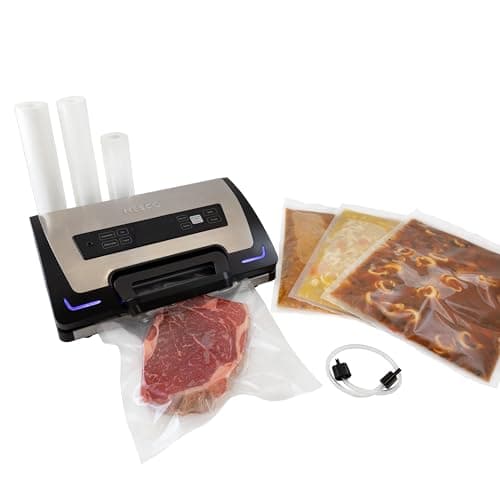
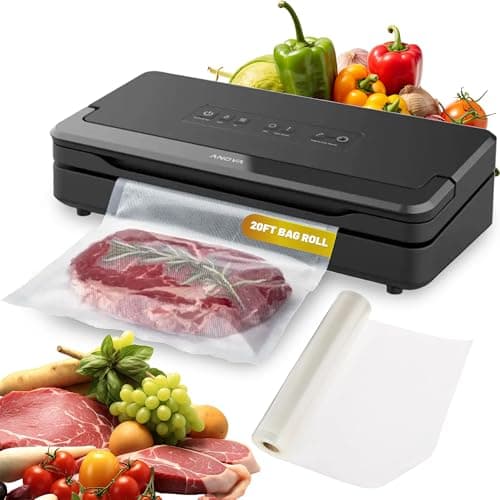
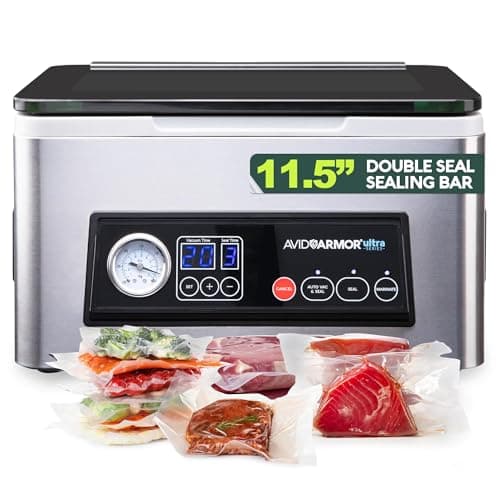
For fish, buy a chamber machine — the Avid Armor USV20 if you want the best-documented one at a home price. Fish is wet, soft and oily, and those are the exact three properties an external vacuum sealer handles worst. If a chamber is out of budget, the Nesco VS-22LB with its LiquidLock mode and drip tray is the external we would pick, and the tray-freeze method below will do more for your results than any upgrade.
Why fish is the hard case
- It starts wet and gets wetter. A fillet releases liquid under suction, so the machine is fighting a moving target.
- It is soft. Full vacuum crushes a delicate fillet against the bag. The pack looks compressed and the texture suffers.
- It is oily. Oil at the weld line is what turns a good-looking seal into a failed one three months later.
- The bones are sharp. A pin bone or a fin ray can puncture a bag from the inside during freezing.
None of that is a reason to skip vacuum sealing fish — it is the food that benefits most, because oxygen is what turns fish oils rancid. It is a reason to pick the machine on wet performance rather than on suction claims.
Why this list is chamber-first
An external sealer removes air through the bag mouth, so liquid travels toward the seal bar. A chamber machine puts the whole bag inside a box and evacuates the box, so the pressure inside and outside the bag stays equal and nothing moves. For a wet fillet that is not a marginal improvement; it is a different physical situation.
Chamber machines also let you choose a gentler vacuum, which is the answer to the crushing problem. The trade-offs are real and we set them out in chamber vs external: more money, more counter space, and a chamber that caps how long a bag you can seal — which matters if you are packing whole sides rather than portions.
The five, side by side
| Spec | Avid USV20 | LEM MaxVac Pro | VEVOR DZ-260C | Nesco VS-22LB | Anova Pro |
|---|
| Type | Chamber | Chamber | Chamber | External | External |
| Wet fillet handling | Best in class | Best in class | Best in class | LiquidLock mode | Wet mode |
| Adjustable vacuum depth | Pump programme | Pump programme | Pump programme | Modes only | Modes only |
| Bag length limit | Chamber size | Chamber size | Chamber size | Bar width | Bar width |
| Bag cost per package | Lowest — pouches 300/box | Lowest | Lowest | Higher | Higher |
| Counter footprint | Large | Large | Large | Moderate | Small |
The tray-freeze method
This is the technique that makes an external sealer work on fish, and it costs nothing:
- Pat the fillets dry and lay them flat on a tray lined with parchment, not touching.
- Freeze until firm — an hour or two, depending on thickness.
- Bag the frozen fillets and seal. There is no free liquid left to pull, so a normal dry-mode seal holds.
- Leave extra film between the fish and the weld, and wipe the bag mouth before sealing.
It also solves the crushing problem, because a firm fillet does not deform under vacuum. Our wet-meat guide has the same method applied to venison, plus the paper-towel trick for when you have not planned ahead.
For pin bones and fin rays, either remove them or double-bag. A puncture you cannot see is the most common reason a pack that looked perfect is frost-burned by spring.
How long sealed fish actually keeps
We keep storage timelines on one page so they cannot drift: how long vacuum-sealed meat lasts has the figures with their USDA and FoodSafety.gov citations. The short version for fish is that it is one of the shorter-lived items in a freezer even sealed, because the oils that make it worth eating are also what go off.
Storage temperature does as much work as packaging. USDA's target is 0°F or below, and a freezer that drifts above that undoes good packing — which is worth checking if yours lives in a garage.
How we picked
Units we claim to have bench-tested: none
Plenty of sites say they ground two hundred pounds through every grinder. We didn't, and we say so. What we do instead: read the maker's spec sheet, manual and warranty terms, record the figures that decide whether a machine keeps up with your season (size number, motor rating, rated pounds per minute, capacity, duty cycle, gearing), check parts availability, and score each pick on a published rubric. Then we show the season math — pounds per deer from the Ohio Division of Wildlife's yield study — so you can redo it with your own numbers.
Scores are editorial judgments from that documented research, not lab results. Nobody pays for placement. The rubric and weights are on the How We Pick page.