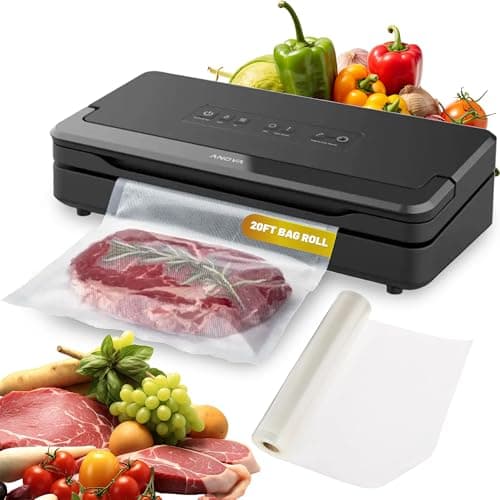
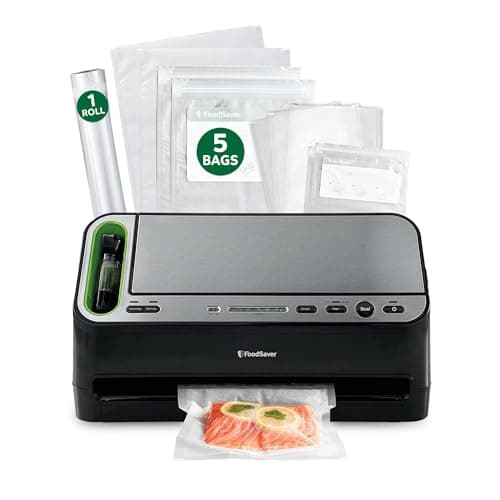
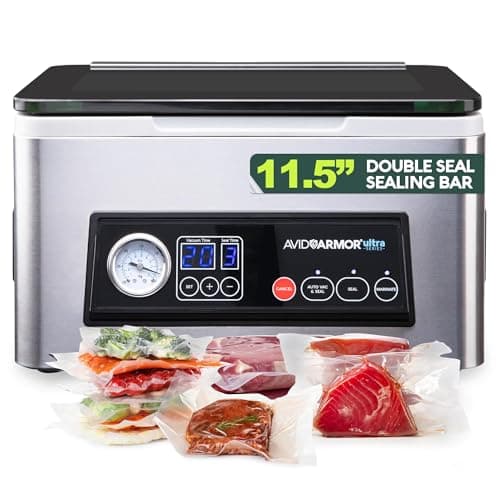
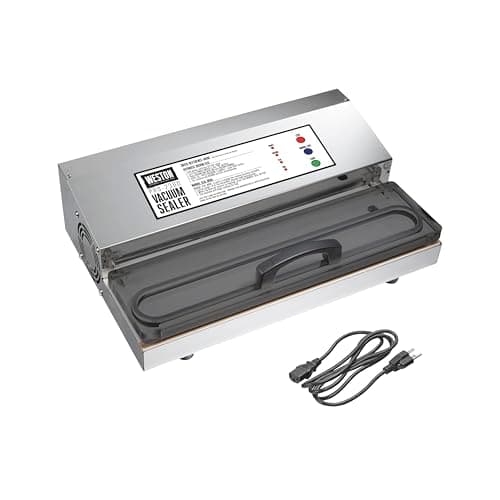
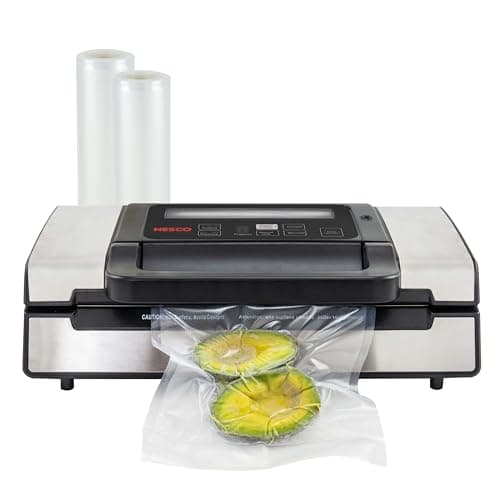
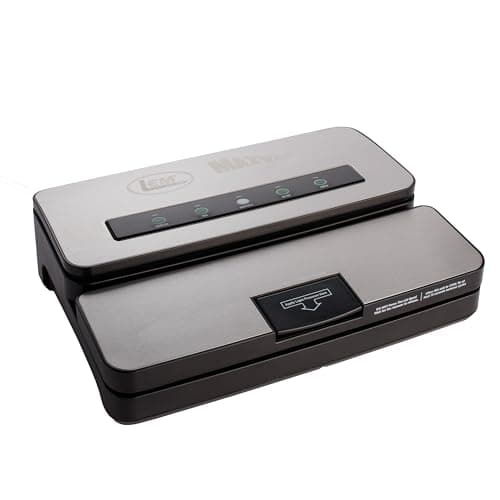
For general food storage, buy the LEM MaxVac 250. It sits at the point where a sealer stops being a gadget and starts being equipment: a proper seal bar, a two-year warranty, and a price that does not assume you are packing out an elk. If your kitchen is mostly leftovers, soups and marinades rather than bulk meat, the Anova Precision Pro is the better buy for its dedicated wet mode and accessory port, and the FoodSaver V4400 is the one to get if you want the machine to make every decision for you.
We do not rank on suction. Every maker quotes a vacuum figure, the figures are measured differently, and none of them is audited. What a manual says about moisture and rest intervals is checkable, so that is what we use.
The three specs that decide it
- What it does with wet food. An external sealer pulls air out through the open mouth of the bag, and liquid comes with it. A machine with a moist or liquid mode, a drip tray, or a chamber is solving a real problem; one without is telling you to freeze things first.
- What the manual allows in one session. Rest intervals are published and they bite: both Nescos state one cycle every two minutes, the Weston and FoodSaver ask for at least 20 seconds, and the LEM MaxVac 500 is the only external sealer we list that publishes a consecutive-seal count.
- Bag cost. The machine is bought once; the bags are bought forever. Chamber pouches come 300 to a box and pre-cut external bags 100, which changes the per-package number more than the machine price does.
Wet food is where sealers actually fail
Nearly every complaint about a vacuum sealer is a wet-food complaint: the bag would not seal, the seal failed in the freezer, soup went up the machine. The makers know it, which is why the mode names exist. Here is who publishes what:
| Sealer | What it publishes for wet food |
|---|
| Anova Precision Pro | A wet-function mode with low-pressure suction and a double seal, for “even the juiciest of foods” |
| FoodSaver V4400 | Automatic moisture detection that switches mode for you, plus a patented removable dishwasher-safe drip tray |
| Nesco VS-22LB | A dedicated Liquid (LiquidLock) mode and a removable drip tray |
| Nesco VS-12 | Dry, Moist and Double seal modes |
| Chamber machines (Avid Armor, LEM Pro, VEVOR) | No mode needed: the bag is inside the chamber, so liquid is never pulled toward the bar |
Two honest caveats. A moist mode trades vacuum depth for a reliable weld, so a wet pack is a slightly softer pack. And no external sealer, in any mode, likes free liquid: the standard fix is to freeze the portion solid on a tray first and then seal it. Our wet-meat guide walks through it.
The seven, side by side
| Spec | LEM 250 | Anova Pro | FoodSaver V4400 | Nesco VS-22LB | Avid USV20 |
|---|
| Type | External | External | External | External | Chamber |
| Wet handling | External limits | Wet mode + double seal | Automatic moisture detection | LiquidLock mode | Best in class |
| Rest between cycles | See LEM's page | Not published | At least 20 s | One cycle / 2 min | Set by the pump programme |
| Accessory port for jars | Not published | Yes, hose included | Yes, jar sealers optional | Canister mode | n/a |
| Roll storage and cutter | Yes | Yes | Yes | Per Nesco | n/a |
| Warranty | 2 years | 5 years | 5 years limited | Per Nesco | Per Avid Armor |
External or chamber
An external sealer sucks air out through the bag mouth. A chamber machine puts the whole bag in a box, evacuates the box, and welds the bag at equal pressure. For food generally — not just meat — the split is simple: externals are cheaper, lighter and take any bag length; chambers handle liquid without ceremony and use cheaper pouches. Our chamber vs external comparison is the long version, and best chamber sealers ranks that half of the field.
The running cost nobody quotes
A sealer is sold on its price and owned on its bags. We keep a live cost-per-package table on bag cost per season rather than typing numbers into prose, because they move. The structural point that does not move: chamber pouches ship 300 to a box, pre-cut external bags 100, and a roll you cut yourself sits between the two but wastes film on odd shapes.
If you are comparing against not buying a machine at all, that is a fair question and we answered it in vacuum sealer vs Ziploc bags — where the honest conclusion is that you buy a sealer for what it does to the food, not to save money on bags.
What to buy, by kitchen
| Your kitchen | Buy | Why |
|---|
| Leftovers, batch cooking, marinades | Anova Precision Pro | Wet mode and an accessory port; five-year warranty |
| Family groceries, want it automatic | FoodSaver V4400 | Bag and moisture detection do the thinking |
| Bulk meat buys, a freezer to fill | LEM MaxVac 250 | Real bar, two-year warranty, sensible price |
| Soups and sauces in quantity | Avid Armor USV20 | Chamber: liquid is not pulled at the seal |
| A whole deer or half a beef | See sealers for heavy use | Duty cycle becomes the deciding spec |
How we ranked these
On the sealer rubric used across this site: duty cycle from the manual (30), wet-meat handling (20), bar width and maximum bag (15), bag cost per season (20), build (15). We have not bench-tested any of them. Duty-cycle figures come only from a manual or maker page we fetched, cited on each card, and where a maker publishes no rest interval the metric is scored neutral rather than guessed.
We deliberately do not rank on the quoted vacuum strength. Makers measure it differently, nobody audits it, and it is the number least likely to predict whether your bag of stew survives a year in the freezer.
How we picked
Units we claim to have bench-tested: none
Plenty of sites say they ground two hundred pounds through every grinder. We didn't, and we say so. What we do instead: read the maker's spec sheet, manual and warranty terms, record the figures that decide whether a machine keeps up with your season (size number, motor rating, rated pounds per minute, capacity, duty cycle, gearing), check parts availability, and score each pick on a published rubric. Then we show the season math — pounds per deer from the Ohio Division of Wildlife's yield study — so you can redo it with your own numbers.
Scores are editorial judgments from that documented research, not lab results. Nobody pays for placement. The rubric and weights are on the How We Pick page.