Best Chamber Vacuum Sealers for Home Game Processing
Three chamber machines that seal bloody trim and liquids on smooth pouches, compared on pump type, chamber size and what each manual says about running them hard.
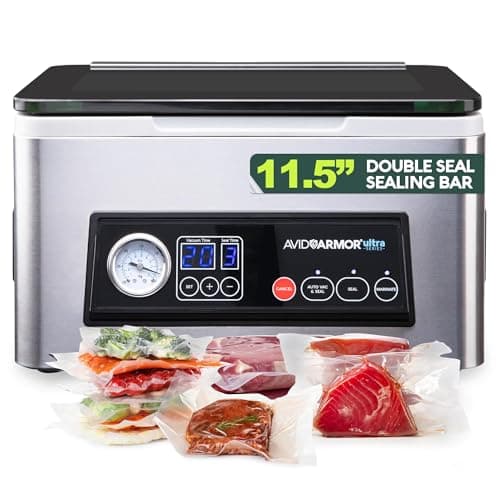
A compact chamber sealer with a dry pump and an 11.5-inch bar that seals wet game and liquids without pulling juice toward the pump, on cheaper smooth pouches.
#ad · Prices come live from Amazon, last checked Sep 19, 2026; where we have no verified live price we show none. Scores are ours, compiled from published specs, manuals and warranty terms, not bench tests. Tap a row for the full write-up.
The Avid Armor USV20 is the chamber sealer we'd put on a hunter's bench: a dry pump with no oil to change, an 11.5-inch bar, timed vacuum and seal controls, and a manual that says it can run continuously (with a one-minute cool-down between cycles advised for best results). Pick the LEM MaxVac Pro if you want a stainless chamber that's longer and deeper, and a two-year warranty, knowing LEM doesn't publish a duty figure. Pick the VEVOR DZ-260C only if you want the longest seal bar of the three and don't mind servicing an oil pump.
What all three share is the reason hunters move to a chamber in the first place: bloody trim and liquids stop being a problem. We haven't tested these machines; the comparison below is built from the three makers' manuals and spec pages, linked on each product card.
Why a chamber sealer suits game
A suction sealer pulls air out through the mouth of the bag, so juice travels toward the seal bar and the pump. A chamber sealer evacuates the whole chamber with the bag inside it. Avid Armor's product page puts it simply: the liquid is never pulled toward a suction port. That's what lets you seal soups, brines and wet trim without pre-freezing, and it's why every chamber machine here scores 9.5 or 10 on wet-meat handling.
The second reason is bag cost. Because a chamber doesn't pull air through the bag, its pouches need no embossed channels. Avid says that's why chamber pouches run cheaper per seal than suction bags, and why chamber sealing pays off at volume. We don't take that on faith: our bag cost per season page runs the per-deer numbers at live prices. It only works one way, though. Avid's pouch page says its smooth pouches will not work in a FoodSaver or any other external suction sealer, while LEM and Wevac both say their embossed bags work in chamber machines.
Dry pump or oil pump
This is the biggest practical split in chamber sealers, and it's mostly about maintenance. Two of our three picks run dry:
Avid Armor USV20: a dry double-piston pump. Avid's help center says it needs no vacuum pump oil for maintenance.
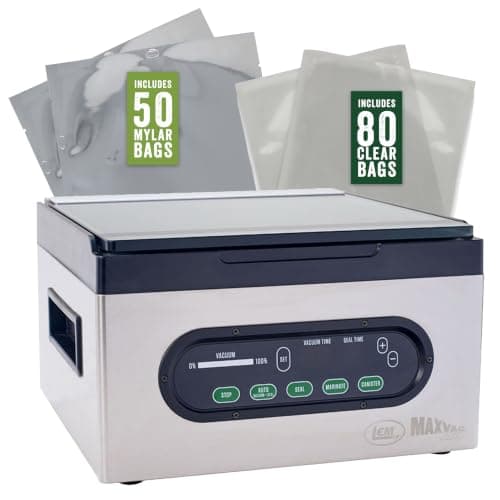
LEM MaxVac Pro: LEM lists a maintenance-free pump with no oil needed.
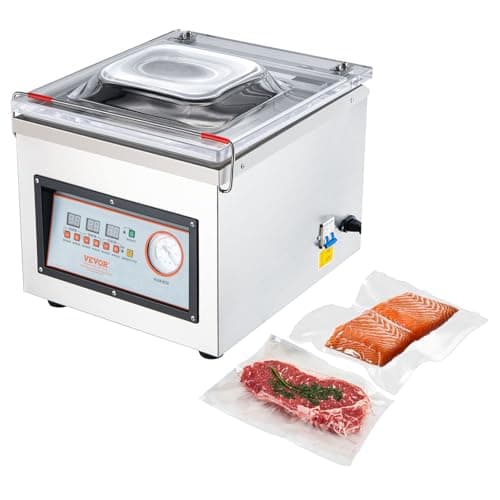
VEVOR DZ-260C: an oil pump. The manual has you fill it to between half and three-quarters of the sight window with 46 or 68 vacuum pump oil before first use, forbids starting the pump without oil, and suggests changing the oil after 800 hours of continuous work.
Avid Armor, which sells both kinds, spells out what an oil machine asks of you in its oil chamber sealer tips: check the oil level regularly, run the pump conditioning program to clear moisture and condensation from the oil and tubing, and change the oil roughly every six months or when it turns cloudy. That's not hard, but it's a job you'll forget between seasons. We found no published data comparing dry and oil pump life in home use, so pump type doesn't earn or lose points on its own; it shows up in the build score as a maintenance cost.
Chamber and pouch size: the real limit
On a chamber sealer the bag has to fit inside the machine, so chamber dimensions decide what you can seal whole. Depth matters as much as width: a thick roast has to fit under the closed lid.
Machine
Seal bar
Chamber
Largest bag
Avid Armor USV20
11.5 in.
12.25 x 8.5 x 3 in.
Pouches up to 11 x 10 in.
LEM MaxVac Pro
11.42 in., dual 2.5 mm seals
11.24 x 11.81 x 3.93 in. deep
Bags up to 11 in. wide
VEVOR DZ-260C
320 mm (12.6 in.)
355 x 340 x 70 mm (about 14.0 x 13.4 x 2.8 in.)
Not stated as a pouch size
The trade is clear on paper. The VEVOR has the most floor area and the longest bar but the shallowest chamber, at about 2.8 inches. The LEM is the deepest at 3.93 inches and longer front to back than the Avid. The USV20 is the most compact and caps pouches at 11 x 10 inches, so long cuts like a whole backstrap get cut to fit. For one-pound packages of burger and steaks, all three are plenty.
Cycle time and cool-down
Chamber sealers are timed machines: you set how long the pump runs and how long the bar heats. The USV20 and the MaxVac Pro both adjust vacuum from 15 to 60 seconds and seal from 3 to 9. The USV20's factory defaults are 20 seconds of vacuum and a 4-second seal, and its manual says the machine can be used continuously but advises a one-minute cool-down between cycles for best results. At those defaults, a deer's 52 one-pound pouches take about 72 minutes if you honor every pause.
The VEVOR manual suggests 30-40 seconds of vacuum for general items, a 2-2.2 second seal and 3-5 seconds of seal cooling, but publishes no rest between cycles. LEM publishes no cool-down figure for the MaxVac Pro either. Both score neutral on duty cycle for that reason, not because we assume they're weak.
In detail
The picks, in full
1
Best for wet meat
Avid Armor USV20 Chamber Vacuum Sealer
7.6 /10
A compact chamber sealer with a dry pump and an 11.5-inch bar that seals wet game and liquids without pulling juice toward the pump, on cheaper smooth pouches.
#ad · Price as of Sep 19, 2026 · Affiliate disclosure for the link to VEVOR DZ-260C Chamber Vacuum Sealer
What to look for in a home chamber sealer
Pump type. Dry means no oil; oil means a maintenance schedule. Decide which one you'll actually keep up with.
Chamber depth and pouch size. Measure the thickest thing you package. The USV20's chamber is 3 inches high, the MaxVac Pro's 3.93, the VEVOR's about 2.8.
Timed controls. Adjustable vacuum and seal times let you pull harder on dense wet trim and back off on soft cuts. All three have them; the USV20 and MaxVac Pro publish their ranges.
A vacuum gauge. The USV20 and the VEVOR both show chamber pressure; it tells you whether a weak seal is a vacuum problem or a heat problem.
Replaceable wear parts. Seal bars, seal tape and gaskets wear. Avid's listing copy says the USV20 has a user-replaceable seal bar, though its warranty excludes the seal bar and gaskets. LEM's store listing for the MaxVac Pro includes an extra chamber gasket in the box.
Warranty. LEM gives the MaxVac Pro two years; Avid gives the USV20 one year; the VEVOR manual points you to VEVOR's support site rather than printing terms.
Counter space, weight and the lid
A chamber sealer is a box with a hinged lid, and on processing day it sits on the same counter as the cutting boards and the meat lugs. Measure before you buy. Avid lists the USV20 at 14 x 12 x 8.25 inches and 17.55 lb, and says it needs 17 inches of clearance to open the lid; Avid's point is that it opens in place under standard upper cabinets, which sit 18 inches above the counter, but it also tells you to measure your own gap since cabinets vary. LEM lists the MaxVac Pro at 13.9 x 14.29 x 8.58 inches and 22.5 lb. VEVOR's manual gives the chamber size but no machine weight, so check the listing before you plan to lift it in and out of a pantry.
Two of the three also do a second job. The USV20 has an accessory port and ships with a hose for jars and canisters, and LEM includes a vacuum hose for external sealing with the MaxVac Pro. Both have a marinate cycle that pulls a vacuum without sealing; the USV20 manual runs it 60 seconds per cycle and suggests three cycles, and LEM's listing describes three cycles without sealing. None of that changes how well a machine seals a deer, but it's the difference between a sealer that lives out all year and one that goes back in the closet in January.
Seal it cold, not warm
The one habit chamber owners have to learn is temperature. The USV20 manual's troubleshooting page says high temperatures create vapors that make the pouch inflate or refuse to pull all the air, and Avid's oil sealer tips say liquids should only be sealed at room temperature or cooler. For raw meat that means sealing it cold from the fridge or cooler, which is where it should be anyway.
Which season a chamber sealer fits
A chamber machine earns its space in a moderate or heavy season: three to five deer is 157-261 one-pound packages at the Ohio DNR average, and six deer is 313. That's enough bags for the per-pouch savings to add up, and enough wet trim for the liquid handling to matter. Our 6+ deer setup builds around one. For one or two deer, a good external sealer and a pre-freeze routine will do the job for less money and counter space; the head-to-head is in chamber vs external vacuum sealer, and if wet meat is the only reason you're looking, read how to vacuum seal wet meat first.
How we picked
Units we claim to have bench-tested: none
Plenty of sites say they ground two hundred pounds through every grinder. We didn't, and we say so. What we do instead: read the maker's spec sheet, manual and warranty terms, record the figures that decide whether a machine keeps up with your season (size number, motor rating, rated pounds per minute, capacity, duty cycle, gearing), check parts availability, and score each pick on a published rubric. Then we show the season math — pounds per deer from the Ohio Division of Wildlife's yield study — so you can redo it with your own numbers.
Is a chamber vacuum sealer worth it for deer processing?+
For three or more deer a season, or any season with a lot of wet trim, usually yes. It seals liquids without pulling them toward the pump and uses smooth pouches that Avid Armor says cost less per seal. For one or two deer, an external sealer with a pre-freeze routine covers the job for less.
Can you use regular vacuum sealer bags in a chamber sealer?+
Embossed bags generally can go in a chamber: LEM says its MaxVac bags work in chamber sealers and Wevac says the same of its embossed rolls. The reverse doesn't work. Avid Armor says its smooth chamber pouches won't seal in a FoodSaver or any other suction sealer. Avid's manual sets its default seal time for its own pouches, so expect to adjust seal time for other bags.
Dry pump or oil pump: which is better for a home chamber sealer?+
Dry pumps (Avid Armor USV20, LEM MaxVac Pro) need no oil. Oil pumps (the VEVOR DZ-260C here) need filling, checking and changing; Avid's own advice for its oil machines is roughly every six months or when the oil turns cloudy. We found no published data showing either lasts longer in home use.
How long do you wait between cycles on a chamber sealer?+
Only Avid Armor publishes a figure: the USV20 manual says the machine can be used continuously but advises a one-minute cool-down between cycles for best results. LEM and VEVOR don't publish a rest interval for the MaxVac Pro or DZ-260C.
We haven't bench-tested this gear and we don't pretend to. Specs come from the maker's own pages, manuals and maker-supplied listing copy (labeled as such); food-safety figures from USDA and university extension publications; yield from the Ohio Division of Wildlife; prices live from Amazon. Where a figure isn't published, we say so. Read the full method.