Vacuum Sealers for Dry Aging: Bag Width Is the Spec That Decides It
A dry-age bag is a membrane, not a barrier - it has to be pulled hard against the meat and then left alone for weeks. That makes the widest bar and the strongest pull the specs worth paying for, and it rules out some excellent sealers.
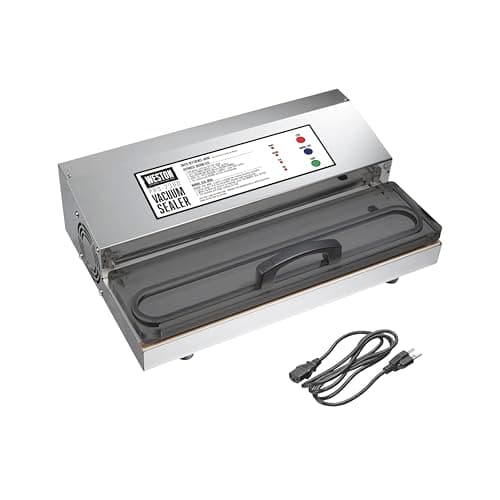
Takes bags up to 15 inches across - the widest here - with a double-piston pump rated to 28 in. Hg and a manual-seal mode. A whole strip loin fits without being cut down.
A chamber machine evacuates the whole chamber, so it handles a wet, bloody subprimal without pulling juice at the seal. The limit is the 11 x 10 in. pouch ceiling.
A moist preset and a double seal, built for over 100 continuous seals - but on a narrow bar. Fine for aging single steaks or short sections, not a whole subprimal.
#ad · Prices come live from Amazon, last checked November 4, 2026; where we have no verified live price we show none. Scores are ours, compiled from published specs, manuals and warranty terms, not bench tests. Tap a row for the full write-up.
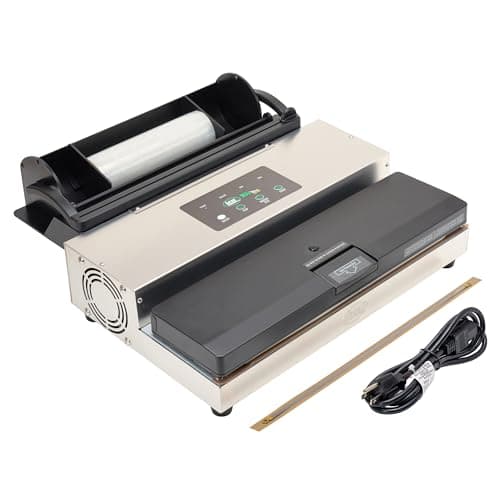
For dry aging, buy the Weston Pro-2300: it takes bags up to 15 inches across, the widest of any sealer we cover, with a double-piston pump rated to 28 in. Hg and a manual-seal mode you control. Dry-aging bags are sold to fit whole subprimals, and the single thing that stops most home attempts is a seal bar too narrow for the bag. Our full Weston Pro-2300 review goes through what that bar does and does not buy you. The LEM MaxVac 500 is the runner-up at 14 inches, and it is the only machine here whose maker publishes a continuous rating.
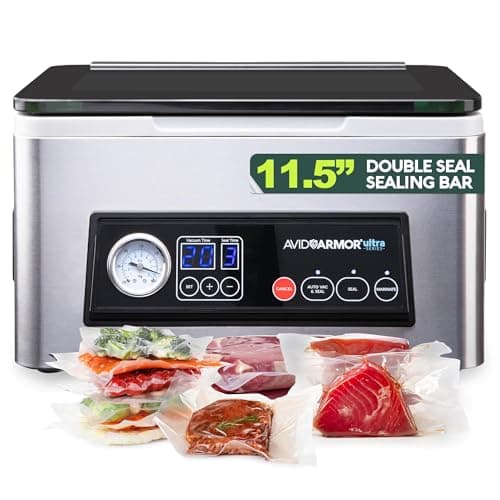
If your cuts are small enough to fit, a chamber machine is the gentler tool: the Avid Armor USV20 evacuates the whole chamber rather than sucking at the bag mouth, which is exactly what you want with a wet, bloody piece of meat. Its ceiling is an 11 x 10 inch pouch.
How dry aging in a bag works
Dry aging traditionally means hanging unpackaged meat in a controlled cooler and accepting the rind and the weight loss. The home version uses a specialist bag. Texas A&M's Jeff Savell and Kerri Gehring describe it directly: there are bags developed for dry aging that “provide some protection during storage, but still allow moisture and oxygen exchange to achieve the desired effect,” and “beef products are placed in these bags followed by vacuum packaging to draw the package down around the meat.”
That last clause is the whole brief for your sealer. The bag is a membrane that must be in intimate contact with the surface of the meat; the vacuum sealer's job is to pull it down tight and seal it closed. It is not making an airtight barrier the way it does for freezer storage — moisture and oxygen are meant to pass through the film.
Savell and Gehring also note the honest caveat about the whole practice: dry aging “is still considered more of an art form where parameters have been developed mostly through trial and error rather than scientific or technical methods.” Treat anyone quoting precise universal numbers with suspicion, including us.
What the research actually found
There is one piece of controlled work worth knowing, from the Kansas Agricultural Experiment Station. Paired beef strip loins were cut into four sections and dry aged either traditionally (unpackaged) or in a moisture-permeable vacuum bag, for 14 or 21 days. The results, in the authors' words: “Cooking loss, tenderness, juiciness, and all flavor attributes were similar for the aging methods,” while the bagged beef showed “lower yeast counts after either aging time, compared with beef dry aged unpackaged,” less weight loss during aging and less trim loss after 21 days.
Their conclusion is that the method “can increase yields, decrease microbial contamination, and provide processors greater flexibility of facility use.” For a home cook, the useful translation is: a bag gets you comparable eating quality with less waste and less surface microbial load than hanging a naked subprimal in a domestic fridge — which is the only version of traditional dry aging available to most households anyway.
The specs that matter for this job
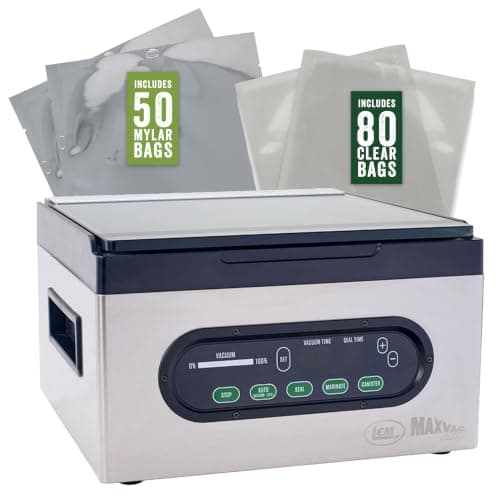
Bag width, first and by a distance. A whole strip loin or ribeye subprimal is a long, wide piece of meat, and dry-aging bags are sized for it. A 15-inch bar takes a bag a 13-inch bar will not. Weston publishes 15 inches; LEM's MaxVac 500 publishes 14; the MaxVac 250 stops at 11.
How hard it pulls. Weston publishes a double-piston pump rated up to 28 in. Hg against LEM's 21 in. Hg on both MaxVac externals. The harder pull does more to seat a membrane bag against the meat surface.
Manual seal control. Being able to stop the vacuum and seal on your own command matters when the bag is drawing down over an irregular shape; Weston's manual points you to manual seal mode for liquids, and the same control is useful here.
Duty cycle, much less than usual. Dry aging is one or two seals, not forty. The rating that dominates our other sealer pages barely matters here — which is why the MaxVac 500's published 500 consecutive seals is a nice-to-have rather than the deciding factor.
The five, side by side
Spec
Weston Pro-2300
LEM MaxVac 500
Avid Armor USV20
LEM MaxVac Pro
Anova Pro
Type
External
External
Chamber
Chamber
External
Max bag width
15 in.
14 in.
11 x 10 in. pouch
11 in.
Narrow bar
Pull
Up to 28 in. Hg
21 in. Hg
Dry double-piston pump
-0.95 bar, 180 W
Not published in in. Hg
Seal
5 mm bar
4.8 mm seal
11.5 in. bar, two wires
11.42 in., dual 2.5 mm
Double seal
Wet-meat handling
Manual seal mode
No moist mode listed
Chamber — best
Chamber — best
Moist preset
Published continuous rating
20 s rest between cycles
500 seals / 5 hours
1-minute cool-down advised
None published
Over 100 continuous seals
Warranty
See maker
2 years
1 year (excludes bar and gaskets)
2 years
See maker
Chamber or external, for this one job
Our general position on this site is that a chamber sealer is the better machine for wet game — it evacuates the chamber rather than the bag, so blood and juice do not get dragged toward the seal. That is in our chamber versus external comparison and we stand by it.
Dry aging is the one application where it flips, and the reason is purely dimensional. A chamber machine can only seal what fits inside the chamber: the USV20's pouch ceiling is 11 x 10 inches and LEM's MaxVac Pro chamber is 11.24 by 11.81 by 3.93 inches. A dry-aging bag with a whole subprimal in it does not fit either. So the question is simply whether your cut fits in a chamber:
Two practical consequences. First, buy the bags from a maker who states which bar widths and machine types their product works with, and check that against the figure on your sealer's spec sheet before you buy a subprimal. Second, if a bag maker says a chamber machine is required or forbidden for their film, believe them over any general advice, including ours.
Temperature, time and food safety
A dry-aging bag is not a preservation method, and the clock on the meat keeps running. Texas A&M notes that small refrigerators are now sold specifically for consumer dry aging, “with controls for temperature, relative humidity, and ultra-violet light as a bacterial control” — which is a fair signal of how much the environment matters relative to the bag.
If you are doing this in a household fridge, two things are worth holding onto. University of Maine Cooperative Extension's guidance on vacuum sealing at home is clear that vacuum packaging slows spoilage but does not substitute for refrigeration or freezing, and FoodSafety.gov's cold food storage chart is the reference for how long raw beef keeps refrigerated. A bag that lets oxygen and moisture through is, by design, not giving you the extended refrigerated life a sealed barrier bag would.
For everything after the aging — portioning, sealing for the freezer and how long it keeps — our how long vacuum-sealed meat lasts page has the cited storage tables, and how to vacuum seal wet meat covers the technique for the bloody cuts a dry-aged subprimal produces when you trim the rind off.
In detail
The picks, in full
1
Best for dry aging
Weston Pro-2300 Vacuum Sealer
7.6 /10
Takes bags up to 15 inches across - the widest here - with a double-piston pump rated to 28 in. Hg and a manual-seal mode. A whole strip loin fits without being cut down.
+15-inch bag capacity is the widest of any external sealer we list
+5 mm seal bar and a double-piston pump rated to 28 in. Hg
+Manual mode lets you seal early; the manual says to use Manual Seal for liquids
What it doesn't
−No roll storage or cutter listed, so you cut bags off a separate roll
−Weston hasn't posted a manual for this 65-0220-W version that we could fetch; the rest rule comes from the 65-0201 manual
Skip this if…
…your packages are one-pound bricks of burger — you're paying for a 15-inch bar you'll never fill, and the MaxVac 500 publishes a longer continuous rating
#ad · Price as of November 4, 2026 · Affiliate disclosure for the link to LEM MaxVac 500 Vacuum Sealer
3
Best chamber option
Avid Armor USV20 Chamber Vacuum Sealer
7.6 /10
A chamber machine evacuates the whole chamber, so it handles a wet, bloody subprimal without pulling juice at the seal. The limit is the 11 x 10 in. pouch ceiling.
#ad · Price as of November 4, 2026 · Affiliate disclosure for the link to LEM MaxVac Pro Chamber Vacuum Sealer
5
Only for small cuts
Anova Precision Vacuum Sealer Pro
6.5 /10
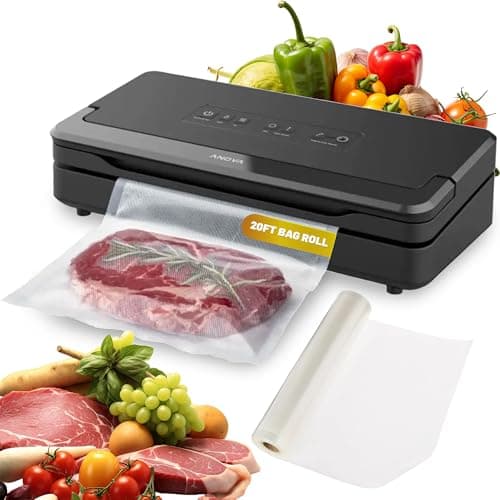
A moist preset and a double seal, built for over 100 continuous seals - but on a narrow bar. Fine for aging single steaks or short sections, not a whole subprimal.
#ad · Price as of November 4, 2026 · Affiliate disclosure for the link to Anova Precision Vacuum Sealer Pro
How we picked
Every pick, scored on the same published rubric
Each machine here is read end to end: the maker's spec sheet, the owner's manual and the warranty terms. We pull out the figures that decide whether it keeps up with your season — size number, motor rating, rated pounds per minute, capacity, duty cycle, gearing — confirm parts are still available, and score every pick on the same weighted rubric, so a score on one page means the same thing on the next. Then we show the season math, pounds per deer from the Ohio Division of Wildlife's yield study, so you can run it against your own freezer.
The Weston Pro-2300, because it takes bags up to 15 inches across — the widest we cover — with a double-piston pump rated to 28 in. Hg and a manual-seal mode. Dry-aging bags are sized for whole subprimals, so bag width is the spec that decides whether the job is possible at all.
Do you need a vacuum sealer to dry age beef?+
If you are using a dry-aging bag, yes. Texas A&M describes the process as placing the beef in the bag “followed by vacuum packaging to draw the package down around the meat.” The sealer's job is to pull the membrane into contact with the surface, not to make an airtight barrier.
Is a chamber vacuum sealer better for dry aging?+
Only if your cut fits. A chamber machine handles wet meat better, but the Avid Armor USV20 tops out at an 11 x 10 inch pouch and LEM's MaxVac Pro chamber is about 11 by 12 by 4 inches. A whole subprimal in a dry-aging bag will not fit either, which is why a wide-bar external sealer wins this particular job.
Does dry aging in a bag work as well as traditional dry aging?+
A Kansas State study on paired strip loins aged 14 or 21 days found cooking loss, tenderness, juiciness and all flavour attributes were similar between the two methods, with the bagged beef showing lower yeast counts, less weight loss during aging and less trim loss at 21 days.
Can you dry age in a normal vacuum sealer bag?+
No. A standard vacuum bag is a barrier film; a dry-aging bag is deliberately permeable to moisture and oxygen, which is what produces the effect. Buy bags sold for dry aging and check the maker's stated machine compatibility against your sealer's bar width.
What size bag do you need to dry age a whole subprimal?+
Wider than most home sealers take. That is the practical ceiling on this whole project: match the bag the maker sells to a published bar width — 15 inches on the Weston Pro-2300, 14 on the LEM MaxVac 500, 11 on the MaxVac 250 — before you buy the meat.
Specs come from the maker's own pages, manuals and maker-supplied listing copy (labeled as such); food-safety figures from USDA and university extension publications; yield from the Ohio Division of Wildlife; prices live from Amazon. Where a figure isn't published, we say so. Read the full method.