The Best Chest Freezers for Meat, Ranked by the Deer They Hold
Seven chest freezers, sized against published venison yield and packing density, checked for a real garage rating, and compared on what their EnergyGuide labels say they burn in a year.
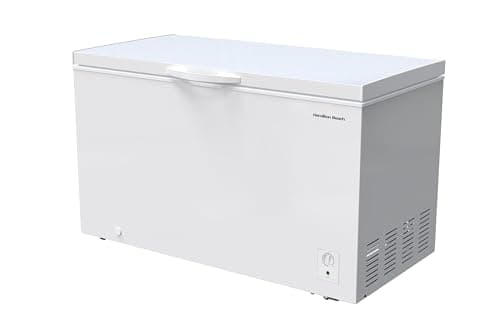
The only chest here with a written garage rating (0°F to 110°F surroundings) plus a published energy figure. Buy this one if your freezer lives in the garage.
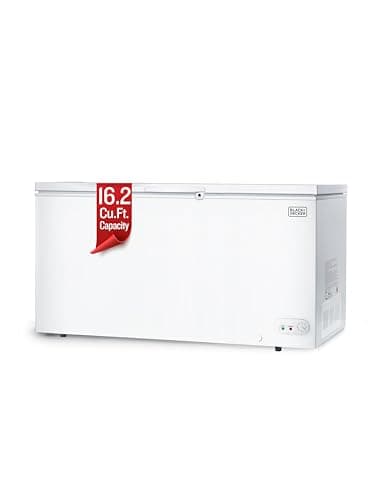
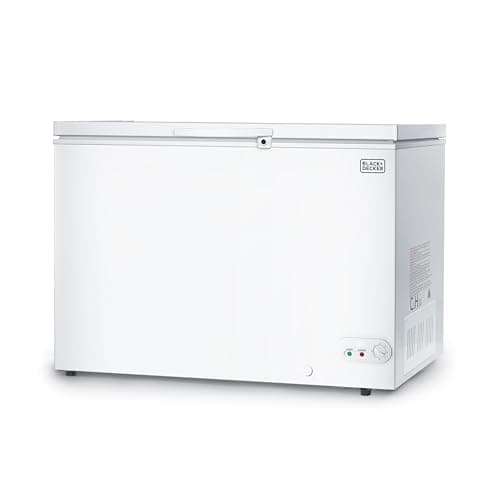
The biggest chest we list: room for six or more average deer or a half beef, with two baskets and a five-year compressor-parts warranty. Keep it indoors.
#ad · Prices come live from Amazon, last checked Sep 19, 2026; where we have no verified live price we show none. Scores are ours, compiled from published specs, manuals and warranty terms, not bench tests. Tap a row for the full write-up.
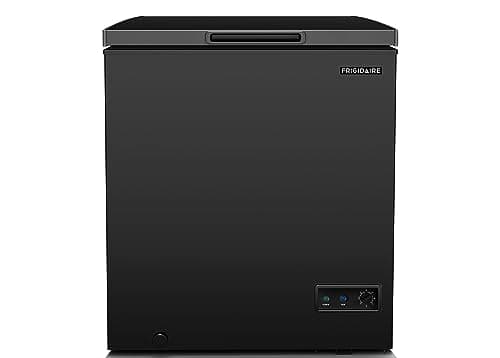
If you take three to six deer a season, buy the Hamilton Beach 14 cu ft chest. At realistic packing it holds about 280-350 lb, which is 5.4-6.7 deer at the Ohio DNR average. It is also the only chest in this group whose manual gives it a garage rating (0°F to 110°F surroundings), and its EnergyGuide label puts it at 282 kWh a year. If you take six or more deer, or you split a half beef with family, the BLACK+DECKER 16.2 has the room, but its manual keeps it out of a cold garage. For one or two deer, the Frigidaire 7 cu ft is the right size, and our small chest freezer picks go deeper on that end.
We haven't bench-tested these freezers. Every number here comes from an EnergyGuide label, an owner's manual, the maker's product page or the maker-supplied Amazon listing, and each spec on the cards below links to where it came from. Where a maker doesn't publish something, such as yearly energy use or a garage rating, we say "not published" and score that line neutral. The weights are on how we pick.
How we sized these: deer, pounds, cubic feet
Every freezer listing gives cubic feet. None of them tells you how many deer that is, so we worked it out from two published numbers.
The first is yield. The Ohio Division of Wildlife weighed 115 field-dressed whitetails from the 2017 gun season, butchered them and weighed the venison. The average deer gave 52.19 lb of meat from 107.56 lb field-dressed, a 48.52% yield. Antlered deer averaged 62.51 lb and antlerless deer 45.05 lb. The report says plainly that shot placement and butchering skill move those numbers, so treat 52.19 lb as a planning average. Your deer may differ.
The second is packing density. The Good Meat Project figures that a perfectly organized cubic foot holds about 30 lb of meat, but says 20-25 lb is more likely once you are dealing with roasts, odd shapes and bone-in packages. We use that realistic range throughout, never the perfect-pack number.
The long version, with buck and doe rows and the separate question of how fast a freezer can freeze a deer, is in how much freezer space a deer takes.
How many deer each freezer holds
Rated capacity from the maker, times 20-25 lb per cubic foot, divided by 52.19 lb per deer. This is venison only. If the same freezer carries your groceries, subtract whatever space they take.
Freezer
Rated capacity
Meat at 20-25 lb/cu ft
Average Ohio deer
Season fit
Hamilton Beach HBFRF1497
14.0 cu ft
280-350 lb
5.4-6.7
5-6 deer
BLACK+DECKER BCF1620E
16.2 cu ft
324-405 lb
6.2-7.8
6+ deer or a half beef
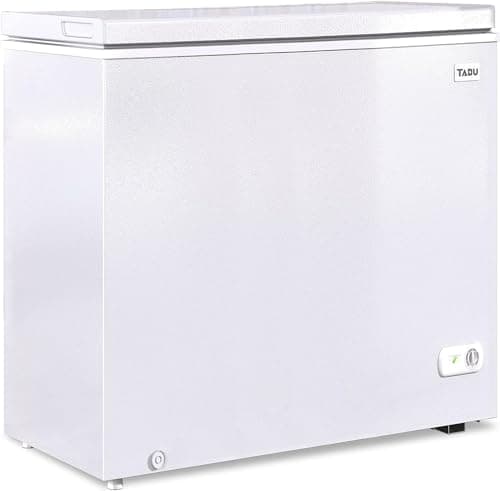
TABU 12.0
12.0 cu ft
240-300 lb
4.6-5.7
3-5 deer
BLACK+DECKER BCF1000E
10 cu ft
200-250 lb
3.8-4.8
3-4 deer
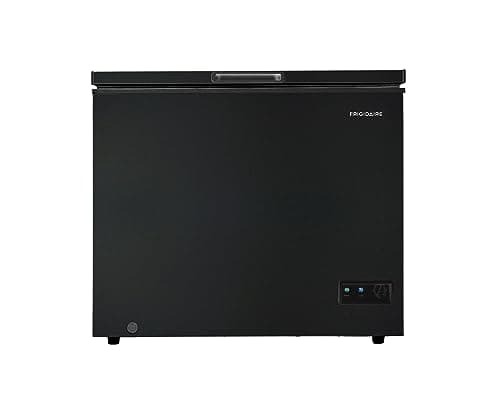
Frigidaire EFRF9003
8.6 cu ft (sold as a 9 cu ft class)
172-215 lb
3.3-4.1
3-4 deer
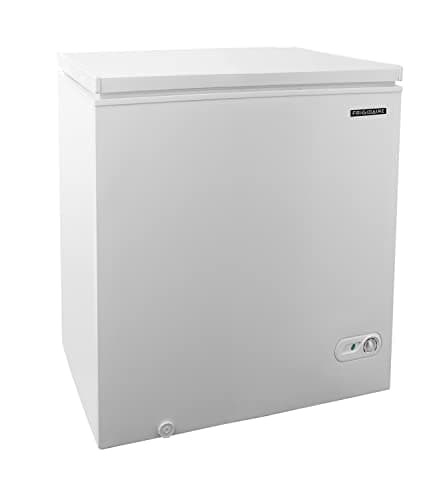
Frigidaire EFRF7003
7.0 cu ft
140-175 lb
2.7-3.4
1-2 deer
Frigidaire EFRF5003
5.0 cu ft
100-125 lb
1.9-2.4
1-2 deer, venison only
Two things stand out. The Frigidaire sold as a 9 cu ft freezer is rated at 8.6 cu ft on its own EnergyGuide label, so do your math on 8.6. And every two cubic feet you add is worth 40-50 lb, close to one more average deer. That matters more than it sounds in the year a neighbor offers you a doe the week after you filled the freezer.
Garage or basement? Read the manual before you pick a spot
Plenty of hunters' freezers end up in the garage, and deer season is exactly when a garage turns cold. ENERGY STAR says to keep a freezer indoors, such as the basement, unless you live in a mild climate, because extreme temperatures are hard on the compressor and can shorten the freezer's life. If the garage is your only option, buy a freezer the maker actually rates for it.
Hamilton Beach HBFRF1497: the spec table in the owner's manual says the garage-ready model holds a stable temperature in surroundings from 0°F to 110°F. It is the only explicit range in this group.
BLACK+DECKER BCF1000E and BCF1620E: the shared instruction manual says the freezer "is not designed to operate in temperature setting below 55°F" in its section on protecting the unit from heat and moisture. We read that as indoors only for a northern deer season.
Frigidaire EFRF5003: the Amazon listing title says "Garage-Ready," but the owner's manual gives no ambient range. It only warns that the inside temperature varies with the room temperature.
Frigidaire 7 and 9, TABU 5 and 12: no garage rating published. TABU's listing names the garage as a place to use it but gives no ambient range.
Whatever you buy, put an appliance thermometer inside it. The USDA recommends one for exactly this reason, and says frozen food held constantly at 0°F stays safe; only the quality drops with time.
What the EnergyGuide labels say
Yearly energy use is the one running cost you can check before you buy, but only if the maker posts the label. Four of the seven chests here have one we could find.
Freezer
Capacity
kWh per year (EnergyGuide)
kWh per cubic foot
Frigidaire EFRF9003
8.6 cu ft
214
24.9
Frigidaire EFRF5003
5.0 cu ft
216
43.2
Frigidaire EFRF7003
7.0 cu ft
250
35.7
Hamilton Beach HBFRF1497
14.0 cu ft
282
20.1
BLACK+DECKER BCF1000E / BCF1620E
10 / 16.2 cu ft
Not published
—
TABU 5.0 / 12.0
5 / 12 cu ft
Not published
—
Per cubic foot, the bigger chests are cheaper to run. The 14 cu ft Hamilton Beach uses less than half the energy per cubic foot of the 5 cu ft Frigidaire. That argues for buying the size you will grow into instead of adding a second small freezer in three years. ENERGY STAR puts a certified chest freezer at about 215 kWh a year and says manual-defrost freezers use half the energy of automatic-defrost models, as long as you actually defrost them. Every chest here that states its defrost type is manual defrost.
In detail
The picks, in full
1
Best overall · garage-rated
Hamilton Beach 14 Cu. Ft. Chest Freezer (HBFRF1497)
8.1 /10
The only chest here with a written garage rating (0°F to 110°F surroundings) plus a published energy figure. Buy this one if your freezer lives in the garage.
+A written garage rating: stable temperature in 0°F to 110°F surroundings
+282 kWh a year, at the low end of the 268-297 kWh range the label gives for similar models
+About 280-350 lb at realistic packing, or 5.4-6.7 average Ohio deer
What it doesn't
−One basket for 14 cu ft, so plan on bins
−One-year warranty, shorter than BLACK+DECKER's compressor coverage
−A half beef needs 11.2-14 cu ft at realistic packing, which fills it
Skip this if…
…you need a half beef and a season of venison in the same box. A half beef alone needs 11.2-14 cu ft at realistic packing. Step up to the 16.2 cu ft BLACK+DECKER and keep it indoors.
#ad · Price as of Sep 19, 2026 · Affiliate disclosure for the link to Hamilton Beach 14 Cu. Ft. Chest Freezer (HBFRF1497)
2
Best for 6+ deer or a half beef
BLACK+DECKER 16.2 Cu. Ft. Chest Freezer (BCF1620E)
6.8 /10
The biggest chest we list: room for six or more average deer or a half beef, with two baskets and a five-year compressor-parts warranty. Keep it indoors.
+About 324-405 lb at realistic packing: 6.2-7.8 average Ohio deer, or the 11.2-14 cu ft a half beef needs at the same density
+Two baskets and an easy-access drain
+Compressor parts covered through year five
What it doesn't
−Not designed to operate below 55°F, per the manual
−Yearly energy use is not published
−Five feet wide (60.43 in), so measure the wall first
Skip this if…
…your only spot is an unheated garage. The manual says it is not designed to run below 55°F. The Hamilton Beach 14 is rated for 0°F to 110°F surroundings.
+214 kWh a year, below the 216-227 kWh range its label gives for similar models
+About 172-215 lb at realistic packing, or 3.3-4.1 average Ohio deer
+Interior and exterior drain plugs
What it doesn't
−Rated 8.6 cu ft, not 9, so do your math on 8.6
−No temperature range or garage rating in the maker materials we found
−One basket
Skip this if…
…the freezer is going in an unheated garage. Frigidaire publishes no garage rating or ambient range for it. The Hamilton Beach 14 is the one with a written 0°F-110°F rating.
+About 240-300 lb at realistic packing, or 4.6-5.7 average Ohio deer
+Published temperature range and noise figure
+Adjustable leveling legs for an uneven garage or basement floor
What it doesn't
−Yearly energy use is not published
−No garage rating and no defrost drain mentioned
−The listing is thin (the 5 and 12 cu ft share a model number), so confirm dimensions before you clear floor space
Skip this if…
…you want documented energy use and a written warranty before you buy. The listing gives neither. The Hamilton Beach 14 publishes both an EnergyGuide figure and a one-year warranty.
+Energy use is on paper: 216 kWh a year on the EnergyGuide label
+Exterior defrost drain, so defrosting is a pan job rather than a towel job
+Small enough for a utility room or apartment corner
What it doesn't
−At a realistic 20-25 lb per cubic foot it holds about 100-125 lb, so two average Ohio deer (104 lb) fill it
−216 kWh sits near the top of the 137-221 kWh range the label gives for similar models
−The garage-ready claim is in the listing title only; Frigidaire's manual gives no ambient range
Skip this if…
…you take two deer a season and also want room for groceries. At realistic packing it tops out around 125 lb, and two average deer are 104 lb on their own. The 7 cu ft model is the better buy.
#ad · Price as of Sep 19, 2026 · Affiliate disclosure for the link to Frigidaire EFRF5003 5.0 Cu. Ft. Chest Freezer
How to choose a chest freezer for meat
Size for the seasons you actually have
Count your deer over the last three seasons, not your best year. Multiply by 2.1-2.6 cu ft each, then add whatever else lives in that freezer: the turkey, the bulk ground beef, the bags of ice for the cooler. The table above assumes none of that. If you ever buy beef by the side, the numbers climb fast: a half beef is its own freezer-sized problem, worked through in what size freezer you need for half a cow.
Freezing speed is a separate number from storage
A freezer can store far more than it can freeze in a day. NDSU Extension says to add only what will freeze within 24 hours, usually 2 or 3 lb of food per cubic foot of storage, and to set the freezer to -10°F about 24 hours before a big load. For a 7 cu ft chest that is 14-21 lb a day, so one average deer takes 2.5-3.7 days to add at that pace. A 14 cu ft chest handles 28-42 lb a day, or one deer in 1.2-1.9 days. It is one more reason not to buy exactly the size the table says.
Manual defrost is the price of efficiency
The Hamilton Beach and Frigidaire manuals say to defrost when frost builds to about 1/4 to 1/2 inch. The BLACK+DECKER manual says to do it whenever frost reaches 1/8 inch. An exterior drain lets the meltwater run into a pan instead of across the floor. Schedule defrosting for late summer, when the freezer is emptiest. USDA notes that a full freezer keeps food frozen about two days with the lid shut, so a quick defrost with the food packed in coolers is routine, not a crisis.
Baskets are for the top; bins are for everything else
Every chest here except the two BLACK+DECKERs ships with one hanging basket; those two ship with a pair. Either way, the bottom of a chest turns into a pit by January. A few lift-out bins, one cut per bin, with the shortest-keeping meat on top, fix that without giving up the chest's capacity advantage.
Chest or upright
ENERGY STAR puts a certified chest at about 215 kWh a year and a certified upright at about 395. The Good Meat Project adds that an upright holds slightly less meat than a chest of the same size. An upright only wins on access and frost-free convenience. The full trade is in chest vs upright freezer.
The wrap matters as much as the box
USDA describes freezer burn as grayish-brown leathery spots caused by air reaching the surface of the food. It does not make the meat unsafe, but it does ruin it. A freezer only holds temperature; the package keeps the air off. If you are sealing a whole deer in one session, start with our vacuum sealers for wild game, which ranks sealers on the continuous-use figure in each manual.
How we picked
Units we claim to have bench-tested: none
Plenty of sites say they ground two hundred pounds through every grinder. We didn't, and we say so. What we do instead: read the maker's spec sheet, manual and warranty terms, record the figures that decide whether a machine keeps up with your season (size number, motor rating, rated pounds per minute, capacity, duty cycle, gearing), check parts availability, and score each pick on a published rubric. Then we show the season math — pounds per deer from the Ohio Division of Wildlife's yield study — so you can redo it with your own numbers.
About 2.1-2.6 cu ft per deer at the Ohio DNR average of 52.19 lb, using the Good Meat Project's realistic 20-25 lb per cubic foot. Two deer need 4.2-5.2 cu ft, three need 6.3-7.9, five need 10.4-13.1. Add room for anything else the freezer holds.
Can I put a chest freezer in the garage?+
Only if the maker rates it for a garage. In this list, only the Hamilton Beach HBFRF1497's manual gives a range (0°F to 110°F surroundings). The BLACK+DECKER chest manual says its freezers are not designed to operate below 55°F. ENERGY STAR recommends keeping a freezer indoors unless you live in a mild climate.
How much electricity does a chest freezer use?+
The EnergyGuide labels in this list run from 214 kWh a year (Frigidaire, 8.6 cu ft) to 282 kWh (Hamilton Beach, 14 cu ft). ENERGY STAR puts a certified chest freezer at about 215 kWh a year. BLACK+DECKER and TABU don't publish a figure for the models here.
How many pounds of meat fit in a 7 cubic foot freezer?+
About 140-175 lb at the Good Meat Project's realistic 20-25 lb per cubic foot, or roughly 2.7-3.4 average Ohio deer. A perfectly packed freezer at 30 lb per cubic foot would hold 210 lb, but mixed packages rarely pack that well.
Is a deep freezer the same as a chest freezer?+
In most listings, yes. Every freezer on this page is described as a deep freezer somewhere in its listing, meaning a top-opening chest. Uprights are the other layout.
We haven't bench-tested this gear and we don't pretend to. Specs come from the maker's own pages, manuals and maker-supplied listing copy (labeled as such); food-safety figures from USDA and university extension publications; yield from the Ohio Division of Wildlife; prices live from Amazon. Where a figure isn't published, we say so. Read the full method.