Chest vs Upright Freezer: Which One Holds a Season of Meat Better?
Two 14 cu ft freezers, one chest and one upright, compared on the numbers their makers publish: energy, capacity, garage rating and how easy it is to find the backstrap in March.
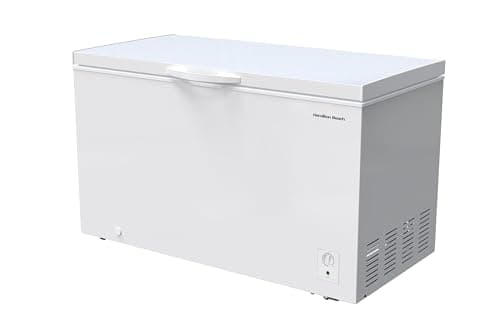
The only chest here with a written garage rating (0°F to 110°F surroundings) plus a published energy figure. Buy this one if your freezer lives in the garage.
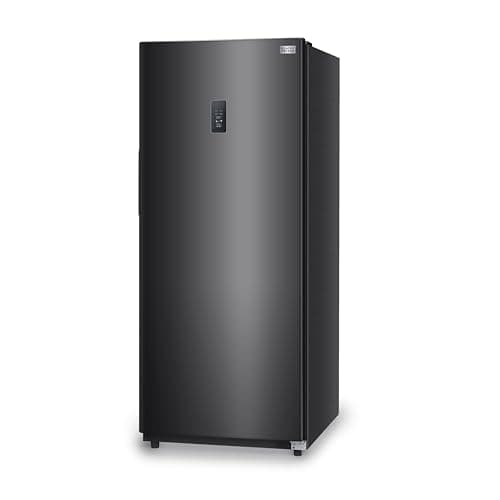
A frost-free ENERGY STAR upright that converts to a fridge. It's the easiest freezer here to find things in, and it pays for that in electricity compared with a chest.
#ad · Price as of Sep 19, 2026 · Affiliate disclosure for the link to BLACK+DECKER 14 Cu. Ft. Convertible Upright Freezer (BUC1400XB)
For storing a season of venison, buy a chest. On the numbers the makers publish, the 14 cu ft Hamilton Beach chest is labeled at 282 kWh a year; ENERGY STAR lists the same-size BLACK+DECKER upright series at 396. The chest also has a written garage rating, and a chest holds a little more meat per cubic foot. Buy the upright only if frost-free convenience and shelf-level access are worth roughly 114 extra kWh a year to you, or if you simply don't have the floor space.
We haven't run these two freezers against each other. This comparison uses the EnergyGuide label, the ENERGY STAR database, both owner's manuals and the makers' product pages, all linked below.
Side by side
Hamilton Beach HBFRF1497 (chest)
BLACK+DECKER BUC1400XB (upright)
Capacity
14.0 cu ft
14 cu ft (397 L)
Defrost
Manual
Frost free
Yearly energy
282 kWh (EnergyGuide)
396 kWh (ENERGY STAR record for the BUC1400XS in the same series)
Garage rating
0°F to 110°F surroundings (manual)
Garage ready in freezer mode only (product page)
Temperature range
10.4°F to -11.2°F
7°F to -11°F; Fast Freeze -18°F
Layout
Open chest, 1 removable wire basket, front drain
4 glass shelves, wire basket, 4 door bins
Exterior (W x D x H)
54.56 x 28.19 x 33.46 in; 57.24 in tall with lid open
28 x 27.9 x 68.1 in
Warranty
1 year
1 year parts and labor; compressor parts years 2-5
Sources: the Hamilton Beach owner's manual and EnergyGuide label; the BLACK+DECKER product page, instruction manual and the ENERGY STAR database. ENERGY STAR lists the stainless-look BUC1400XS rather than the black XB we link to; BLACK+DECKER sells them as color versions of one series.
Energy: the chest wins, and it isn't close
ENERGY STAR's freezer page gives the category averages: a certified chest freezer uses about 215 kWh a year, a certified upright about 395. It also says manual-defrost freezers use half the energy of automatic-defrost models, provided you defrost them. Our two 14 cu ft examples line up with that pattern: 282 kWh for the manual-defrost chest, 396 for the frost-free upright, a gap of 40%.
Two caveats. First, the frost-free upright never needs a defrost weekend, and that is real labor saved. Second, not every upright is frost free. Hamilton Beach's own 11 cu ft upright (HBFRF1100) is manual defrost and labeled 282 kWh a year, the same figure as the 14 cu ft chest for about 3 cu ft less space. Its seven clear drawers give you upright-style access, but its manual asks you to defrost once or twice a year, so you give up the main reason people buy an upright.
Capacity: same number, different meat
The Good Meat Project says a cubic foot realistically holds 20-25 lb of meat and that an upright holds slightly less than a chest. It doesn't quantify "slightly," and neither will we. But the reasons are visible in the spec table: shelves, door bins and the air gap in front of each shelf all take space that a chest fills with packages.
Where the upright wins is access. In a chest, the package you want is always under the one you don't. In an upright, every shelf is at eye level, and door bins hold the jerky meat and sausage you pull weekly. If you do go chest, a basket-and-bin system claws most of that back. See how to organize a chest freezer.
Garage use: read both manuals
The Hamilton Beach manual's spec table rates the chest for surroundings from 0°F to 110°F. BLACK+DECKER's product page calls the upright "garage ready (only in freezer mode)," yet the install section of the BUC1400X manual also says the freezer is "not designed to operate in temperature setting below 55°F." Those two statements don't sit comfortably together, so if the upright is headed for a cold garage, ask BLACK+DECKER which one governs before you buy. ENERGY STAR recommends keeping any freezer indoors unless you live in a mild climate.
Floor space and power outages
The chest needs about 54.6 × 28.2 in of floor and 57.24 in of height with the lid open. The upright needs 28 × 27.9 in of floor, roughly half, plus room for the door to swing. If your freezer spot is a tight corner of the basement, the upright may be the only one that fits.
In an outage, the USDA says a full freezer keeps food frozen for about two days with the door shut, and a half-full one about a day. It draws no line between chest and upright, so the practical rule is the same for both: keep it full and keep it closed.
Chest or upright, season by season
1-2 deer: the freezer is small enough that access barely matters. A 7 cu ft chest holds 2.7-3.4 average deer, and at this size the chest's lower energy use and lower height make it the easy call.
3-5 deer: the real decision point. Five average deer need 10.4-13.1 cu ft, so either layout works at 14 cu ft. The chest stores more and runs cheaper; the upright is kinder to a bad back.
6+ deer or a half beef: chest. Six average deer need 12.5-15.7 cu ft, and the Good Meat Project's note that an upright holds slightly less starts to cost you whole deer at this size.
One arrangement worth considering if you have the room: a chest in the basement for the season's bulk, and an upright, or the freezer above the kitchen fridge, for the next two weeks' packages. It is the same logic as a pantry and a cupboard, and it means the chest lid only opens when you restock.
Choose the chest if, choose the upright if
Choose the chest if you are storing a season of venison or a side of beef, the freezer goes in a garage, or running cost matters. At 14 cu ft it covers 5.4-6.7 average deer; for six or more deer or a half beef, step up to the 16.2 cu ft chest in the chest freezer ranking.
Choose the upright if you pull from the freezer daily, you hate defrosting, floor space is tight, or bending into a chest is hard on your back. Accept the higher energy figure and plan on slightly less meat per cubic foot.
Hamilton Beach 14 Cu. Ft. Chest Freezer (HBFRF1497)
8.1 /10
The only chest here with a written garage rating (0°F to 110°F surroundings) plus a published energy figure. Buy this one if your freezer lives in the garage.
+A written garage rating: stable temperature in 0°F to 110°F surroundings
+282 kWh a year, at the low end of the 268-297 kWh range the label gives for similar models
+About 280-350 lb at realistic packing, or 5.4-6.7 average Ohio deer
What it doesn't
−One basket for 14 cu ft, so plan on bins
−One-year warranty, shorter than BLACK+DECKER's compressor coverage
−A half beef needs 11.2-14 cu ft at realistic packing, which fills it
Skip this if…
…you need a half beef and a season of venison in the same box. A half beef alone needs 11.2-14 cu ft at realistic packing. Step up to the 16.2 cu ft BLACK+DECKER and keep it indoors.
#ad · Price as of Sep 19, 2026 · Affiliate disclosure for the link to Hamilton Beach 14 Cu. Ft. Chest Freezer (HBFRF1497)
Best upright freezer
BLACK+DECKER 14 Cu. Ft. Convertible Upright Freezer (BUC1400XB)
6.9 /10
A frost-free ENERGY STAR upright that converts to a fridge. It's the easiest freezer here to find things in, and it pays for that in electricity compared with a chest.
+Frost free, so there's no weekend spent chipping ice
+Garage ready in freezer mode, per BLACK+DECKER
+Shelves and door bins keep every package at eye level
What it doesn't
−396 kWh a year for the same 14 cu ft that the Hamilton Beach chest's label puts at 282
−Uprights hold slightly less meat than a chest of the same size, per the Good Meat Project
−The manual's install section still says it is not designed to operate below 55°F, which sits awkwardly with the garage claim. Ask BLACK+DECKER before a cold-garage install
Skip this if…
…your goal is the most venison for the least power. The Hamilton Beach 14 cu ft chest is labeled at 282 kWh a year. ENERGY STAR lists this upright series at 396.
#ad · Price as of Sep 19, 2026 · Affiliate disclosure for the link to BLACK+DECKER 14 Cu. Ft. Convertible Upright Freezer (BUC1400XB)
How we picked
Units we claim to have bench-tested: none
Plenty of sites say they ground two hundred pounds through every grinder. We didn't, and we say so. What we do instead: read the maker's spec sheet, manual and warranty terms, record the figures that decide whether a machine keeps up with your season (size number, motor rating, rated pounds per minute, capacity, duty cycle, gearing), check parts availability, and score each pick on a published rubric. Then we show the season math — pounds per deer from the Ohio Division of Wildlife's yield study — so you can redo it with your own numbers.
Is a chest or upright freezer more energy efficient?+
The chest. ENERGY STAR puts a certified chest at about 215 kWh a year and a certified upright at about 395. Our 14 cu ft pair: 282 kWh for the Hamilton Beach chest, 396 for the BLACK+DECKER upright series.
Does an upright freezer hold as much as a chest freezer?+
Slightly less at the same rated size, per the Good Meat Project. Shelves, door bins and air gaps take space a chest fills with packages.
Which is better for deer meat?+
A chest, for most hunters: more meat per cubic foot, less power, and in this pair the only written garage rating. An upright is better if you need frost-free convenience and easy access every day.
Do upright freezers need defrosting?+
Frost-free uprights like the BLACK+DECKER BUC1400X don't. Manual-defrost uprights, such as Hamilton Beach's HBFRF1100, do. Its manual suggests defrosting once or twice a year, more often if frost is heavy.
We haven't bench-tested this gear and we don't pretend to. Specs come from the maker's own pages, manuals and maker-supplied listing copy (labeled as such); food-safety figures from USDA and university extension publications; yield from the Ohio Division of Wildlife; prices live from Amazon. Where a figure isn't published, we say so. Read the full method.