Freezers & Storage ◆ Guide
Chest Freezer Organization: A System for Finding the Backstrap in February
A chest freezer holds more meat per cubic foot than an upright and hides it better. Here is a system that keeps every package findable, and keeps the oldest one on its way out.
We earn a commission if you buy through our links, at no extra cost to you. It never decides the ranking — the method is published · Affiliate disclosure
Organize a chest freezer in columns, not layers. Use lift-out bins, one kind of cut per bin, with the oldest packages and anything that expires soonest on top, and keep a written inventory taped to the lid. Freeze new packages flat in a single layer first, then file them on edge in their bin like records in a crate. You will never dig for the backstrap again.
The storage times and freezing rules below come from the USDA and university extension services. The system itself is plain shop organization.
Why chest freezers turn into a pit
A chest holds more than an upright of the same size. The Good Meat Project says an upright holds slightly less, and ENERGY STAR puts a certified chest at about 215 kWh a year against about 395 for an upright. The price is access. Everything goes in from the top, the one hanging basket covers a fraction of the floor, and whatever went in first ends up under everything that came after. By February the October roasts are buried, and you buy ground beef at the store while ground venison ages out in the bottom corner.
The fix is to turn a pit into columns you can lift out, so reaching the bottom means moving one bin, not unloading half the freezer.
Measure the inside before you buy bins
Bins are sized to specific freezers, and the makers say so. iSPECLE's listing tells you to measure your freezer's inner width before buying. Three numbers matter:
- Inner width (front to back, below the lid): this decides whether a bin fits crosswise.
- Floor length. If your chest has a raised compressor step at one end, the floor is shorter than the top opening.
- Depth under the hanging basket. Bins that stack under the basket need to clear it.
For reference, the iSPECLE bins are 14.7 × 7.1 × 6.1 in and are sold for 7 cu ft chests; the Goovilla bins are 12.6 × 6.3 × 5.27 in and sold for 5-7 cu ft chests. Frigidaire's manual gives the basket in its 5 and 7 cu ft chests as 7.1 in wide, the same width as an iSPECLE bin.
Zone it by cut and date
Give each bin one job. Then decide which job sits on top by how long each cut keeps. The USDA freezer chart gives the order:
| Zone | What goes in it | USDA best-quality window at 0°F | Where it lives |
|---|---|---|---|
| Use first | Sausage, bacon | 1-2 months | Hanging basket |
| Weekly | Ground venison, stew meat | 3-4 months (uncooked ground meat) | Top bin, easy reach |
| Steaks | Backstrap, loin, steaks, chops | 8-12 months (uncooked wild game) | Middle bins |
| Roasts | Roasts, bone-in cuts | 8-12 months (uncooked wild game) | Bottom, one lift away |
| Trim | Trim saved for the next grind or sausage batch | 8-12 months (uncooked wild game) | Bottom corner, labeled |
Within each bin, NDSU Extension's rule applies: arrange packages so you use the ones that have been in the freezer longest first. The Good Meat Project adds that boneless cuts store better than bone-in cuts, and bigger cuts such as roasts store longer than small steaks, which is why roasts can live at the bottom.
Freeze flat, then file
New packages don't go straight into their bin. The USDA says not to stack packages until they are frozen: spread them in a single layer and stack them only once frozen solid. NDSU Extension adds that you should leave space between new packages so air can circulate, then store them close together once frozen, and add only as much as freezes in 24 hours: usually 2-3 lb per cubic foot, or 14-21 lb a day in a 7 cu ft chest.
So keep one bin (or the basket) empty as a staging area during processing week. Lay the day's packages flat across it and across the top of the load. Once they are rock hard, file them on edge in their zone bin. Flat vacuum packs filed on edge let you flip through a bin like a card file, reading labels without lifting anything out.
Keep an inventory on the lid
NDSU recommends keeping a list of everything in the freezer and updating it every time food goes in or comes out, to prevent over-storage and quality loss. The lid of a chest freezer is the obvious place: a sheet in a plastic sleeve, or a dry-erase board. One line per zone, with a tally of packages and the oldest date. Combined with labels on every package (the NCHFP says product, date and amount at minimum), it means you know what is in there without standing at the open lid while you search.
A five-minute monthly check
Once a month, with the lid open no longer than it takes:
- Read the thermometer. The USDA recommends keeping an appliance thermometer in the freezer and holding it at 0°F or below.
- Promote next month's meals. Move the packages you'll cook in the next few weeks up into the hanging basket, oldest first.
- Update the lid inventory. Cross off what came out, and note the oldest date left in each zone.
- Check the frost. If it is approaching the thickness your manual gives for defrosting, plan the day now rather than in the middle of deer season.
Defrost day is reorganization day
The chests we list that state a defrost type are all manual defrost, and the manuals say when: the Hamilton Beach and Frigidaire manuals say to defrost at 1/4 to 1/2 inch of frost, and the BLACK+DECKER manual at 1/8 inch. The Hamilton Beach manual's routine: turn the control to off, unplug, move the food into insulated coolers or boxes, pull the drain plug, and speed things up with pans of hot water.
Use the day. With everything out, re-sort each bin, pull anything past its window, and update the lid inventory. The USDA says a full freezer keeps food frozen for about two days with the door shut, and the BLACK+DECKER manual says defrosting usually takes a few hours. Packed tight in coolers, the food rides it out. Late summer, when the chest is emptiest before deer season, is the time.
Bins, and a freezer they fit
Two bin sets sized for 5-7 cu ft chests, and the 7 cu ft chest they suit best. For a bigger chest, buy more sets, or look at the BLACK+DECKER chests in our chest freezer ranking, which ship with two baskets.
Picks for this job
An organized 5-7 cu ft chest
Measure your freezer's inside width first. Both bin makers say so.
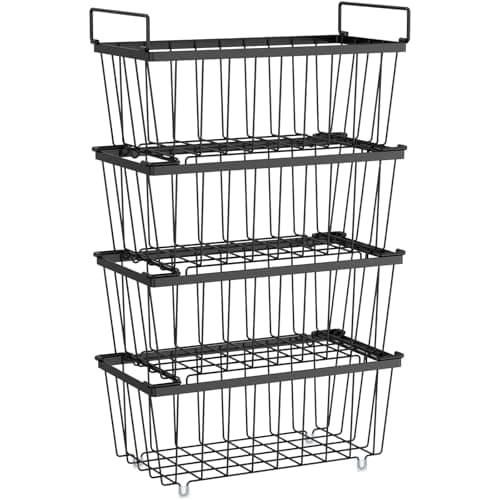
Best bins for a 7 cu ft chest
iSPECLE Freezer Organizer Bins for 7 Cu. Ft. Chests (4-Pack)
Rated for 33 lb-plus per bin; the handles fold in to lock as a stacking shelf. Sized for 7 cu ft chests.
$28.89Amazon#ad · Price as of Sep 19, 2026 · Affiliate disclosure for the link to iSPECLE Freezer Organizer Bins for 7 Cu. Ft. Chests (4-Pack)
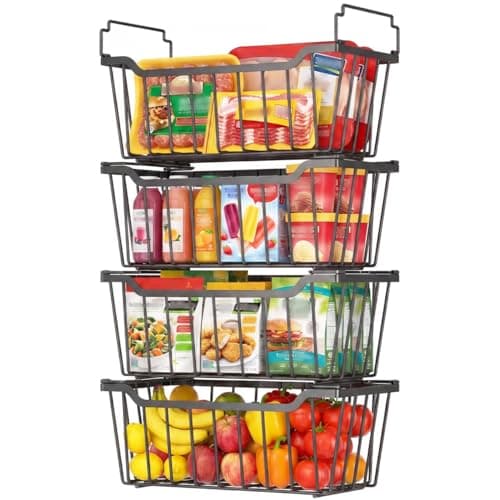
Best bins for a 5-7 cu ft chest
Goovilla Freezer Organizer Bins for 5-7 Cu. Ft. Chests (4-Pack)
Smaller bins with snap-together bases; the better fit for a 5 cu ft chest. No load rating published.
$22.49Amazon#ad · Price as of Sep 19, 2026 · Affiliate disclosure for the link to Goovilla Freezer Organizer Bins for 5-7 Cu. Ft. Chests (4-Pack)
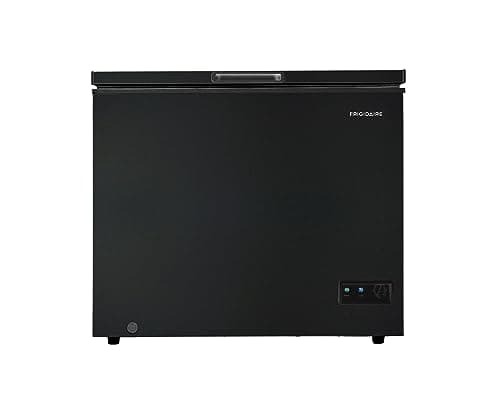
Best for 1-2 deer
Frigidaire EFRF7003 7.0 Cu. Ft. Chest Freezer
Holds about 140-175 lb at realistic packing, or 2.7-3.4 average deer. Its basket is 7.1 in wide, per the manual.
$381.78Amazon#ad · Price as of Sep 19, 2026 · Affiliate disclosure for the link to Frigidaire EFRF7003 7.0 Cu. Ft. Chest Freezer
Organization starts at the wrapping table: flat, labeled packages file neatly. See how to package deer meat for the freezer, and if you are still choosing a freezer layout, chest vs upright covers the access trade-off.
Questions
Frequently asked
How do you organize a chest freezer?
What should go on the bottom of a chest freezer?
Are chest freezer bins worth it?
How often should I defrost a chest freezer?
Keep going down the chain
Related
- Best chest freezers for meatSeven chests, sized by the deer they hold
- How to package deer meatFlat, labeled packages that file neatly
- Best small chest freezersThe 5-7 cu ft chests these bins fit
- Chest vs upright freezerWhen access is worth the energy
- How long vacuum-sealed meat lastsThe storage windows behind the zones
Receipts
Sources
- USDA Food Safety and Inspection Service — Freezing and Food Safety
- NDSU Extension (FN614) — Food Freezing Basics: Packaging, Loading the Freezer and Refreezing
- National Center for Home Food Preservation — Packaging and Labeling Foods
- Good Meat Project — Freezer Space (pounds of meat per cubic foot)
- ENERGY STAR — Freezers (chest vs upright energy use, defrost type, placement)
- Hamilton Beach (Curtis International) — Owner's manual, HBFRF1497 chest freezer [PDF]
- BLACK+DECKER — Instruction manual, BCF890E / BCF1000E / BCF1300E / BCF1620E / BCF1980E
- Frigidaire (Curtis International) — Owner's manual, EFRF5003 / EFRF7003 [PDF]
- Amazon listing, manufacturer-supplied copy — iSPECLE freezer bins SR1901
We haven't bench-tested this gear and we don't pretend to. Specs come from the maker's own pages, manuals and maker-supplied listing copy (labeled as such); food-safety figures from USDA and university extension publications; yield from the Ohio Division of Wildlife; prices live from Amazon. Where a figure isn't published, we say so. Read the full method.