Home Processing ◆ Guide
How Much Meat You Get From a Deer, Buck or Doe
Ohio's wildlife officers weighed 115 deer before and after butchering. Here's what they found, what changes the number on your deer, and how much freezer and sealer it takes.
We earn a commission if you buy through our links, at no extra cost to you. It never decides the ranking — the method is published · Affiliate disclosure
An average white-tailed deer gives you about 52 pounds of venison. Ohio's Division of Wildlife weighed 115 field-dressed deer from the 2017 gun season, butchered every one and weighed the meat: 52.19 lb per deer on average, or 48.52% of field-dressed weight. Bucks averaged 62.51 lb and antlerless deer 45.05 lb.
That's the number this whole site sizes gear around, so it's worth knowing where it comes from, what it doesn't tell you, and how to adjust it for the deer hanging in your garage.
What Ohio actually measured
The study wasn't done for a hunting magazine. Ohio's wildlife officers "needed to determine the average venison yield from one white-tailed deer to support a case," according to the Ohio DNR's write-up, so Division of Wildlife employees recorded the field-dressed weight of 115 deer during the 2017 deer gun season, butchered each one and weighed the venison it produced. Field-dressed means the internal organs were removed and everything else was still intact. Of the 115, 47 were antlered and 68 antlerless (does and button bucks). Together they weighed 12,370 lb field-dressed and produced 6,001.8 lb of venison.
| Group | Average field-dressed weight | Average venison | Yield |
|---|---|---|---|
| Antlered (47 deer) | 129.69 lb | 62.51 lb | 48.20% |
| Antlerless (68 deer) | 92.27 lb | 45.05 lb | 48.83% |
| All 115 deer | 107.56 lb | 52.19 lb | 48.52% |
Source: Ohio Department of Natural Resources, Division of Wildlife, "Venison Meat Yield."
What the report doesn't say is just as useful to know. It doesn't split the venison into cuts and ground meat, it doesn't say whether any cuts were left bone-in, and it doesn't describe how hard the trim was. So read 52 lb as what a real butchering job produced from an average Ohio deer, not a promise for yours.
It also publishes averages only. There's no range, no smallest or largest deer, so the report can't tell you how far a single animal strays from 52 lb. The best proxy it offers is the split by antlers: a 17.5-lb gap between the average buck and the average antlerless deer. For planning a season, that's the spread worth carrying in your head: a doe-heavy year comes in lighter than the average, a buck-heavy year heavier, and three or four deer tend to average out.
The quick rule: a little under half the field-dressed weight
The striking thing in Ohio's table is how steady the percentage is: 48.20% for bucks, 48.83% for antlerless deer. Bigger deer gave more meat, but in proportion. So the fastest estimate for your own deer is its field-dressed weight times about 0.485. If you weigh it on a hanging scale before you skin it, you can have a solid number before you make the first cut, which is when you want to know whether the freezer has room.
| Field-dressed weight | Estimated venison at 48.52% | Freezer space at 20-25 lb/cu ft |
|---|---|---|
| 80 lb | about 39 lb | 1.6 to 2 cu ft |
| 100 lb | about 49 lb | 2 to 2.5 cu ft |
| 120 lb | about 58 lb | 2.3 to 2.9 cu ft |
| 140 lb | about 68 lb | 2.7 to 3.4 cu ft |
| 160 lb | about 78 lb | 3.1 to 3.9 cu ft |
| 180 lb | about 87 lb | 3.5 to 4.4 cu ft |
| 200 lb | about 97 lb | 3.9 to 4.9 cu ft |
Ohio's average percentage applied to other weights. These are estimates, not measurements; a deer shot through the shoulder will come in under.
A second yardstick: the national numbers
Ohio's report points readers to the Wild Harvest Initiative, a Conservation Visions project that compiles harvest and meat-yield data for whitetails across the US and Canada. Its white-tailed deer factsheet gives an average consumable weight of 68 lb for a male and 45 lb for a female, from average dressed weights of 115 and 76 lb and live weights of 150 and 99 lb. The antlerless figure matches Ohio's almost exactly; the buck figure runs about 5 lb heavier than Ohio's 62.51. Two sources landing that close is why we're comfortable sizing gear to the Ohio average. The factsheet also counts just over 12 million whitetails harvested in the US and Canada between 2014 and 2016, about 6 million a season, which is a lot of freezers.
Which weight are you holding?
The quickest way to get a wrong answer is to apply the right percentage to the wrong weight. Ohio's 48.52% is venison divided by field-dressed weight: guts out, everything else on. The Wild Harvest Initiative's numbers work out differently. Its consumable weights are about 45% of its average live weights for both bucks and does, and about 59% of its average dressed weights. The factsheet doesn't define "dressed" the way Ohio defines field-dressed, and its consumable figure isn't described cut by cut, so don't mix the two bases.
The practical rule: if you weighed the deer on a hanging scale after field dressing, use Ohio's percentage. If you only have a live-weight guess, you're estimating from an estimate, and the average for your deer's sex (Ohio's 62.51 or 45.05 lb) is as good a planning number as any. And if a processor quotes a price or a yield on "hanging weight," ask whether they mean with the hide on or off; the answer changes the arithmetic.
What changes the yield on your deer
- Shot placement. Ohio calls it "one large factor." A shot behind the shoulder blade allows a greater yield; a shot directly at the shoulder blade "will greatly reduce the meat yield from the front quarters."
- Butchering effort and skill. Per Ohio, yield "will also be dependent on how much effort is put into butchering as well as skill and experience." Neck meat, shanks and the flank are the pieces that get kept or tossed depending on patience.
- Buck or doe. Ohio's antlered average beat the antlerless average by 17.46 lb, almost entirely because the bucks were bigger: their yield percentage was actually slightly lower.
- Bone-in cuts. Leaving chops or shanks bone-in raises the package weight, not the amount of meat. When you compare your haul with a friend's, compare boneless to boneless.
- Damage and contamination. Bloodshot meat around the wound gets trimmed. And if gut contents touched the meat, the University of Georgia's National Center for Home Food Preservation says to skip jerky from it and use it only where it will be thoroughly cooked.
How much of it ends up ground
No agency source we found splits a deer into steaks versus burger, because it isn't a property of the deer. It's a choice. Backstraps and tenderloins are the usual keepers, hindquarter muscles can go any direction (roasts, steaks, jerky or grind), and neck, shank, flank and trim are the typical grinder meat. So instead of a made-up average, here's what each choice means in pounds:
| Share you grind | Ground from one average deer | Ground from a 3-deer season | Ground from a 5-deer season |
|---|---|---|---|
| 25% | 13 lb | 39 lb | 65 lb |
| 50% | 26 lb | 79 lb | 131 lb |
| 75% | 39 lb | 118 lb | 196 lb |
| 100% | 52 lb | 157 lb | 261 lb |
Scenarios on Ohio's 52.19 lb average, not measured splits.
Two things push the ground total up from there. Adding pork or beef fat for burger and sausage adds its own weight on top of the venison; our venison burger fat ratio guide covers how much. And the more of the deer you grind, the more the grinder matters: a season where most of five deer goes to burger and sausage is a very different job from one where you grind the trim off two. That's the whole logic behind grinder sizes by season.
Jerky and sticks: count the shrink
Pounds of venison and pounds of finished product aren't the same number once heat is involved. The most candid figures we found are on a processor's own price list: Duma Deer Processing in Ohio prices its specialty products by raw weight and warns of 25-30% cooking loss on snack sticks and 50-65% on restructured jerky. Run those through a batch:
| Raw meat in | As snack sticks (25-30% loss) | As restructured jerky (50-65% loss) |
|---|---|---|
| 5 lb | about 3.5 to 3.8 lb | about 1.8 to 2.5 lb |
| 10 lb | about 7.0 to 7.5 lb | about 3.5 to 5.0 lb |
| 20 lb | about 14.0 to 15.0 lb | about 7.0 to 10.0 lb |
Loss ranges as published by Duma Deer Processing (read September 18, 2026); raw weight includes any pork or fat added to the batch.
Two practical consequences. If a third of your deer is headed for jerky, your freezer needs far less room for that share than the raw pounds suggest, but your dehydrator needs room for all of it: tray capacity is sized to raw, sliced meat going in, not to what comes out. And if you're comparing a processor's per-pound specialty charge with doing it yourself, check whether the price is on raw or finished weight; Duma's and Eddie's lists both say raw. Our deer jerky guide covers the process.
The season table: 1 to 6 deer
| Deer | Venison at the Ohio average | Freezer space at 20-25 lb/cu ft | One-pound packages | Setup sized for it |
|---|---|---|---|---|
| 1 | 52 lb | 2.1 to 2.6 cu ft | 52 | 1-2 deer setup |
| 2 | 104 lb | 4.2 to 5.2 cu ft | 104 | 1-2 deer setup |
| 3 | 157 lb | 6.3 to 7.9 cu ft | 157 | 3-5 deer setup |
| 4 | 209 lb | 8.4 to 10.5 cu ft | 209 | 3-5 deer setup |
| 5 | 261 lb | 10.4 to 13.1 cu ft | 261 | 3-5 deer setup |
| 6 | 313 lb | 12.5 to 15.7 cu ft | 313 | 6+ deer setup |
52.19 lb per deer (Ohio DNR); 20-25 lb per cubic foot (Good Meat Project, realistic packing).
If most of your deer are bucks, run the same table at 62.51 lb per deer: three bucks is 188 lb and 7.5 to 9.4 cu ft, which is closer to a four-deer season on the average. Doe-heavy seasons run the other way, at 45.05 lb each.
Sizing the freezer and sealer to the yield
Freezer. The Good Meat Project puts a perfectly organized cubic foot at about 30 lb of meat but says 20 to 25 lb "is more likely," because meat doesn't come in standard shapes. It also notes that boneless cuts store better than bone-in. Plan on the low end and one average deer needs 2.1 to 2.6 cu ft. By the same math a 7 cu ft chest holds about 140 to 175 lb (two to three deer) and a 12 cu ft chest about 240 to 300 lb (four to five). Our freezer space for a deer guide goes deeper on chest versus upright and packing.
Sealer. The sealer spec that matters for a deer is how many seals it's rated to make back to back before it needs to cool. One deer in one-pound packs is about 52 bags; cut from a roll, each bag takes one seal to form and one to close, so about 104 seals. LEM rates its MaxVac 250 for up to 250 continuous seals and its MaxVac 500 for up to 500, which is the difference between two deer and three-plus in one sitting.
Package size. We use one-pound packages as the planning unit because that's a common size for ground venison, but it's your call, and it changes the bag and seal count more than anything else on this page. Two-pound family packs halve both. Steaks and roasts packed by the meal land somewhere in between. Whatever you choose, decide before the session: the number of bags you'll need is the easiest thing to run out of halfway through a deer.
Picks for this job
Freezers and sealers sized to a season's yield
Two chest freezers bracketing the 1-2 and 3-5 deer seasons, and two sealers whose makers publish a continuous-seal rating.
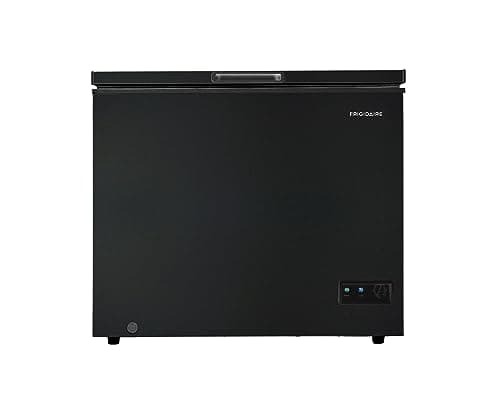
Best for 1-2 deer
Frigidaire EFRF7003 7.0 Cu. Ft. Chest Freezer
7.0 cu ft, about 140 to 175 lb at realistic packing: two deer plus the household's other food.
$381.78Amazon#ad · Price as of Sep 19, 2026 · Affiliate disclosure for the link to Frigidaire EFRF7003 7.0 Cu. Ft. Chest Freezer
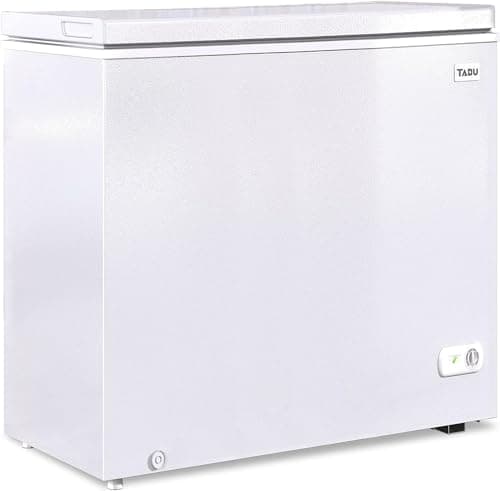
Best for 3-5 deer on a budget
TABU 12.0 Cu. Ft. Chest Freezer
12.0 cu ft, about 240 to 300 lb: four deer comfortably, five if you pack tight.
$429.99Amazon#ad · Price as of Sep 19, 2026 · Affiliate disclosure for the link to TABU 12.0 Cu. Ft. Chest Freezer
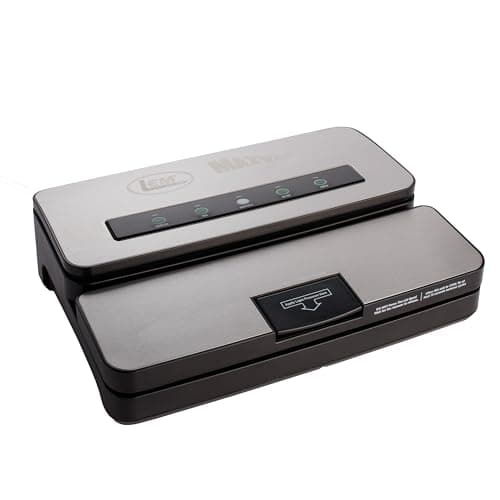
Best for 3-5 deer
LEM MaxVac 250 Vacuum Sealer
Up to 250 continuous seals per LEM: two deer from a roll (about 208 seals) in one sitting.
$219.99Amazon#ad · Price as of Sep 19, 2026 · Affiliate disclosure for the link to LEM MaxVac 250 Vacuum Sealer
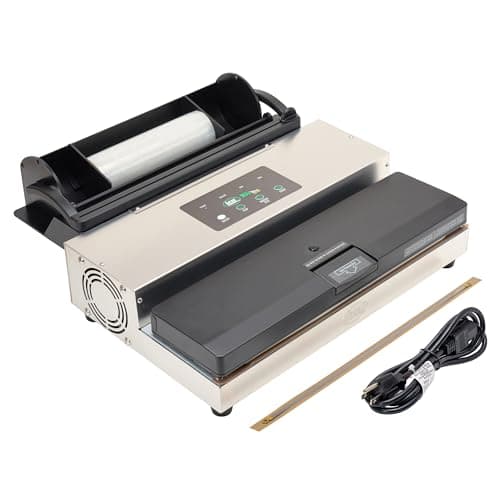
Best for 6+ deer
LEM MaxVac 500 Vacuum Sealer
Up to 500 continuous seals per LEM: a three-deer weekend from a roll (about 314) in one sitting.
$369.99Amazon#ad · Price as of Sep 19, 2026 · Affiliate disclosure for the link to LEM MaxVac 500 Vacuum Sealer
Track your own yield
Ohio's average is the right planning number until you have a better one, and the better one is cheap to get. Three weights, written on the freezer lid or in a notebook, turn next season's gear and freezer decisions from a guess into arithmetic:
- Field-dressed weight, on a hanging scale before skinning. This is the weight Ohio's percentage applies to.
- Packaged venison, weighed as it goes into bags or paper, split into cuts, ground and trim for jerky or sausage.
- Your yield: packaged venison divided by field-dressed weight. If you're well under 48.52%, Ohio's own list of reasons (shot placement, and the effort and skill that went into the butchering) is where to look first.
Do that for a season and you'll know your real pounds per deer, how much of it you actually grind and how many packages a deer really makes, which are the three numbers that size a grinder, a sealer and a freezer. If your deer consistently run heavy, move up a tier on our setup pages sooner; if they run light, the smaller setup will carry you further than the table suggests.
Meals, not pounds
The Wild Harvest Initiative counts meals at 6-ounce servings: its 68 lb buck is 272 meals and its 45 lb doe 180. The same math on Ohio's average deer gives about 139 six-ounce servings. For a household eating venison twice a week at four servings a meal, that's about 17 weeks from one deer and about 35 weeks from two, which is a useful way to decide how many tags you actually want to fill.
Whether you cut it yourself or pay someone, the yield is the same starting point. If you're weighing the two, our DIY vs processor cost page does the per-pound math on six processors' published fees.
Questions
Frequently asked
How many pounds of meat do you get from a deer?
How much meat do you get from a buck versus a doe?
How many pounds of ground meat do you get from a deer?
How do I estimate the meat from my deer's field-dressed weight?
How much freezer space does one deer take?
Why did I get less meat than the average?
Keep going down the chain
Related
- Freezer space for a deerThe storage side of this math, in depth.
- Meat grinder sizes explainedWhich grinder size fits how many pounds a season.
- The 1-2 deer setupGear sized for 52-104 lb a season.
- The 3-5 deer setupGear sized for 157-261 lb a season.
- DIY vs processor costWhat a processor charges per pound of your venison.
- How to process a deer at homeGetting the most meat off the carcass.
Receipts
Sources
- Ohio Department of Natural Resources, Division of Wildlife — Venison Meat Yield (115 deer, 2017 gun season) [PDF]
- Wild Harvest Initiative (Conservation Visions) — White-tailed Deer Factsheet, Mahoney 2020 [PDF]
- Good Meat Project — Freezer Space (pounds of meat per cubic foot)
- National Center for Home Food Preservation (University of Georgia Cooperative Extension) — Jerky
- Duma Deer Processing (Mogadore, Ohio) — published deer processing prices, accessed 2026-09-18
- Eddie's Game Processing (San Antonio, Texas) — published deer processing prices, accessed 2026-09-18
- Amazon listing, manufacturer-supplied copy — LEM MaxVac 250 (1393)
- Amazon listing, manufacturer-supplied copy — LEM MaxVac 500 (1253)
- Amazon listing, manufacturer-supplied copy — Frigidaire EFRF7003 7.0 cu ft chest freezer
- Amazon listing, manufacturer-supplied copy — TABU 12.0 cu ft chest freezer
We haven't bench-tested this gear and we don't pretend to. Specs come from the maker's own pages, manuals and maker-supplied listing copy (labeled as such); food-safety figures from USDA and university extension publications; yield from the Ohio Division of Wildlife; prices live from Amazon. Where a figure isn't published, we say so. Read the full method.