For a home kitchen, buy the CUSIMAX 9-inch. Two speeds, a smooth blade and a serrated blade in the box, a 1-20 mm thickness dial that covers everything from prosciutto to a thick-cut steak, and a blade and slide rail that are stated dishwasher safe. If you would rather buy the machine that tells you the most about itself, the BESWOOD 250 publishes blade speed, maximum cut size and a warranty, and nothing else here publishes all three.
Three specs, not the wattage
Home slicers cluster hard around 200 watts. The VEVOR 7.5 in, the CUSIMAX 8.7 in and the CUSIMAX 9 in are all 200W; the two 10 in machines are 240W. So wattage tells you almost nothing about which to buy. These three do:
- Blade diameter, which sets what will physically fit under it.
- Published thickness range, at both ends — the thin end decides prosciutto, the thick end decides steak.
- Which parts come off, because a slicer you dread cleaning is a slicer you stop using.
Blade size: what fits under it
Usable cut height is always less than blade diameter, because the blade has to clear the carriage. Only BESWOOD publishes the real figure.
| Slicer | Blade | Comfortable with |
|---|
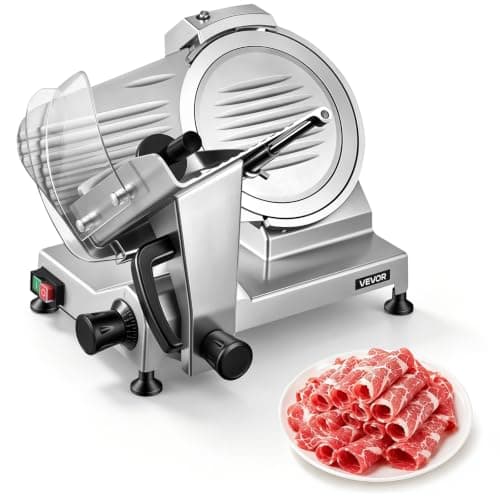
| VEVOR 12 in | 12 in carbon steel | Whole pork belly, large roasts |
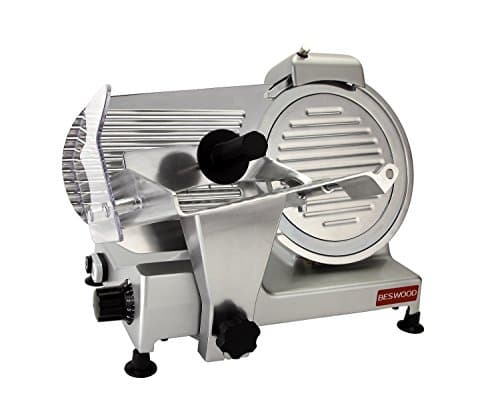
| BESWOOD 250 | 10 in chrome-plated | Published max cut 8.25 x 6.7 in |
| VEVOR 10 in | 10 in carbon steel | Deli logs, roasts, most home cuts |
| CUSIMAX 9 in | Two 9 in stainless | Roasts, bread, cheese, most home cuts |
| CUSIMAX 8.7 in | Two 8.7 in stainless | Deli meat, bread, cheese |
| VEVOR 7.5 in | 7.5 in | Deli logs and smaller |
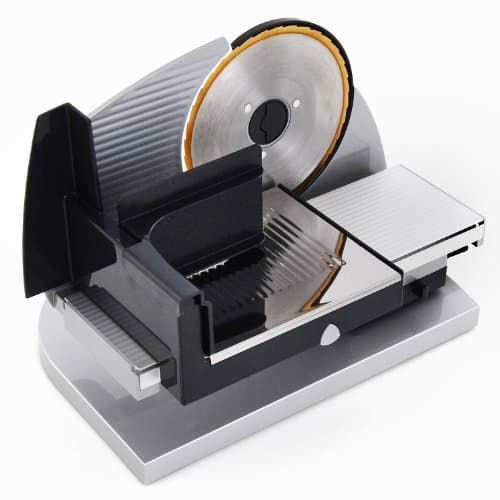
| Chef's Choice 632 | 7 in stainless | Deli meat, small roasts |
For a normal kitchen, 9 or 10 inches is the sweet spot. Below that you start trimming food to fit; above it you are buying bench space and weight you will not use.
The thickness dial, end to end
| Slicer | Published range | Thin enough for deli? | Thick enough for steak? |
|---|
| CUSIMAX 9 in | 1-20 mm | Yes | Yes |
| CUSIMAX 8.7 in | 1-20 mm | Yes | Yes |
| VEVOR 12 in | 0-15 mm | Yes | Yes |
| VEVOR 7.5 in | 0-15 mm | Yes | Yes |
| VEVOR 10 in | 0-12 mm | Yes | Mostly |
| BESWOOD 250 | 1-12 mm | Yes | Mostly |
| Chef's Choice 632 | Not published | Unknown | Unknown |
One row is blank, and we score that down rather than assume. For genuinely paper-thin work — hot pot, shabu shabu — none of these go thin enough; that is a different machine and a different page, linked below.
The seven, side by side
| Spec | CUSIMAX 9 | BESWOOD 250 | VEVOR 10 | VEVOR 7.5 | Chef's Choice 632 |
|---|
| Motor | 200W, 2-speed | 240W | 240W | 200W | Not published |
| Blade speed | Not published | 282 rpm | 350-400 rpm | 70-100 rpm | Not published |
| Second blade included | Yes, serrated | No | No | No | No |
| Built-in sharpener | No | Yes, two-stone | Yes | No | No |
| Dishwasher-safe parts | Blade + rail | No | No | No | No |
| Weight | Per CUSIMAX | 33 lb | 34 lb | Compact | 11 lb |
| Warranty published | 18 months | 12 months | No | No | No |
| Certification stated | No | No | No | ETL | No |
Cleanup is the reason slicers get abandoned
Almost every slicer that ends up in a cupboard for good went there because cleaning it was a twenty-minute job. Fat sets hard, the carriage traps crumbs, and the blade is the one part you least want to scrub by hand.
Two things to look for. First, which parts detach: the CUSIMAX machines and the VEVOR 7.5 in all drop their blade, pusher and carriage; the Chef's Choice publishes least about this. Second, blade material: the two VEVOR 10 and 12 in blades are carbon steel, which takes a better edge and must be dried immediately or it rusts. Stainless is more forgiving in a home kitchen that will not always dry a blade the minute it is washed.
Safety, briefly and seriously
A deli slicer is the most dangerous thing most people will put on a kitchen counter. The features that matter are a blade guard, a food pusher you actually use, and non-slip feet so the machine cannot walk. The VEVOR 7.5 in publishes a specific design detail worth having — its housing stands 1 mm above the blade to prevent accidental contact — and adds a security lock. The Chef's Choice has a child-proof switch.
Use the pusher for the last of every piece, unplug it before cleaning, and never rush the end of a roast. The last two inches are where the accidents happen.
Which of our slicer pages you want
How we ranked these
On the slicer rubric used across this site: blade size and type (20), motor and partially frozen meat (25), thickness range (20), cleanup and guarding (20), value at the live price (15). We have not bench-tested any of them; every figure is the maker's published spec, cited on each card, and an unpublished figure is marked “not published” and scored neutral rather than guessed.
One thing to notice in the scores: the 10 and 12 in machines score well on blade and motor and still sit below the CUSIMAX 9 in here, because this page is ordered for a home kitchen — where a 34 lb machine that never leaves the counter is a cost, not a feature.
How we picked
Units we claim to have bench-tested: none
Plenty of sites say they ground two hundred pounds through every grinder. We didn't, and we say so. What we do instead: read the maker's spec sheet, manual and warranty terms, record the figures that decide whether a machine keeps up with your season (size number, motor rating, rated pounds per minute, capacity, duty cycle, gearing), check parts availability, and score each pick on a published rubric. Then we show the season math — pounds per deer from the Ohio Division of Wildlife's yield study — so you can redo it with your own numbers.
Scores are editorial judgments from that documented research, not lab results. Nobody pays for placement. The rubric and weights are on the How We Pick page.