Meat Grinders ◆ Guide
How to Clean a Meat Grinder (and Why the Dishwasher Is Not an Option)
The whole routine takes about fifteen minutes and it is almost entirely in LEM's own manual: push the last of the meat through, hand wash, dry immediately, oil the cutting parts, store dry.
We earn a commission if you buy through our links, at no extra cost to you. It never decides the ranking — the method is published · Affiliate disclosure
Unplug the grinder, push a slice of bread through the head to clear the last of the meat, strip the head down, hand wash every part in warm soapy water, rinse with clear hot water and hand-dry immediately, then lubricate the knife and plates with food-grade silicone spray before you put it away. Grinder parts are not dishwasher safe. That is LEM's own instruction, in capitals, in the manual it ships with its #8 — and the reason is discoloration and corrosion, not inconvenience.
The ten-step routine
- Clear the head with bread. LEM's manual: “Meat remaining in the Grinder Head may be moved through by passing a slice of bread through the Grinder Head.” It pushes the last of the trim out instead of leaving it to dry in the auger flights.
- Switch off and unplug. Step one in the manual's own numbering.
- Take off the meat pan and the stomper. They are the parts most often left in a sink and forgotten.
- Remove the head. On LEM's #8 that means unscrewing the star bolt and pulling the head straight out.
- Unscrew the retaining ring and strip the head. Ring, plate, knife, auger, bushing, washer. Lay them out in order so reassembly is not guesswork.
- Hand wash in warm soapy water. Do not soak. A nylon brush gets the plate holes and the auger flights; a wooden skewer clears a stubborn hole.
- Rinse with clear hot water. The manual says clear hot water, which rinses soap residue and speeds the drying that comes next.
- Hand-dry immediately. This is the step people skip and the one that ends knives and plates. LEM says hand-dry immediately and do not soak.
- Lubricate the knife and the plates. LEM: “We advise you to lubricate the Knife and the Grinding Plates with silicon spray.” Food-grade silicone, LEM's own lubricant spray or mineral oil all appear in its guidance; the point is a thin barrier against moisture.
- Reassemble loosely or store the parts dry. LEM asks that the appliance be stored upright to extend the life of the motor, in a secure, dry place.
Clean immediately after use. LEM prints that in capitals too, and it is the difference between a fifteen-minute job and a scraping job.
Why not the dishwasher
Because the maker says so, and it says why. LEM's #8 manual states that grinder parts are not dishwasher safe and that discoloration may occur, and it repeats the instruction twice: once in the safety list and once in the cleaning section. The combination of high heat, long dwell time and strongly alkaline detergent is hard on the aluminum, the tinned cast iron and the plating that grinder parts are made from, and it is hard on the lubricated bushing.
If your grinder's manual says otherwise for specific parts, follow your manual. What you should not do is assume stainless means dishwasher safe. Stainless resists corrosion; it is not immune to it, and the knife and plate are the parts that matter most.
Rust, and why the silicone spray step is not optional
Grinder knives and plates are typically carbon or lightly plated steel precisely because that is what takes and holds a keen cutting edge. The trade is that they corrode. Water left in a plate hole overnight will leave a rust bloom you then have to clean off a food-contact surface, and repeated cycles pit the face where the knife meets the plate — which is where cutting performance lives.
So the sequence matters: rinse hot, dry by hand straight away, then put a film of food-grade silicone on the knife and plates. LEM also uses lubricant on the auger bushing, telling owners to remove the bushing, lubricate it with food-grade silicone, its own spray or mineral oil, and reinsert it — and it notes that bushings and washers are wear parts that need changing for the unit to work properly.
Picks for this job
What the cleaning routine actually needs
Not much: a spare knife and plate pair so a corroded one does not stop a session, and food-grade tubs to hold trim and ground meat while the head is in the sink.
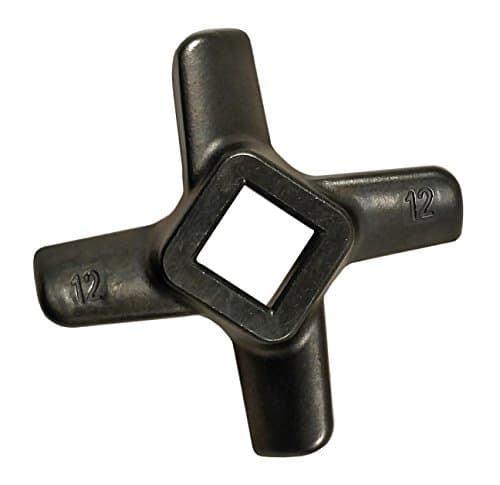
Best #12 replacement knife
Food Service Knives #12 Drop-Forged Grinder Knife
A spare drop-forged knife means a pitted one gets replaced rather than scrubbed. Measure your grinder before you order — fit is by measurement, not size number alone.
$20.99Amazon#ad · Price as of November 4, 2026 · Affiliate disclosure for the link to Food Service Knives #12 Drop-Forged Grinder Knife
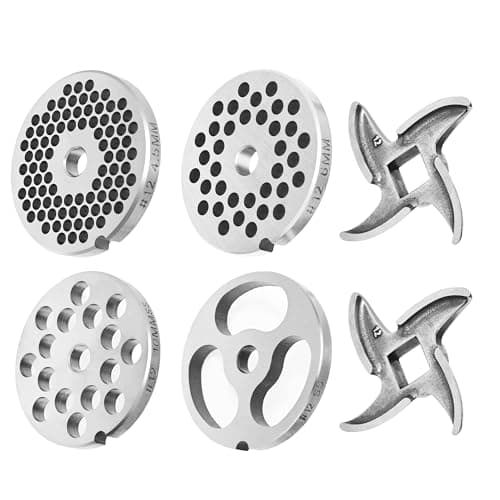
Best #12 plate kit
BOLEXINO #12 Stainless Grinder Plate Set with 2 Knives
Three #12 plates, a stuffing plate and two knives, so you can swap a corroded pair out and change both together as LEM advises.
$35.99Amazon#ad · Price as of November 4, 2026 · Affiliate disclosure for the link to BOLEXINO #12 Stainless Grinder Plate Set with 2 Knives
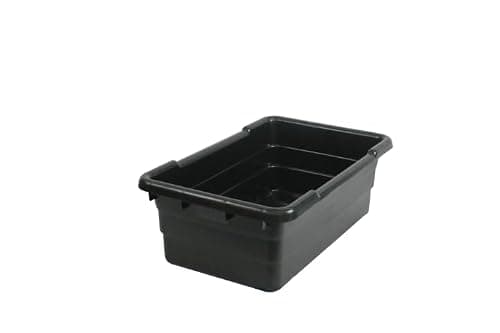
Best for 3-5 deer
UltraSource UltraTotes Food-Grade Tote Boxes, 6 Totes, No Lids
Food-grade tubs to hold trim and ground meat while the head is stripped, so the cold chain keeps running during cleanup.
$149.99Amazon#ad · Price as of November 4, 2026 · Affiliate disclosure for the link to UltraSource UltraTotes Food-Grade Tote Boxes, 6 Totes, No Lids
Sanitising is not the same as washing
LEM puts a warning in the manual that goes beyond soap: “Always be as thorough as possible when cleaning and sanitizing components. Any parts exposed to raw meat may harbor or develop bacteria possibly causing illness or death.” Washing removes the fat and protein; sanitising addresses what is left. Penn State Extension's guidance on processing wild game and Ohio State Extension's venison factsheet both treat clean equipment and a maintained cold chain as the two controls that matter at home.
The practical version: wash first, because sanitiser does not work through grease; keep a separate brush for grinder parts; and do not put a clean plate down on the board you were trimming on.
Dried-on meat, and the grinder you forgot about
If meat has dried in the auger flights or the plate holes, soak is exactly what LEM tells you not to do. Work warm soapy water and a stiff nylon brush instead, and use a skewer or a plate-hole brush for the holes. Patience beats a long soak, which drives water into the bushing and under the plating.
If you find the grinder put away dirty from last season, strip it completely, wash, dry, and then look hard at the knife and plate before you trust them with food. Pitting on the cutting faces is a replace, not a clean.
Storing it until next season
Dry, upright, out of reach of children — LEM's three storage instructions. Keep the knife and plates oiled and, if you can, in a wrap or a box rather than loose in a drawer where they bang against each other. Leave the ring finger-tight rather than torqued: LEM warns that over-tightening the ring causes needless wear on the knife and plate, and that running the grinder empty can damage the head and auger.
When cleaning is not the problem
If the grinder mushes after a clean, the issue is upstream of the sink: warm meat, a backwards knife, sinew on the knife, or a dull knife and plate. LEM's troubleshooting says that if meat is mashing rather than extruding in strings you should chill it to 40 °F, check that the plate and knife are installed properly, and know that a dull knife or plate will also cause mashing. Our clogging and mushing guide works through all six causes, and sharpening grinder knives and plates covers what to do with a pair that has gone dull.
Questions
Frequently asked
Can you put meat grinder parts in the dishwasher?
How do you get the last of the meat out of a grinder?
Should you oil a meat grinder after cleaning?
Can you soak a meat grinder to loosen dried meat?
How do you clean rust off a grinder plate?
How often should a meat grinder be cleaned?
Keep going down the chain
Related
Receipts
Sources
- LEM Products — #8 Electric Meat Grinder, Model 1158, Use & Maintenance manual (June 2014) [PDF]
- LEM Products — Grinder Workshop (troubleshooting and maintenance FAQ)
- LEM Products — Meat Processing Tips (January 2025)
- LEM Products — #10/12 Stainless Steel Grinder Knife (product page, SKU 485SS)
- Penn State Extension — Proper Processing of Wild Game and Fish (updated June 2023)
- Ohio State University Extension (Ohioline) — Food Preservation: Freezing and Canning Venison, HYG-5367 (2019)
- USDA Food Safety and Inspection Service — Ground Beef and Food Safety (fact sheet, rev. August 2012; copy hosted by Utah State University Extension) [PDF]
- Amazon listing, manufacturer-supplied copy — Food Service Knives #12 drop-forged knife
- Amazon listing, manufacturer-supplied copy — BOLEXINO #12 plate set with 2 knives
- Amazon listing, manufacturer-supplied copy — VTurboWay #12 knife 2-pack (published fit list)
- Amazon listing, manufacturer-supplied copy — UltraSource UltraTotes food-grade tote boxes, black, 6 totes (501116-BL6)
Specs come from the maker's own pages, manuals and maker-supplied listing copy (labeled as such); food-safety figures from USDA and university extension publications; yield from the Ohio Division of Wildlife; prices live from Amazon. Where a figure isn't published, we say so. Read the full method.