Meat Grinders ◆ Guide
Is Grinding Your Own Meat Cheaper? Not at the Grocery Store
The honest answer surprises people: at the last published national averages, a pound of boneless chuck roast cost more than a pound of ground beef. Grinding your own buys control, not savings - unless you are working from wild game, bulk beef, or a sale.
We earn a commission if you buy through our links, at no extra cost to you. It never decides the ranking — the method is published · Affiliate disclosure
No — not if you are buying the meat at a supermarket. At the last published national averages (September 2026), boneless chuck roast averaged $9.19 a pound while ground beef averaged $6.79. Grinding your own chuck started you $2.39 a pound behind, before you counted the trim you throw away, the machine, or your Saturday afternoon.
That is not an argument against owning a grinder. It is an argument against owning one for the wrong reason. There are four situations where a grinder genuinely pays — and if you hunt, you are already in one of them. This page works through the numbers, then the cases.
What the published prices say
We are not going to quote a supermarket shelf from memory. These are the Bureau of Labor Statistics Average Price series — the same price collection that feeds the Consumer Price Index — for the September 2026 observation, U.S. city average, accessed 2026-10-16.
| BLS series | September 2026, per lb | What it is |
|---|---|---|
| Ground beef, 100% beef | $6.79 | The thing you are trying to beat |
| Ground chuck, 100% beef | $6.48 | The closest like-for-like: chuck, already ground |
| Chuck roast, USDA Choice, boneless | $9.19 | What you would buy to grind yourself |
Read the second and third rows together, because that is the comparison that settles it: ground chuck was $6.48 and the boneless chuck roast it is made from was $9.19. Buying the roast and grinding it cost $2.70 a pound more than buying the identical cut already ground. You did the work and paid a premium for the privilege.
Why the roast costs more than the grind
It feels backwards. Ground beef is the processed product; the roast is the raw material. Shouldn't the raw material be cheaper?
No, and for a reason worth understanding: grinding is where the leftovers go. A packing plant breaking down a carcass produces a lot of material that cannot be sold as a steak or a roast — the trim off every primal, the lean scraps, the pieces too small or too irregular to merchandise whole. All of it is perfectly good beef and essentially none of it can be sold at cut prices. It gets ground.
So ground beef is priced off the cheapest beef in the building, blended to a fat target. A chuck roast is priced as a cut, competing with every other cut for case space. The grind is cheap because of what goes into it, not because of what is done to it.
Supermarkets also use ground beef as a traffic driver far more aggressively than they do chuck roasts, which pushes the same direction. The practical consequence: the gap is structural, not a temporary quirk, and you should expect it to persist.
The trim loss nobody counts
The published prices understate the gap, because you do not grind everything you buy. A chuck roast comes with silverskin, hard fat and connective tissue you will cut away before it goes near the auger — partly for texture, partly because gristle is what wraps around a grinder knife and stops the machine. Our clogging guide is largely about exactly that material.
Assume a modest 10% loss — and 10% is modest; a badly trimmed chuck can lose more. At $9.19 a pound bought, your finished grind effectively costs $10.21 a pound: purchase price ÷ (1 − 10%). The gap against $6.79 ground beef is now a little over $3.41 a pound.
The one mitigation: that trim is not worthless. Fat you cut off is fat you can add back deliberately, which is the whole point of controlling a blend — see venison burger fat ratio. But you are not getting the money back.
The price you cannot buy at
Here is the number that explains why bulk buying changes everything. On 10/15/2026, USDA's national boxed beef report put the Choice cutout at $3.74 a pound (373.98 per cwt) and the primal chuck at $3.37 a pound (337.4 per cwt). For reference, the primal round was $2.95 a pound and the Select cutout $3.53.
| Chuck, by where you buy it | Per lb | Source and date |
|---|---|---|
| Wholesale primal chuck (boxed beef) | $3.37 | USDA AMS, 10/15/2026 |
| Retail boneless chuck roast | $9.19 | BLS average price, September 2026 |
| Retail ground beef | $6.79 | BLS average price, September 2026 |
Wholesale chuck was about a third of the retail roast price. You cannot walk into a plant and buy at $3.37 — that is a truckload price between packers and distributors, and the spread covers freight, cutting, shrink, store labor and margin. But it tells you where the room is: every step you take toward buying whole and closer to the source is a step toward that number. A whole chuck roll from a butcher, a quarter or a half beef, a case-price buy at a restaurant supply — all of them put you somewhere between those top two rows instead of at the bottom of the retail case.
That is the real answer to “is grinding cheaper”: the grinder is not what saves you money. Buying differently is what saves you money, and a grinder is what makes buying differently practical. Our how much meat from a half cow page has the sourced take-home weights for that decision.
The break-even arithmetic
Once you know your own saving per pound, break-even is one division: machine price ÷ saving per pound = pounds to grind. We will not guess your saving, so the table runs several, against live machine prices.
| Grinder | Live price | Saving $0.50/lb | Saving $1.00/lb | Saving $2.00/lb | Saving $3.00/lb |
|---|---|---|---|---|---|
| GVODE Metal Meat Grinder Attachment for KitchenAid | $35.99 | 72 lb | 36 lb | 18 lb | 12 lb |
| STX Turboforce 3000 Electric Meat Grinder (#12) | $179.80 | 360 lb | 180 lb | 90 lb | 60 lb |
| LEM MightyBite #8 Electric Meat Grinder (500 W) | $249.99 | 500 lb | 250 lb | 125 lb | 84 lb |
Grinder prices live as of November 4, 2026; a machine without a verified price is left out rather than estimated. Pounds are rounded up. Read it as: at a $1.00 per pound saving you need to grind that many pounds before the machine has paid for itself, ignoring your time and the electricity.
The pattern is the useful part. At a thin saving, even a cheap stand-mixer attachment takes a lot of grinding to repay; at $2.00 or $3.00 a pound — which is roughly what buying a whole chuck roll or a half beef gets you against retail ground — a mid-range standalone pays off inside one or two bulk buys. And if the meat is free because you shot it, the only question left is cost per deer:
Put it in per-pound terms over five seasons at two deer a year — ten deer, about 522 lb of venison at the Ohio DNR average. The GVODE Metal Meat Grinder Attachment for KitchenAid works out to about $0.07 a pound of machine cost; the LEM MightyBite #8 Electric Meat Grinder (500 W), about $0.48 a pound. Against a processor's per-deer grinding fee that is not a close contest, which is the whole argument on our DIY versus processor cost page. Prices live as of November 4, 2026.
Four cases where it does pay
1. Wild game. The meat is already yours and grinding is the only way to use the trim — the neck, shanks, flanks and scraps that are not steaks. There is no “cheaper” alternative to compare against except a processor's fee, and a grinder beats that in one or two seasons. At the Ohio DNR average of 52.19 lb per deer, a good share of each animal is destined for the grinder whatever you do with the rest. Start at how to grind deer meat.
2. Bulk and whole-primal buying. See the wholesale table above. A whole chuck roll, a case of brisket trim, a quarter or half beef — these are bought closer to the cutout and they arrive as cuts and trim, not as grind. A grinder is what turns that into usable burger, and it is where the saving actually lives.
3. Chuck on a genuine sale. The structural gap we described can invert in a given week. Loss-leader chuck roast below the ground-beef price is real, and when it happens, grinding it is strictly better than buying the grind: same cut, your own fat ratio, less money. Check the shelf, not our table.
4. Grinding what you already paid for. If you have hanging-weight beef in the freezer, a shoulder from a hog, or trim left from breaking down a primal, that meat is a sunk cost. Grinding it is pure yield recovery — the alternative is throwing away protein you already bought.
What you are actually buying
If the money case only works in those four situations, why do people who have run the numbers still own grinders? Because the things a grinder buys are things money does not fix:
- Fat ratio you choose. Store grind comes in a few fixed ratios. Yours comes in whatever ratio the dish wants, which matters enormously for venison — lean to the point of unpleasant without added fat. That is the entire fat ratio page.
- One animal, one cut, your knife. You know exactly which piece of meat went in, because you put it there. A package of store grind is blended from many sources by design.
- Grind texture and timing. Coarse for chili, fine for sausage, double-ground for snack sticks — see grinder plate sizes — and ground an hour before it is cooked rather than days before.
- Access to cuts nobody grinds commercially. Short rib, oxtail meat, brisket point for a better burger blend. These are not sold as grind at any price.
Those are good reasons. They are just not savings, and a page that told you otherwise would be selling you something.
Picks for this job
Three grinders at three price points
If the case above fits you, these are the machines we would start from - a stand-mixer attachment if you already own the mixer, a budget standalone, and the entry LEM. Every price is live; we do not quote machine prices from memory.
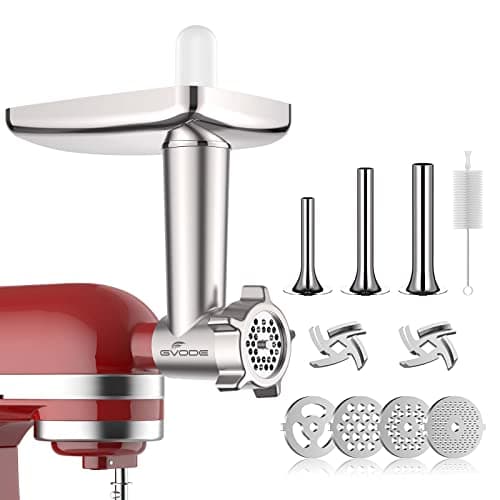
Budget metal attachment
GVODE Metal Meat Grinder Attachment for KitchenAid
Cheapest way in if a KitchenAid is already on the counter. Lowest break-even on the table above, lowest throughput too.
$35.99Amazon#ad · Price as of November 4, 2026 · Affiliate disclosure for the link to GVODE Metal Meat Grinder Attachment for KitchenAid
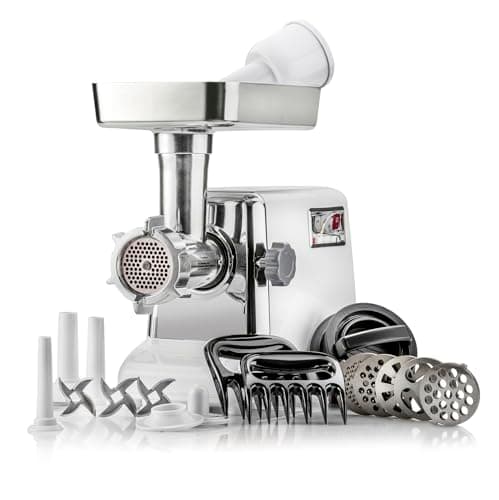
Best budget pick
STX Turboforce 3000 Electric Meat Grinder (#12)
The budget standalone we point people at first: a real auger and head for less than most attachments plus a mixer.
$179.80Amazon#ad · Price as of November 4, 2026 · Affiliate disclosure for the link to STX Turboforce 3000 Electric Meat Grinder (#12)
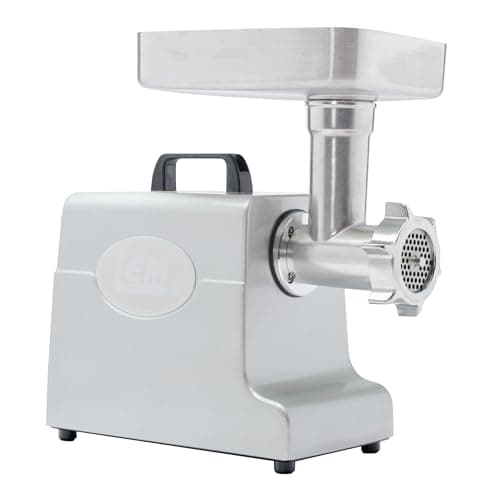
Best for one deer a year
LEM MightyBite #8 Electric Meat Grinder (500 W)
Where a grinder stops feeling like an appliance. The one to buy if bulk beef or two-plus deer a year is the plan.
$249.99Amazon#ad · Price as of November 4, 2026 · Affiliate disclosure for the link to LEM MightyBite #8 Electric Meat Grinder (500 W)
What we would do
Do not buy a grinder to beat the ground-beef price at your supermarket. You will not, the published averages say so, and the structure of how beef is cut and priced says it will stay that way.
Buy one if you hunt, if you are willing to buy beef in larger pieces than a tray, or if fat-ratio control is worth real money to you — and then let those things pay for it. If the plan is three to five deer or a half beef, the machine we would buy is reviewed in full at LEM BigBite #12 review. Size it to the volume you will actually put through it, which is what our meat grinder sizes explained page is for, and if you are weighing an attachment against a standalone, that is its own comparison.
One last honest note about this page: the numbers on it have dates attached for a reason. Beef prices moved a long way through 2026, and the BLS series and the USDA cutout report are both free to check. If the gap has closed by the time you read this, trust the series over us.
Questions
Frequently asked
Is it cheaper to grind your own meat?
Why does chuck roast cost more than ground beef?
How much do you lose to trim when grinding chuck?
How many pounds before a meat grinder pays for itself?
Is grinding your own meat cheaper for venison?
Why is wholesale beef so much cheaper than retail?
Keep going down the chain
Related
- DIY vs processor costThe other cost question: your gear against a processor's fee.
- Best meat grinders for home useOnce you have decided a grinder earns its place.
- LEM BigBite #12 reviewThe machine we would buy if the case above fits you.
- Meat grinder sizes explainedSize it to the volume, not to the price.
- Venison burger fat ratioThe control you are actually paying for.
- How much meat from a half cowWhere the real savings live, with sourced weights.
Receipts
Sources
- U.S. Bureau of Labor Statistics, Average Price Data via FRED — Ground Beef, 100% Beef, cost per pound, U.S. city average (APU0000703112), September 2026 observation, accessed 2026-10-16
- U.S. Bureau of Labor Statistics, Average Price Data via FRED — Ground Chuck, 100% Beef, cost per pound, U.S. city average (APU0000703111), September 2026 observation, accessed 2026-10-16
- U.S. Bureau of Labor Statistics, Average Price Data via FRED — Chuck Roast, USDA Choice, Boneless, cost per pound, U.S. city average (APU0000703213), September 2026 observation, accessed 2026-10-16
- U.S. Bureau of Labor Statistics — Average Price Data (CPI Average Price Concepts and Methods)
- USDA Agricultural Marketing Service, National Daily Boxed Beef Cutout and Boxed Beef Cuts (LM_XB803), report dated 10/15/2026
- Ohio Department of Natural Resources, Division of Wildlife — Venison Meat Yield (115 deer, 2017 gun season) [PDF]
Specs come from the maker's own pages, manuals and maker-supplied listing copy (labeled as such); food-safety figures from USDA and university extension publications; yield from the Ohio Division of Wildlife; prices live from Amazon. Where a figure isn't published, we say so. Read the full method.