Freezers & Storage ◆ Guide
Is Freezer-Burned Venison Safe to Eat? Yes, and Here Is What to Do With It
Those grey-brown leathery patches are the meat drying out inside the freezer. They cost you flavour and texture, not safety - and the fix is packaging, not a colder freezer.
We earn a commission if you buy through our links, at no extra cost to you. It never decides the ranking — the method is published · Affiliate disclosure
Freezer-burned meat is safe to eat. NDSU Extension puts it plainly: freezer burn “is the drying out, or dehydration, of frozen food. It appears as grayish-brown leathery spots and is caused by air reaching the surface of the food. Although it is not a safety issue, it affects the quality of the food.” Its advice on what to do: “Cut freezer-burned portions away either before or after cooking the food. Heavily freezer-burned foods may have to be discarded for quality reasons.”
So the decision is a flavour decision, not a risk decision. Trim the patches off a mildly affected pack and use it. Bin a pack that is leathery through, because it will taste like it looks.
What freezer burn actually is
Dehydration inside a freezer. Air in contact with the surface of the meat draws moisture out of it over months, and what is left is dry, discoloured and tough. The cause NDSU names is simple and it is the one you can control: air reaching the surface of the food.
Two things follow from that, and they are the two most common misconceptions:
- It is not caused by a freezer that is too cold. A colder freezer does not burn meat. NDSU says to set a freezer to 0 °F (-18 °C) or lower to preserve food for extended periods, because freezing keeps food safe “by slowing the growth of microorganisms that cause both food spoilage and foodborne illness.”
- It is not spoilage. Nothing has grown. The meat has lost water, which is why trimming the affected surface leaves perfectly good meat underneath.
Is it safe to eat?
That second sentence is the more useful one for a hunter with a full chest freezer, because it is the whole model: at 0 °F, safety is not the variable. Quality is. Everything in the published storage charts is about how good the meat will be, not whether it will make you ill.
What to do with a burned pack
| What you are looking at | Do this |
|---|---|
| A few grey-brown patches on one face of a steak | Trim them off — before or after cooking, per NDSU |
| A dry rind around the outside of a roast | Trim the rind, use the centre |
| Ground venison with dried grey crumb on the surface | Scrape the dry surface away; use the rest in a wet dish — chilli, stew, sauce |
| A pack that is leathery all the way through | Discard for quality — NDSU says heavily burned foods may have to be |
| A whole backstrap with burn in several places | Trim, then grind it rather than trying to serve it as steak |
One practical note for venison specifically: a lightly burned pack of grind is the best candidate for rescue, because the texture damage disappears into a braise. A lightly burned steak is the worst, because texture is the whole point of a steak.
Freezer burn, or just a colour change?
Not every discoloured pack is burned. NDSU addresses this directly: colour changes do occur in frozen foods, and “the bright red color of meat as purchased can turn brownish because of a lack of oxygen, freezer burn (drying out) or abnormally long storage.” Its conclusion is the same either way: “Be sure to properly package foods to retain the quality.”
The practical test is texture, not colour. Freezer burn is dry and leathery to the touch and the surface looks desiccated. A simple colour shift from red to brown-purple, with a normal moist surface, is oxygen deprivation in a sealed bag — which is exactly what a vacuum sealer is supposed to do. Dark venison in a vacuum bag is usually a well-sealed bag, not a problem.
How to prevent it
Everything that prevents freezer burn is a packaging decision. NDSU's guidance on supermarket wrapping is the clearest illustration: freezing meat in its store wrap is safe “but only if you will use the food within a month. For longer storage, overwrap the package using airtight heavy-duty foil, plastic wrap or freezer paper, or place the package inside a plastic freezer bag,” and use airtight freezer containers to repackage family packs into smaller amounts.
For a season of venison that translates to three rules:
- Get the air out. A vacuum sealer is the most complete answer available to a home processor, because it removes the air rather than just covering it. Freezer paper works when it is wrapped tight and double-wrapped.
- Freeze fast and in shallow packages. NDSU: freeze in shallow containers, because slow freezing creates large, disruptive ice crystals; food about 2 inches thick should freeze completely in about two hours. Do not stack packages while they freeze — spread them in one layer and stack them only once they are solid.
- Date everything and rotate. NDSU: write the date on the package and arrange the freezer so you use the oldest packages first. Freezer burn is a function of time with air; a rotated freezer never gets to the point of having it.
Picks for this job
What actually prevents it
Remove the air or wrap it out. A sealer is the thorough answer, freezer paper the cheap one, and both beat a bag with air in it.
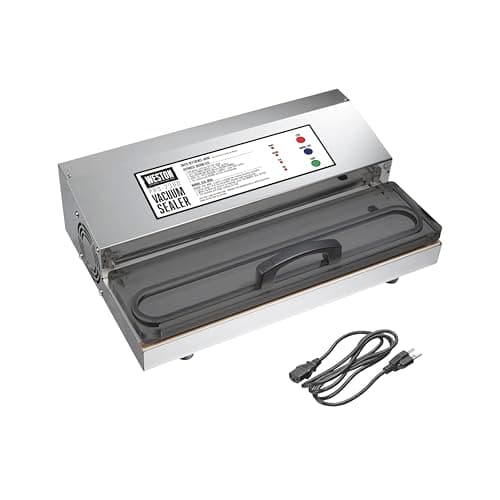
Best for wide cuts
Weston Pro-2300 Vacuum Sealer
A fan-cooled sealer with a double-piston pump rated to 28 in. Hg and bags up to 15 in. wide, so a whole backstrap seals in one piece. Its manual asks for at least 20 seconds with the lid open between cycles.
$474.45Amazon#ad · Price as of November 4, 2026 · Affiliate disclosure for the link to Weston Pro-2300 Vacuum Sealer
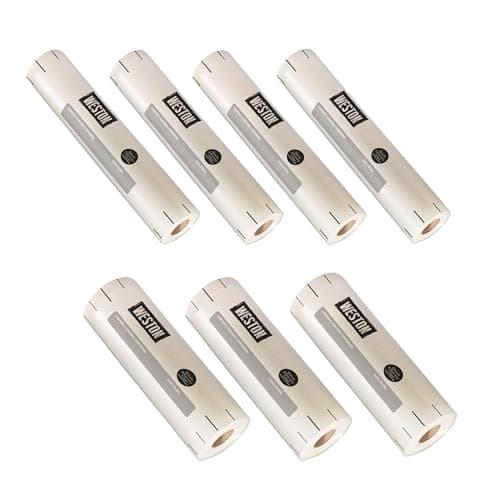
Best two-width roll pack
Weston 3 mil Vacuum Sealer Rolls, 7-Pack
The rolls to feed it: cut each bag to the cut, so there is no excess air volume to pull out in the first place.
Check price · Amazon#ad · Price as of November 4, 2026 · Affiliate disclosure for the link to Weston 3 mil Vacuum Sealer Rolls, 7-Pack
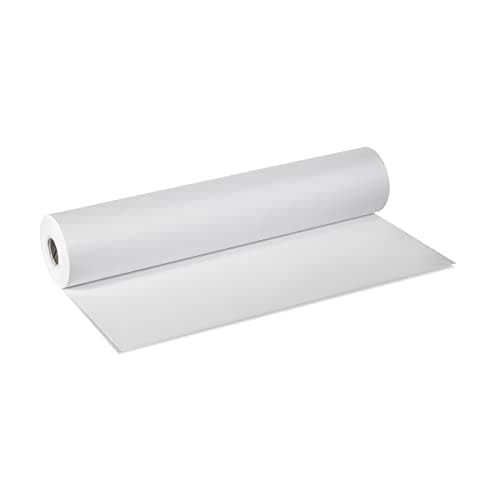
Best freezer paper for a whole deer
Weston Heavy-Duty Freezer Paper Roll, 15 in x 150 ft (83-4000-W)
The low-tech answer that still works: wrap tight, double-wrap, tape it, date it. Cheaper per package than any bag.
$22.95Amazon#ad · Price as of November 4, 2026 · Affiliate disclosure for the link to Weston Heavy-Duty Freezer Paper Roll, 15 in x 150 ft (83-4000-W)
If you are deciding between the two approaches rather than owning both, our freezer paper versus vacuum sealing comparison works through the cost and the keeping quality, and how to package deer meat for the freezer covers the wrapping technique package by package.
One caveat worth carrying: University of Maine Cooperative Extension's guidance on vacuum sealing at home is clear that vacuum packaging slows deterioration but is not a substitute for refrigeration or freezing. A vacuum bag prevents freezer burn; it does not extend what the freezer itself is doing.
Storage times are about quality, not safety
NDSU reprints the USDA frozen meat storage chart, and reading it with “this is a quality chart” in mind changes how you use it:
| Food | Months of frozen storage |
|---|---|
| Uncooked steaks, chops, roasts | 4 to 12 |
| Uncooked ground meat | 3 to 4 |
| Cooked meat | 2 to 3 |
| Uncooked whole poultry | 12 |
| Uncooked cut-up poultry | 9 |
| Cooked poultry | 4 |
Note the gap between ground meat at 3 to 4 months and whole cuts at 4 to 12. That is the single most useful planning fact for a hunter: grind is the thing to eat first, and whole cuts are what you keep into next autumn. At the Ohio Division of Wildlife average of about 52 lb of venison a deer, a two-deer season is roughly 104 lb — and if a third of that is grind, that is 35 lb to get through inside four months for best quality rather than twelve.
Our how long vacuum-sealed meat lasts page carries the cited tables in more detail, and chest freezer organization covers the rotation system that makes the dates mean something.
Why venison seems to show it faster
Partly because of how it arrives. A deer gets packaged in one long session, often by hand, often into bags with more air in them than anyone intends, and all of it goes into the freezer on the same day — so it all ages at the same rate and it all comes due at the same time. Commercial meat arrives a pack at a time in a factory seal.
Partly because venison is lean. There is less intramuscular fat to buffer a drying surface, so the dry patches read as grey-brown leather sooner than they would on a marbled beef steak.
And partly because of loading. NDSU's point about spreading packages in one layer to freeze, rather than stacking them, is exactly the rule a hunter breaks when forty packs go in at once. Ohio State Extension's factsheet on freezing meat, poultry and game and NCHFP's freezing-meats page both treat package size and freezing speed as part of the same problem.
The answer is not a better freezer. It is tight packaging, shallow packages, a date on every one, and a freezer organised so the oldest comes out first. Our best chest freezers for meat page covers the hardware and freezer space for a deer the sizing.
Questions
Frequently asked
Is freezer-burned meat safe to eat?
What causes freezer burn?
Should you throw away freezer-burned venison?
Does a colder freezer prevent freezer burn?
Why did my venison turn brown in the freezer?
How long does venison keep in the freezer before quality suffers?
Does vacuum sealing prevent freezer burn?
Keep going down the chain
Related
Receipts
Sources
- NDSU Extension — Questions and Answers About Storing Food in the Freezer (FN1465, reviewed June 2025) [PDF]
- NDSU Extension (FN614) — Food Freezing Basics: Packaging, Loading the Freezer and Refreezing
- National Center for Home Food Preservation (University of Georgia) — Freezing Meats
- National Center for Home Food Preservation — Packaging and Labeling Foods
- University of Illinois Extension — Freezer Storage
- Ohio State University Extension (CFAES) — Food preservation: freezing meat, poultry, and game
- University of Maine Cooperative Extension — Vacuum Sealing Safely at Home (September 2024)
- USDA Food Safety and Inspection Service — Freezing and Food Safety
- Ohio Department of Natural Resources, Division of Wildlife — Venison Meat Yield (115 deer, 2017 gun season) [PDF]
- Weston — Pro-2300 vacuum sealer manual (65-0201 version; rest interval and thermal protector) [PDF]
- Amazon listing, manufacturer-supplied copy — Weston Pro-2300 (65-0220-W)
- Amazon listing, manufacturer-supplied copy — Weston vacuum sealer roll 7-pack (30-2001-W)
- Amazon listing, manufacturer-supplied copy — Weston freezer paper 83-4000-W
- Amazon listing, manufacturer-supplied copy — LEM MaxVac 250 (1393)
Specs come from the maker's own pages, manuals and maker-supplied listing copy (labeled as such); food-safety figures from USDA and university extension publications; yield from the Ohio Division of Wildlife; prices live from Amazon. Where a figure isn't published, we say so. Read the full method.