Breaking Knife vs Boning Knife: Two Jobs, Two Blades
A boning knife separates meat from bone. A breaking knife turns the meat you separated into cuts. Trying to do the second job with the first is why a long afternoon gets longer.
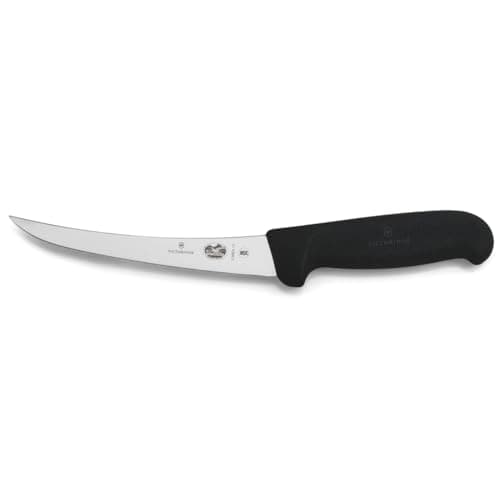
A 6 in. curved semi-stiff blade at 3.4 oz: enough spine to lever around a hip joint, enough give to follow a seam. Victorinox pitches semi-stiff at thicker meats.
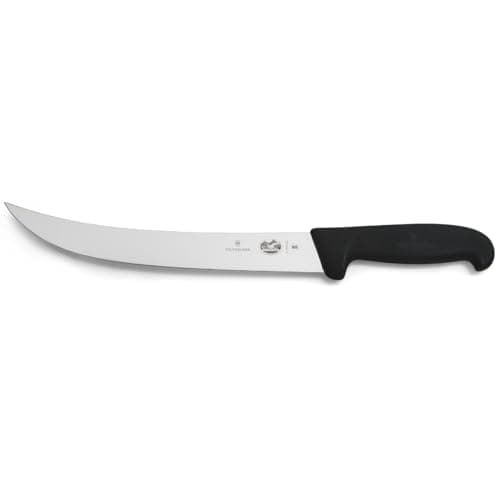
9.8 in. of curved blade, 15.4 in. overall. Victorinox publishes more on this steel than any knife we list: conical ground and ice tempered, NSF, lifetime warranty.
#ad · Price as of November 4, 2026 · Affiliate disclosure for the link to Victorinox Fibrox 6 in Curved Boning Knife, Flexible
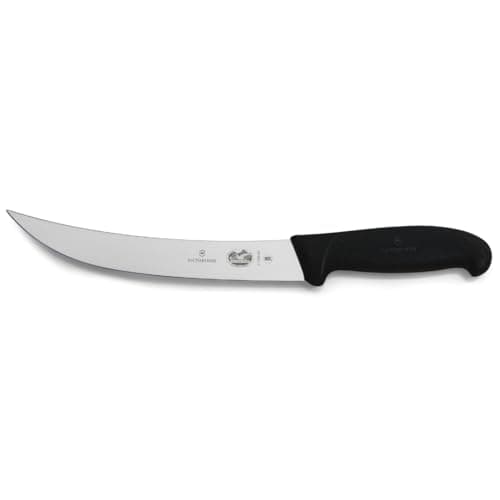
Buy the 6-inch curved semi-stiff boning knife first. On a deer, almost everything is a boning job: separating muscle groups, working around the hip and shoulder joints, following seams. The semi-stiff blade has enough spine to lever and enough give to follow, which is why it is the first knife in our boning knife picks.
Add an 8-inch curved breaking knife when portioning becomes the slow part. Victorinox's own case for it is that the wider, heavier blade keeps slices uniform and stops meat tearing — which is exactly what a 6-inch boner cannot do across a boned-out hindquarter in one stroke.
Side by side
Spec
Boning, 6 in. semi-stiff
Breaking, 8 in.
Breaking, 10 in.
Blade
6 in. curved, semi-stiff
7.9 in. curved
9.8 in. curved
Overall length
About 11 in.
13.1 in.
15.4 in.
Weight
3.4 oz
4.2 oz
5 oz
Primary job
Meat off bone, around joints
Portioning roasts and steaks
Large primals, elk quarters
Published steel detail
Stainless
High-carbon stainless edge
Conical ground, ice tempered
Warranty
Lifetime
Lifetime
Lifetime
What each knife is actually for
A boning knife works against resistance. The blade is short so you can control the tip in a confined space, and narrow so it slips between muscle and bone. The work is small, repeated and close: cutting the ball out of a hip socket, releasing a shoulder blade, running the tip along a rib.
A breaking knife works through unsupported meat. The blade is long so a cut finishes in one pass, and wider and heavier so it tracks straight instead of wandering. The work is open and sweeping: a hindquarter into roasts, a loin into steaks, a shoulder into chunks for the grinder.
The failure mode when you only own the boner is sawing. A 6-inch blade cannot cross a whole muscle in one stroke, so you take two or three — and every restart leaves a step in the face of the cut, which is the “torn” look Victorinox's breaking-knife copy is describing.
Flex, spine and the curve
Three attributes, and only one of them is about length.
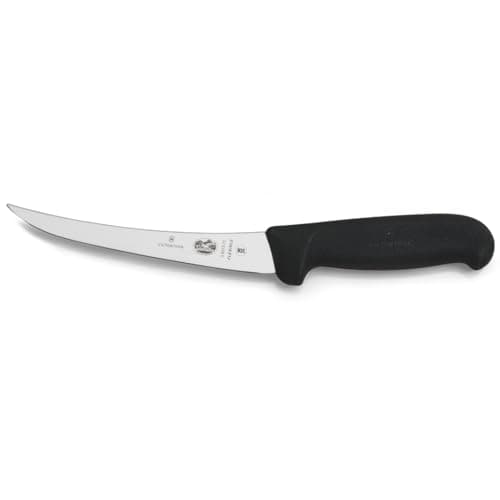
Flex. Victorinox pitches the semi-stiff boner at thicker meats that need a less flexible knife, and the flexible version of the same pattern at trimming fat and sinew. The flexible blade follows a flat surface beautifully and is the wrong tool for levering a joint — its own listing copy points it at tender, delicate cuts like chicken and fish.
Spine and weight. 3.4 oz on the boner, 4.2 and 5 oz on the breakers. That extra mass is doing work: it carries the blade through a long cut so you are steering rather than pushing.
The curve. Both patterns here are curved, for different reasons. On the boner it gives a better working angle close to and around bone, per Victorinox. On the breaker it is what lets a long stroke rock through a muscle rather than drag.
Which to buy first
One knife: the 6-inch semi-stiff boner. Two knives: add the 8-inch breaker. Three knives: add the flexible 6-inch for trimming — which, if you make a lot of jerky or backstrap steaks, is the knife you will reach for most after the first two.
Both patterns also come in sets. Our butcher knife sets page covers the boxed options, and deer processing kits the versions that bundle a saw and gloves too.
8 inch or 10 inch
For whitetails, the 8-inch. Deer muscles are small enough that 7.9 inches of blade crosses them, and the shorter knife is easier to control on a kitchen counter.
The 10-inch earns its length on elk quarters and beef primals, where a muscle can be wider than a deer's whole hindquarter. It is also the knife Victorinox publishes the most about — conical ground and ice tempered, NSF-compliant — if the documentation matters to you. Our elk yield page is the volume context for that choice.
Using the wrong one
A breaker around a joint is the dangerous mistake, not just the inefficient one. Ten inches of curved blade levering against bone in a confined space is a lot of edge you cannot see, and the force needed to get it there is force you are not controlling with the tip.
A boner used as a breaker is merely slow and leaves ragged faces. Neither is a disaster; both are the reason a two-knife kit is the standard answer. Penn State Extension's guidance on processing wild game treats clean, well-maintained equipment and an unbroken cold chain as the two controls that matter at home — sharp knives serve both, because a sharp knife means less time with the meat out of the cold.
If you are choosing between a boner and a fillet knife instead, that is a different pair with a different answer — see boning knife vs fillet knife.
In detail
The contenders, in full
Buy this first
Victorinox Fibrox Pro 6 in Curved Boning Knife, Semi-Stiff
7.6 /10
A 6 in. curved semi-stiff blade at 3.4 oz: enough spine to lever around a hip joint, enough give to follow a seam. Victorinox pitches semi-stiff at thicker meats.
#ad · Price as of November 4, 2026 · Affiliate disclosure for the link to Victorinox Fibrox 8 in Curved Breaking Knife
Best for elk and beef primals
Victorinox Fibrox 10 in Curved Breaking Knife
7.5 /10
9.8 in. of curved blade, 15.4 in. overall. Victorinox publishes more on this steel than any knife we list: conical ground and ice tempered, NSF, lifetime warranty.
#ad · Price as of November 4, 2026 · Affiliate disclosure for the link to Victorinox Fibrox 6 in Curved Boning Knife, Flexible
How we picked
Every pick, scored on the same published rubric
Each machine here is read end to end: the maker's spec sheet, the owner's manual and the warranty terms. We pull out the figures that decide whether it keeps up with your season — size number, motor rating, rated pounds per minute, capacity, duty cycle, gearing — confirm parts are still available, and score every pick on the same weighted rubric, so a score on one page means the same thing on the next. Then we show the season math, pounds per deer from the Ohio Division of Wildlife's yield study, so you can run it against your own freezer.
What is the difference between a breaking knife and a boning knife?+
Length and job. A boning knife is about 6 in., narrow and controllable, for separating meat from bone and working around joints. A breaking knife is 8-10 in., wider and heavier, for portioning boned-out meat into roasts and steaks — Victorinox says the wider blade keeps slices uniform and stops meat tearing.
Which should you buy first for deer?+
The 6-inch curved semi-stiff boning knife. On a deer, nearly every cut is a boning cut. Add an 8-inch breaking knife when portioning becomes the slow part of the day.
Do you need a breaking knife if you grind everything?+
No. A breaking knife produces cuts; if all the meat goes through the grinder, a boning knife alone does the whole job.
Should a boning knife be stiff or flexible?+
Semi-stiff for deer. Victorinox pitches its semi-stiff blade at thicker meats that need a less flexible knife, and the flexible version of the same 6 in. pattern at trimming fat and sinew — so the flexible knife is the second one, not the first.
Is a 10 inch breaking knife too big for whitetail?+
For most people, yes. Deer muscles are crossed comfortably by the 7.9 in. blade, and the shorter knife is easier to control. The 10 in. earns its reach on elk quarters and beef primals.
Specs come from the maker's own pages, manuals and maker-supplied listing copy (labeled as such); food-safety figures from USDA and university extension publications; yield from the Ohio Division of Wildlife; prices live from Amazon. Where a figure isn't published, we say so. Read the full method.