Sausage & Curing ◆ Guide
DIY Curing Chamber: What It Takes, and What Food Scientists Say About Home Dry-Curing
A converted fridge with a temperature controller is the easy part. The hard part is the controlled fermentation that a chamber does not give you - and the extension service that studies this does not recommend making dry sausage at home.
We earn a commission if you buy through our links, at no extra cost to you. It never decides the ranking — the method is published · Affiliate disclosure
A DIY curing chamber is a fridge, a temperature controller, a humidity source and a fan — and that combination still does not make home dry-cured salami safe. Washington State University Extension is unambiguous: “Proper equipment and knowledge of sausage making are essential to produce these products safely since Staphylococcus aureus toxin can be produced if fermentation conditions are not rigidly controlled. Therefore, home production of dry sausages is not recommended.”
We are not going to publish a build guide that walks past that sentence. What follows is what a chamber does control, why that is not the controlling variable, and the products you can make with the same equipment and the same gear budget without taking the risk.
What the extension service actually says
The reasoning is in the process description. Dry sausage is defined by “a carefully controlled bacterial fermentation which results in a lower (more acidic) pH and a characteristic tangy flavor,” with lactic acid-producing bacteria and dextrose added to assure proper fermentation. WSU notes that dry sausages “require drying periods usually ranging from 3 weeks to 3 months in which both the temperature and humidity are carefully controlled,” and that they are therefore “quite costly and difficult to make.”
The failure mode WSU names is specific, and it is a toxin rather than a bug you can cook out later: the risk is tied to fermentation conditions, not to the drying that follows. A chamber that holds temperature and humidity beautifully for eight weeks tells you nothing about whether the pH dropped the way it had to in the first day.
What a chamber controls, and what it does not
| Variable | Does a DIY chamber control it? | Is it the one that decides safety? |
|---|---|---|
| Temperature | Yes — a plug-in controller does this well | Partly |
| Relative humidity | Roughly — with a humidifier and a second controller | Mostly a quality variable |
| Air movement | Yes, with a small fan | Quality |
| Rate of pH drop in fermentation | No | Yes — this is the one |
| Water activity in the finished sausage | No — needs measurement, not control | Yes |
| Starter culture viability | No | Yes |
Read the right-hand column. Everything a fridge conversion buys you sits in the top half of the table; everything that decides whether the product is safe sits in the bottom half, and none of it is a thermostat problem. That is the whole reason WSU's recommendation lands where it does.
The build, honestly described
For completeness, this is what people build and what each part does. A used fridge or a wine cooler provides the box and the refrigeration. A plug-in dual-relay temperature controller sits between the wall and the appliance and switches refrigeration or a heat source to hold a setpoint — the Inkbird ITC-308 we list runs both heating and cooling equipment, shows measured and set temperature together, carries high, low and sensor-fault alarms, and handles up to 1100 W at 110 V with an adjustable compressor delay to protect the compressor. A second controller plus an ultrasonic humidifier handles relative humidity, and a small computer fan keeps air moving so surfaces dry evenly instead of case-hardening.
That is a genuinely useful piece of equipment. It is just not a dry-curing licence, and the controller's own listing does not claim an accuracy figure. If you build one, build it for the jobs in the next two sections.
The safer route to the same flavour
The flavour most people are chasing — tangy, firm, sliceable, keeps without refrigeration — comes from acid, salt, nitrite and lost moisture. You can get most of the way there with processes extension services do recommend:
- Summer sausage. A cured, smoked, cooked product rather than a fermented dry one. NDSU's worked example finishes it at 155 °F internal. Fibrous casings, a kit with a matched cure, a leave-in probe, done in a day. Our venison summer sausage guide covers it end to end.
- Snack sticks. Same logic at stick diameter, finished in a smoker, oven or dehydrator. See snack stick kits.
- Jerky. A dried product with a published safe process. USDA's guidance underpins our deer jerky guide and time and temperature table.
- Cured bacon. A cure-then-cook process with published extension guidance behind it, not a fermentation.
Semi-dry sausage, which WSU does allow
There is a middle path in the same publication, and it is worth knowing. WSU: “Semi-dry sausages can be safely prepared within 24 hours if you use very fresh ingredients, properly handled lactic acid starter culture, and careful temperature control.” And it offers a route that skips fermentation entirely: “Tangy semi-dry sausages can also be produced without fermentation by adding encapsulated lactic acid or citric acid directly to the sausage mixture. Sausages made with encapsulated acids are easier to make, but they may have a slightly different flavor than fermented sausages. Encapsulated acids are recommended for homemade dry or semi-dry sausage.”
That is the honest answer for someone who wants salami tang at home: encapsulated acid, a 24-hour semi-dry process, careful temperature control — not an eight-week chamber. And the cure still matters. WSU on nitrite: it “provides protection against food poisoning and also inhibits rancidity in cured meats,” it is used in very small quantities, overdoses can be harmful, and because the amounts are difficult to weigh accurately “it is necessary to use a preblended commercial curing mix.” Our curing salt guide covers which blend goes where.
The gear that is worth owning either way
Picks for this job
What to buy instead of a chamber
A cured, cooked product you can finish in a day, a preblended cure so the nitrite dose is right, and the two instruments that make either path repeatable.
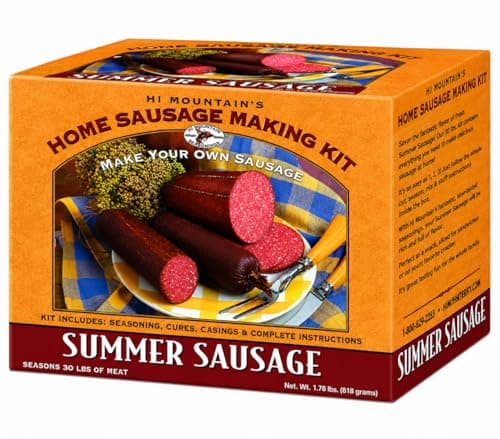
Best summer sausage kit
Hi Mountain Original Summer Sausage Kit
Summer sausage: the cured, smoked, cooked product that gets you most of the flavour without a fermentation to control.
$29.99Amazon#ad · Price as of November 4, 2026 · Affiliate disclosure for the link to Hi Mountain Original Summer Sausage Kit
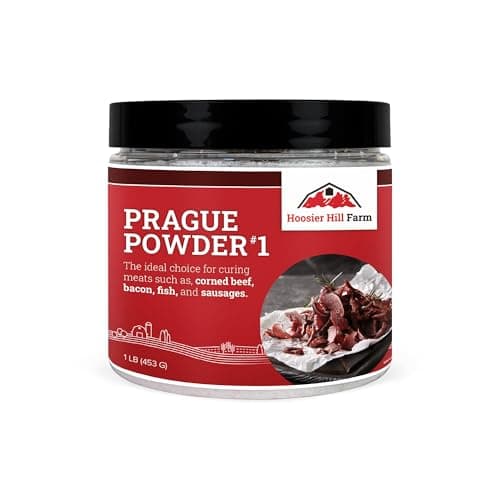
Best Cure #1
Hoosier Hill Farm Prague Powder No. 1 Curing Salt, 1 lb
A preblended Prague Powder No. 1, which is what WSU says to use because the nitrite quantities are too small to weigh accurately at home.
$12.99Amazon#ad · Price as of November 4, 2026 · Affiliate disclosure for the link to Hoosier Hill Farm Prague Powder No. 1 Curing Salt, 1 lb
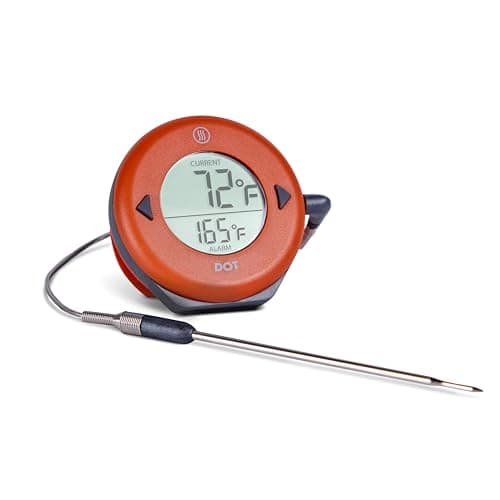
Best leave-in probe
ThermoWorks DOT Simple Alarm Thermometer
A leave-in alarm probe. Finishing to an internal temperature rather than a clock is the whole control on a cooked cured sausage.
$57.00Amazon#ad · Price as of November 4, 2026 · Affiliate disclosure for the link to ThermoWorks DOT Simple Alarm Thermometer
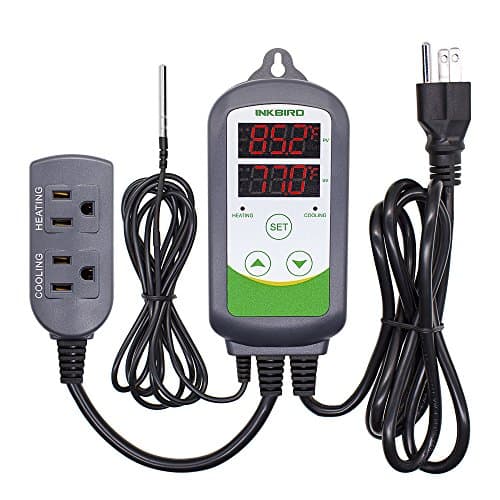
Best for holding a set temperature
Inkbird ITC-308 Digital Temperature Controller
The dual-relay controller people build chambers around. Genuinely useful for holding a fridge at a setpoint - and not, on its own, a dry-curing solution.
$36.00Amazon#ad · Price as of November 4, 2026 · Affiliate disclosure for the link to Inkbird ITC-308 Digital Temperature Controller
If you do build a chamber, the useful jobs it will do well are holding a fridge at a steady temperature for a long cure on bacon, resting sausage at a set temperature before smoking, and keeping a smoker's cold phase stable. Those are temperature problems, which is what a controller solves.
And keep the rest of the chain right: Penn State Extension's guidance on processing wild game treats clean equipment and an unbroken cold chain as the two controls that matter at home, and USDA's sausage guidance is the reference for everything that comes off the stuffer. Start from how to make venison sausage and work up.
Questions
Frequently asked
Can you make dry-cured salami at home in a DIY curing chamber?
What does a curing chamber actually control?
Is there a safe way to make tangy semi-dry sausage at home?
How long does dry sausage take to dry?
Can I use an Inkbird ITC-308 for a curing chamber?
Keep going down the chain
Related
Receipts
Sources
- Washington State University Extension — Homemade Meat, Poultry, and Game Sausages (EB1661) [PDF]
- North Dakota State University Extension — The Art and Practice of Sausage Making (FN176, rev. Oct. 2022)
- Mississippi State University Extension — Making Sausage at Home (P2692)
- Penn State Extension — Proper Processing of Wild Game and Fish (updated June 2023)
- USDA Food Safety and Inspection Service — Sausages and Food Safety
- USDA Food Safety and Inspection Service — Safe Minimum Internal Temperature Chart
- Amazon listing, manufacturer-supplied copy — Inkbird ITC-308 temperature controller
- Amazon listing, manufacturer-supplied copy — ThermoWorks DOT alarm thermometer
- Amazon listing, manufacturer-supplied copy — Hoosier Hill Farm Prague Powder No. 1, 1 lb
- Amazon listing, manufacturer-supplied copy — Hi Mountain Original Summer Sausage Kit
Specs come from the maker's own pages, manuals and maker-supplied listing copy (labeled as such); food-safety figures from USDA and university extension publications; yield from the Ohio Division of Wildlife; prices live from Amazon. Where a figure isn't published, we say so. Read the full method.