Every pellet smoker advertises its top temperature. For a hunter the floor is what matters, because jerky dries below 180°F and half this field cannot get there.
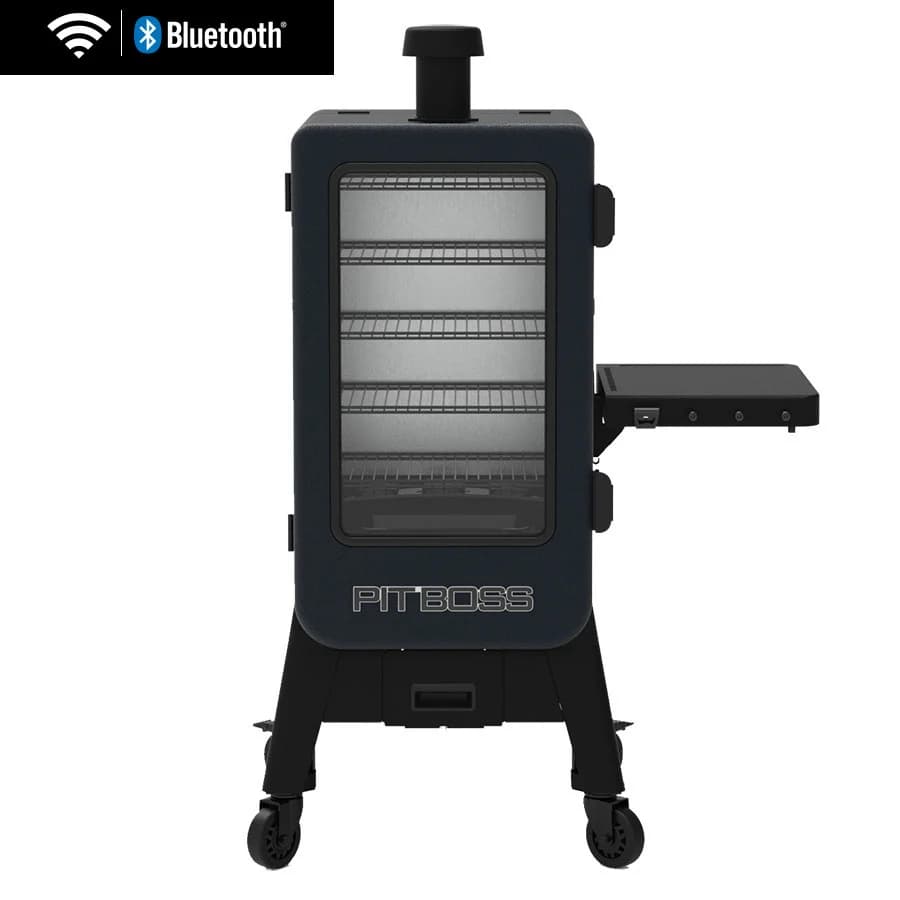
The most rack area Pit Boss sells in a vertical, on a dial that starts at 130°F: 2,224 sq in across five large racks, fed by a 75 lb hopper. A whole season of jerky in one cabinet.
The most rack area Pit Boss sells in a vertical, on a dial that starts at 130°F: 2,224 sq in across five large racks, fed by a 75 lb hopper. A whole season of jerky in one cabinet.
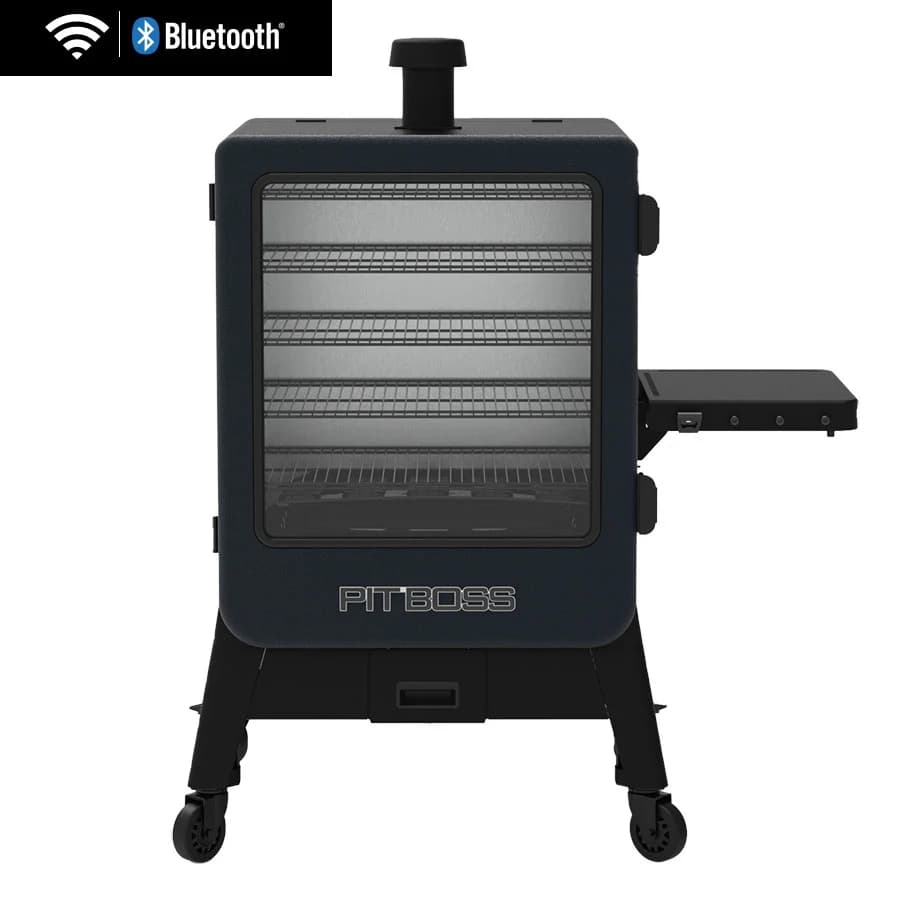
The one most hunters should buy: the same published 130°F floor as the big Navigator, 1,118 sq in over five racks, and Wi-Fi, in a cabinet that fits a normal patio.
The hunter-branded cabinet: 2,015 sq in over six adjustable racks with a viewing window and locking casters. Pit Boss does not publish its temperature range, which is the one thing a jerky buyer needs.
The 7-Series cabinet one size down: 1,679 sq in, the same six adjustable racks, window and casters, at the Navigator 3-Series price. Same missing temperature range.
The horizontal that publishes its numbers: 747 sq in, 180-500°F in 5°F steps, a 21 lb hopper and a Flame Broiler lever for a 1,000°F sear. The 180°F floor is the catch.
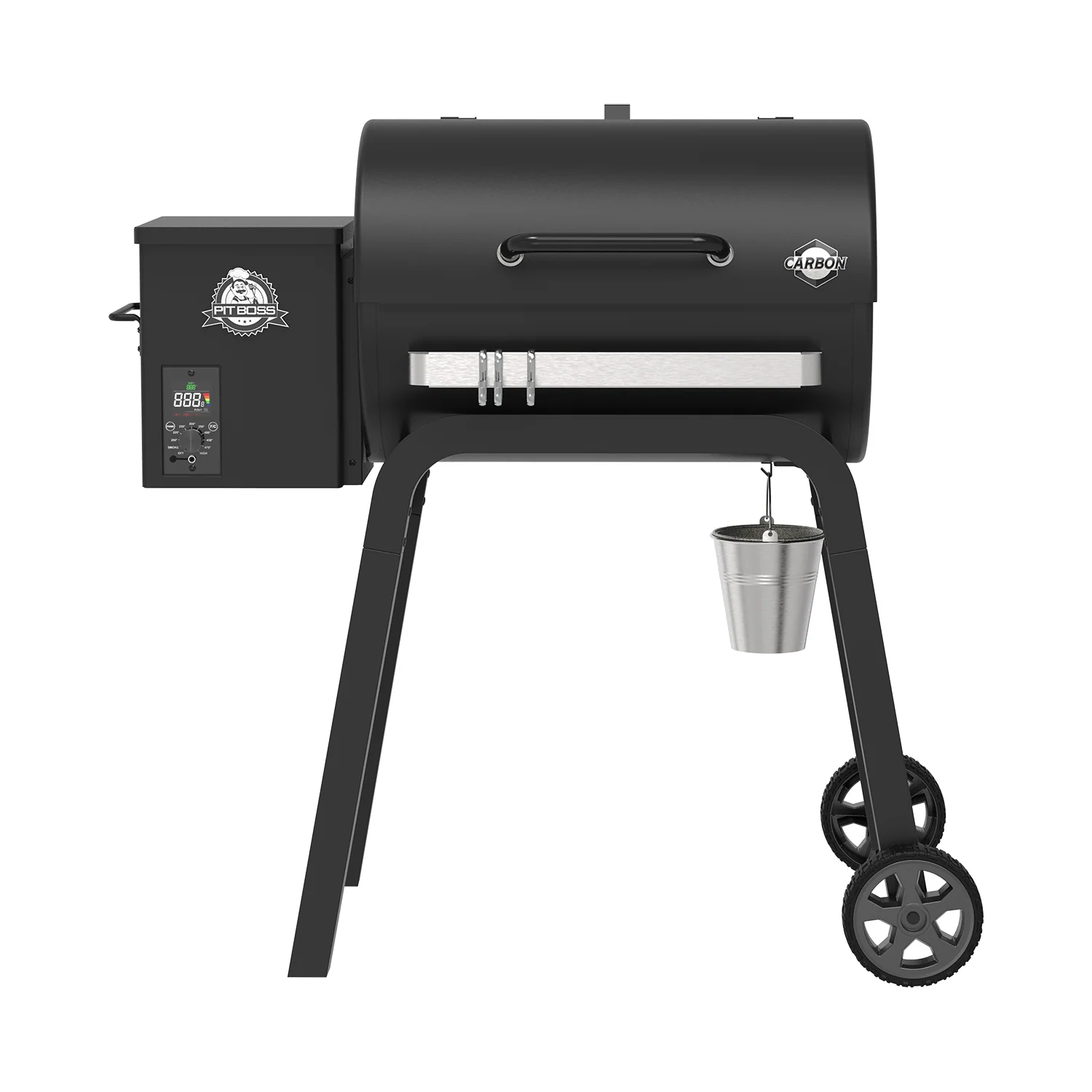
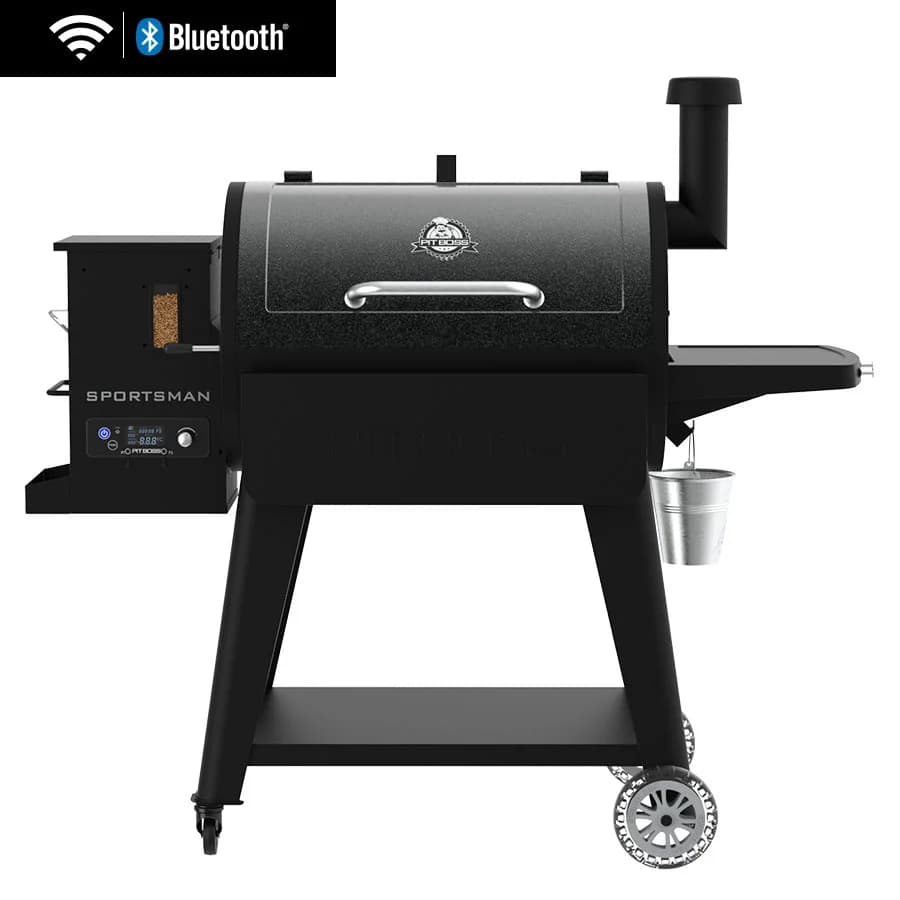
The grill Pit Boss aims at hunters by name: 849 sq in, a 21 lb hopper and a Flame Broiler sear, with the maker's own copy listing smoking jerky and grilling game among the jobs.
#ad · Prices come live from Amazon, last checked November 6, 2026; where we have no verified live price we show none. Scores are ours on a published 8.4-9.8 scale, compiled from manufacturer specs, manuals and warranty terms — see how we pick. Tap a row for the full write-up.
If jerky and snack sticks are why you want a smoker, buy a vertical cabinet that publishes a minimum temperature below 160°F. If you want one machine that smokes a venison ham and also sears a backstrap, buy a horizontal. That is the whole decision, and it is settled by a spec most pellet buyers never read.
This page ranks seven Pit Boss machines — four vertical smokers and three horizontal pellet grills — for the jobs a season of venison actually produces. We have not run any of them. Every figure below is Pit Boss's own published number from the product page cited beside it, read on 2026-11-06, and where Pit Boss publishes nothing we have said so rather than borrowing a number from a sibling model.
The floor, not the ceiling
Here is the finding that orders this entire page. Pit Boss publishes a temperature range on three of these seven machines:
Navigator 3-Series and 6-Series (vertical): 130–420°F.
FB2 700 and Carbon 700 (horizontal): 180–500°F.
The Sportsman 5-Series, 7-Series and 850: no temperature range published at all.
The USDA's jerky guidance is to heat the meat to 160°F first, then dry it. The drying step is a long, low hold — the range where water leaves the strip without the meat cooking and rendering. A machine whose lowest setting is 180°F cannot do that step. It will make something, and that something will be closer to a dry roast than to jerky: brittle at the edges, greasy where the fat rendered out.
What we ranked on
Low-temperature control (30%). Whether the maker publishes a floor, and how low it is. This is the spec that decides whether a machine can do the job a hunter buys it for.
Rack area per batch (25%). Jerky and snack sticks are thin things laid out flat, so usable rack area matters far more than it does for barbecue, where one big piece sits on one grate.
Build, hopper and controls (20%). Hopper capacity decides whether an overnight run needs watching; app connectivity decides whether you watch it from the house.
What the maker publishes (15%). A machine that states its range and capacity is a machine you can plan around. We mark down the ones that do not, the same way we do on every other page here.
Value at list price (10%). Pit Boss's own list price, read 2026-11-06, shown on the button with its date.
Vertical or horizontal
A vertical is a cabinet of racks. For the same footprint you get several times the surface, which is the right shape for a jerky batch: the Navigator 6-Series lists 2,224 square inches across five racks, the Sportsman 7-Series 2,015 across six. It will not sear, and it is not the machine for a spatchcocked bird.
A horizontal is a barrel with one grate. The FB2 700 lists 747 square inches, the Sportsman 850 lists 849 — a third of a vertical's capacity. What you get in exchange is the Flame Broiler lever, which opens the fire pot for a direct sear Pit Boss rates to 1,000°F, and a shape that suits a whole bone-in ham or shoulder.
Machine
Type
Published range
Cooking area
Navigator 6-Series
Vertical
130-420°F
2,224 sq in / 5 racks
Navigator 3-Series
Vertical
130-420°F
1,118 sq in / 5 racks
Sportsman 7-Series
Vertical
Not published
2,015 sq in / 6 racks
Sportsman 5-Series
Vertical
Not published
1,679 sq in / 6 racks
Sportsman 850
Horizontal
Not published
849 sq in
FB2 700
Horizontal
180-500°F
747 sq in
Carbon 700
Horizontal
180-500°F
718 sq in
What Pit Boss publishes, and what it doesn't
The gap worth knowing about before you spend: the Sportsman line is the one Pit Boss markets at hunters — its own copy for the Sportsman 850 lists “grilling game” and “smoking jerky” among the uses — and it is also the line that publishes the least. No temperature range on the 850, the 7-Series or the 5-Series. No hopper capacity on either vertical Sportsman; the page says only “a larger hopper capacity.”
That is why the Navigator cabinets outrank the Sportsman ones here despite the Sportsman 7-Series having more racks and a viewing window. We are not claiming the Sportsman cabinets cannot run low. We are saying Pit Boss does not tell you, and on the one spec that decides a jerky machine, buying on an assumption is how people end up disappointed. If you want the Sportsman hardware, ask Pit Boss for the minimum set temperature before you order.
Rack area in deer
Square inches are abstract until you convert them into an animal. At the Ohio Division of Wildlife's measured average a whitetail yields about 52 pounds of venison, and a hunter might turn 10 to 15 pounds of that into jerky — the hams, trimmed and sliced.
Sliced at a quarter inch and laid out without touching, a pound of strips occupies roughly a square foot of rack, so 10 pounds wants something close to 1,440 square inches. That number is the reason the entry vertical at 1,118 square inches is a two-batch machine for one deer's jerky, and the 2,224-square-inch cabinet is a one-batch machine. It is also why no horizontal here does a deer's jerky in one run: 849 square inches is most of a day in three loads.
Snack sticks change the arithmetic in your favor, because a stick is round and takes less rack per pound than a flat strip. If sticks are the main job rather than jerky, the smaller cabinets stretch further — see how to make snack sticks.
The alternative: a dehydrator
We would be selling you something you do not need if we left this out. If jerky is the only reason you are shopping, a dehydrator does the job better and for a fraction of the money. It holds a set temperature in the drying range all day, it lives indoors, it costs a quarter of the cheapest machine on this page, and the good ones publish their range the way the Navigator cabinets do.
What a dehydrator cannot do is put smoke on the meat, and it cannot take a venison ham, a summer sausage chub or a rack of ribs. That is the honest line: buy a pellet smoker when you want wood flavor and the capacity for whole cuts as well as strips, and buy a dehydrator when you want jerky. Many people here will be better served by our dehydrator rankings, and dehydrator vs smoker for jerky compares the two routes directly.
In detail
The picks, in full
1
Best overall for a heavy season
Pit Boss Navigator 6-Series Vertical Pellet Smoker
9.6 /10
The most rack area Pit Boss sells in a vertical, on a dial that starts at 130°F: 2,224 sq in across five large racks, fed by a 75 lb hopper. A whole season of jerky in one cabinet.
Rubric inputs — criteria out of 10, weighted into the score above
Low-temperature control for jerky
9 · 30%
Rack area per batch
9.5 · 25%
Build, hopper and controls
8 · 20%
What the maker publishes
8.5 · 15%
Value at list price
6 · 10%
What it gets right
+A published 130°F floor, which is the temperature jerky actually dries at
+2,224 sq in is roughly double the entry vertical, so a heavy season fits in one run
+A 75 lb hopper outlasts any overnight cook without a refill
Good to know
−The dearest machine on this page by a clear margin
−Five racks rather than the six on the cheaper Sportsman cabinets
−A cabinet this size is a poor fit if you only make jerky twice a year
Skip this if…
…you process one or two deer. The 3-Series has the same 130°F floor and the same app for $250 less, and half of 2,224 sq in is still more rack than a light season fills.
#ad · Brand list price as of November 6, 2026 · Affiliate disclosure for the link to Pit Boss Navigator 6-Series Vertical Pellet Smoker
2
Best for most hunters
Pit Boss Navigator 3-Series Vertical Pellet Smoker (PBV3M)
9.5 /10
The one most hunters should buy: the same published 130°F floor as the big Navigator, 1,118 sq in over five racks, and Wi-Fi, in a cabinet that fits a normal patio.
#ad · Brand list price as of November 6, 2026 · Affiliate disclosure for the link to Pit Boss Navigator 3-Series Vertical Pellet Smoker (PBV3M)
3
Most rack area
Pit Boss Sportsman 7-Series Wood Pellet Vertical Smoker
9.2 /10
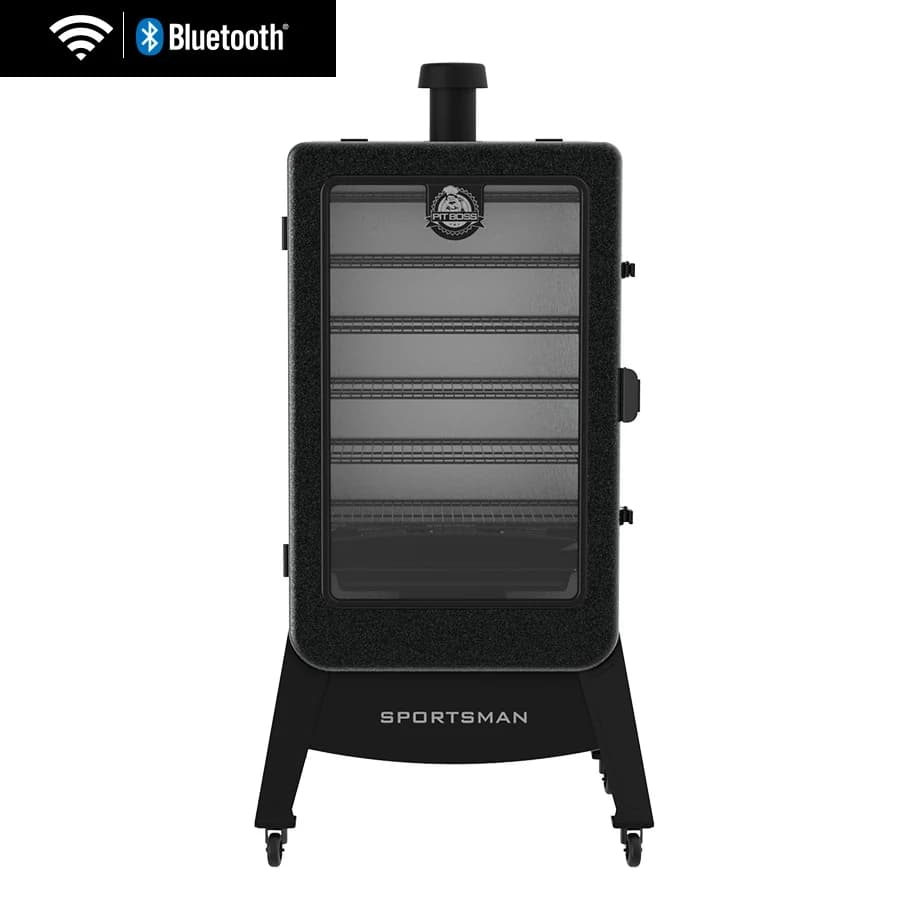
The hunter-branded cabinet: 2,015 sq in over six adjustable racks with a viewing window and locking casters. Pit Boss does not publish its temperature range, which is the one thing a jerky buyer needs.
#ad · Brand list price as of November 6, 2026 · Affiliate disclosure for the link to Pit Boss Sportsman 7-Series Wood Pellet Vertical Smoker
4
Six racks, mid price
Pit Boss Sportsman 5-Series Vertical Smoker (PBV5P2)
9.2 /10
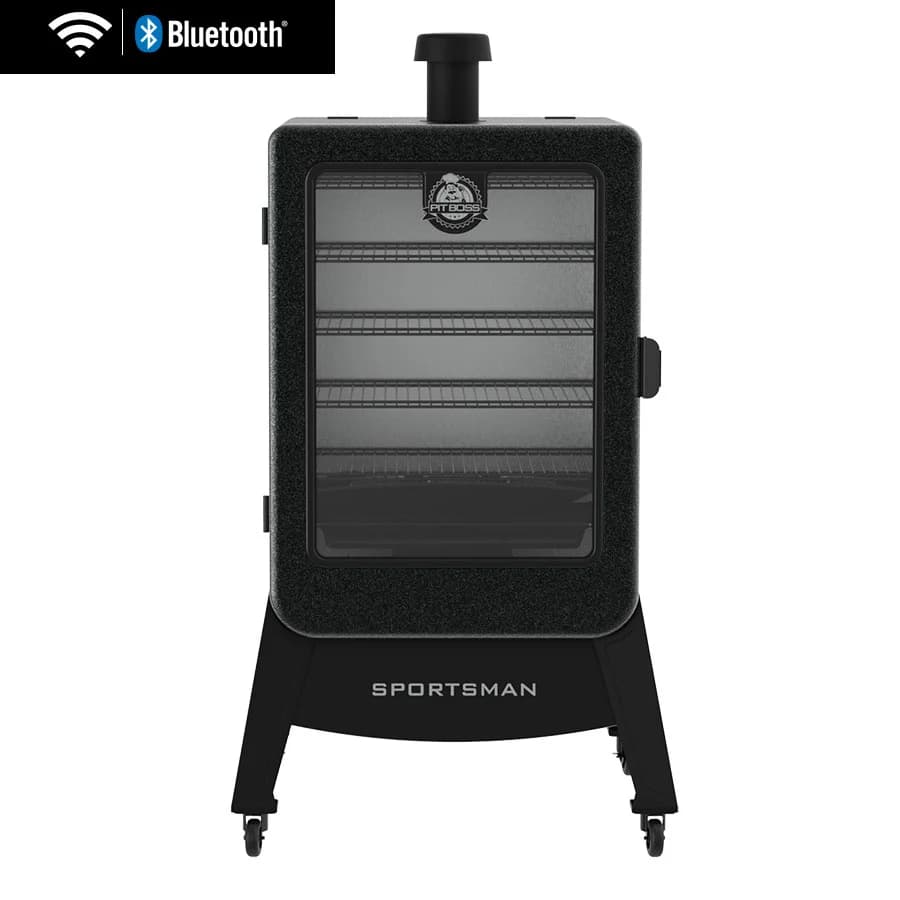
The 7-Series cabinet one size down: 1,679 sq in, the same six adjustable racks, window and casters, at the Navigator 3-Series price. Same missing temperature range.
Rubric inputs — criteria out of 10, weighted into the score above
Low-temperature control for jerky
6 · 30%
Rack area per batch
8 · 25%
Build, hopper and controls
8 · 20%
What the maker publishes
5.5 · 15%
Value at list price
8 · 10%
What it gets right
+Six adjustable racks and 1,679 sq in for the same list price as the 1,118 sq in Navigator 3-Series
+Window and locking casters, the same hardware as the bigger Sportsman
Good to know
−No published temperature range, which is the spec that decides a jerky machine
−No published hopper capacity
−No Wi-Fi figure published, where the Navigator line states Wi-Fi and Bluetooth
Skip this if…
…you want the low-temperature figure in writing before you buy. Trading the Navigator's published 130°F floor for 561 more square inches is a bet, not a spec comparison.
#ad · Brand list price as of November 6, 2026 · Affiliate disclosure for the link to Pit Boss Sportsman 5-Series Vertical Smoker (PBV5P2)
5
Best horizontal for whole cuts
Pit Boss FB2 700 Wood Pellet Grill (PB700FB2)
9.0 /10
The horizontal that publishes its numbers: 747 sq in, 180-500°F in 5°F steps, a 21 lb hopper and a Flame Broiler lever for a 1,000°F sear. The 180°F floor is the catch.
#ad · Brand list price as of November 6, 2026 · Affiliate disclosure for the link to Pit Boss Carbon Series 700 Wood Pellet Grill (PB700CP)
7
The hunter-branded grill
Pit Boss Sportsman 850 Wood Pellet Grill (PB850SPW2)
8.9 /10
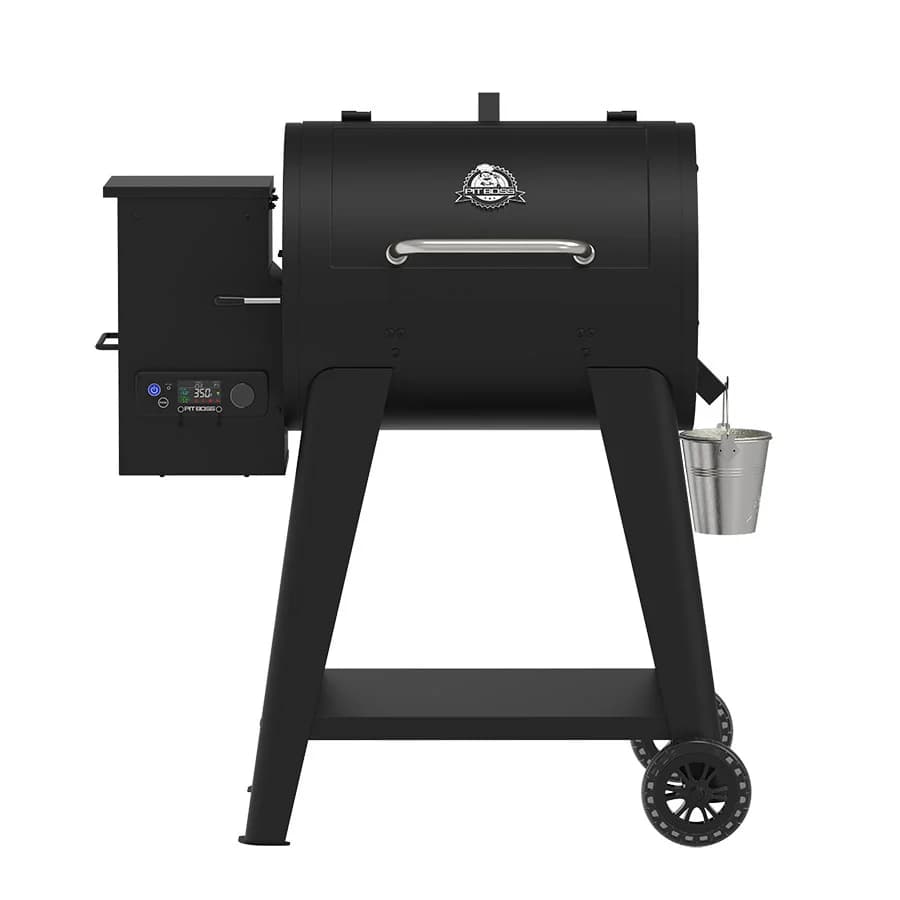
The grill Pit Boss aims at hunters by name: 849 sq in, a 21 lb hopper and a Flame Broiler sear, with the maker's own copy listing smoking jerky and grilling game among the jobs.
#ad · Brand list price as of November 6, 2026 · Affiliate disclosure for the link to Pit Boss Sportsman 850 Wood Pellet Grill (PB850SPW2)
How to choose
Start with the job, not the budget. Jerky and snack sticks: a vertical with a published low floor. Hams, shoulders, summer sausage and the occasional steak: a horizontal. Both, with jerky as the priority: a vertical plus the grill you already own.
Then size it to one deer. Work out the pounds of jerky a season actually produces and divide by roughly a square foot per pound. Most hunters processing one or two deer are comfortably inside the entry Navigator; it is the three-deer households and the people who make sticks for the whole camp who need the 2,000-square-inch cabinets.
Then check the hopper against your longest cook. A 75 lb hopper is an overnight run you can sleep through. A 13.5 lb hopper on a summer-sausage cook is an alarm clock.
Finally, budget for a thermometer that is not the one in the lid. A built-in probe reports the air in the cabinet and, on better models, one piece of meat. It does not tell you that the thickest chub on the middle rack has reached its finish temperature, and on a cabinet with five racks the spread between top and bottom is real. Our thermometer rankings cover the leave-in probes that do.
Pellets are a flavor decision, not a performance one
Every machine here burns standard hardwood pellets and none of them requires the maker's own brand. Venison is lean and takes smoke readily, which is an argument for the milder woods rather than the strongest ones — a heavy mesquite load on a lean ham is easy to overdo and impossible to undo. That is a preference rather than a spec, so we will not rank it.
What does matter mechanically is keeping pellets dry. Damp pellets swell, bridge in the hopper and stall the auger, and a stall mid-cook on a cured product is a food-safety problem rather than an inconvenience. A hopper cleanout — the Carbon 700 and the Navigator line have one — makes it practical to empty the hopper between cooks instead of leaving pellets to sit through a wet week.
Where a smoker fits in the chain
A smoker is a finishing tool. It does not replace the grinder, the stuffer or the sealer, and buying one does not shorten the day: you still break the animal down, still grind, still cure and stuff. What it changes is the last step. If you are assembling a bench from scratch rather than adding to one, start with the 3-5 deer setup and add the smoker once the rest of the chain is in place — the order matters more than the brand.
The most rack area Pit Boss sells in a vertical, on a dial that starts at 130°F: 2,224 sq in across five large racks, fed by a 75 lb hopper. A whole season of jerky in one cabinet.
The one most hunters should buy: the same published 130°F floor as the big Navigator, 1,118 sq in over five racks, and Wi-Fi, in a cabinet that fits a normal patio.
#ad · Brand list price as of November 6, 2026 · Affiliate disclosure for the link to Pit Boss Navigator 3-Series Vertical Pellet Smoker (PBV3M)
How we picked
Every pick, scored on the same published rubric
Each machine here is read end to end: the maker's spec sheet, the owner's manual and the warranty terms. We pull out the figures that decide whether it keeps up with your season — size number, motor rating, rated pounds per minute, capacity, duty cycle, gearing — confirm parts are still available, and score every pick on the same weighted rubric, so a score on one page means the same thing on the next. Then we show the season math, pounds per deer from the Ohio Division of Wildlife's yield study, so you can run it against your own freezer.
What temperature does a pellet smoker need for jerky?+
Low enough to dry rather than cook. Pit Boss publishes a 130°F minimum on its Navigator vertical smokers and 180°F on its horizontal pellet grills; the 180°F floor is above the drying range. The USDA also wants the meat heated to 160°F before the drying step, so you need both the high step and the low hold.
Is a vertical or horizontal pellet smoker better for venison?+
Vertical for jerky, snack sticks and anything thin laid out on racks — the cabinets here hold 1,118 to 2,224 sq in against 718 to 849 for the horizontals. Horizontal for whole cuts and searing, because the Flame Broiler lever opens the fire pot for direct flame up to a Pit Boss-rated 1,000°F.
Which Pit Boss is made for hunters?+
The Sportsman line is the one Pit Boss markets at hunters, and its copy for the Sportsman 850 names grilling game and smoking jerky. Worth knowing, though: the Sportsman models publish no temperature range, where the Navigator cabinets publish 130-420°F. On the spec that decides a jerky machine, the Navigator is the one that tells you.
How much rack space do I need for one deer's jerky?+
About a square foot of rack per pound of quarter-inch strips laid out without touching. Ten pounds of jerky — a realistic figure from the hams of one whitetail at the Ohio DNR average — wants roughly 1,440 sq in, so the entry vertical does it in two batches and the biggest cabinet in one.
Should I buy a pellet smoker or a dehydrator for jerky?+
A dehydrator, if jerky is the only job: it holds the drying range all day, lives indoors and costs a fraction as much. A pellet smoker earns its money when you also want wood smoke and the capacity for whole cuts, summer sausage and hams.
Do I still need curing salt if I am smoking rather than drying?+
Yes. Anything that spends hours in the 100-150°F range needs a nitrite cure in the mix, and the ratio goes by weight rather than by eye — see the curing salt guide.
Specs come from the maker's own pages, manuals and maker-supplied listing copy (labeled as such); food-safety figures from USDA and university extension publications; yield from the Ohio Division of Wildlife; prices live from Amazon. Where a figure isn't published, we say so. Read the full method.