Every bag of Cure #1 on the shelf is the same 6.25% nitrite formula. What separates them is whether the maker tells you the dose, the coverage and the limits - which, for an ingredient that is a safety measure first, is the only thing worth ranking.
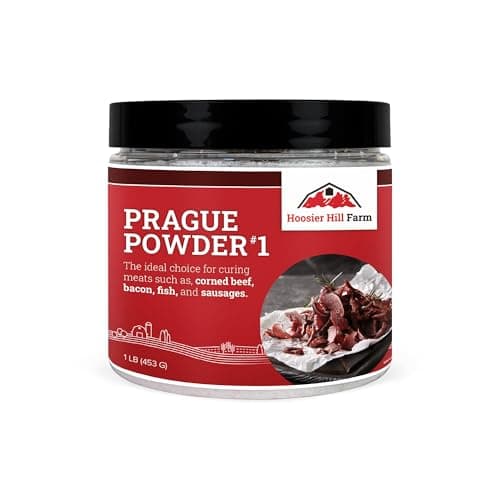
The clearest Cure #1 label we cover: the dose given both by weight (1 oz per 25 lb) and by teaspoon, 100 lb of coverage stated, and an instruction to weigh the meat and the cure.
The clearest Cure #1 label we cover: the dose given both by weight (1 oz per 25 lb) and by teaspoon, 100 lb of coverage stated, and an instruction to weigh the meat and the cure.
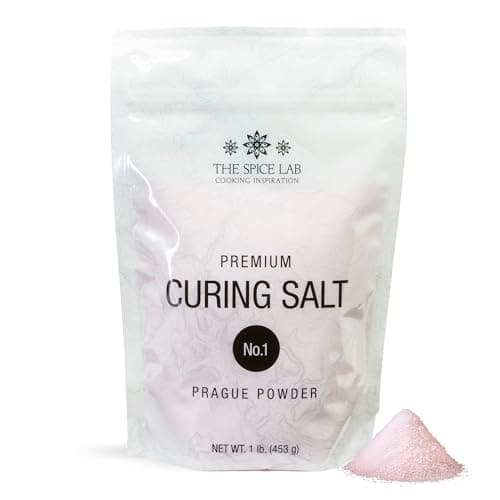
The cheapest Cure #1 here, with the 1-teaspoon-per-5-lb rate printed and a clear overuse warning. Its listing muddles nitrite and nitrate in places, which is why it is not first.
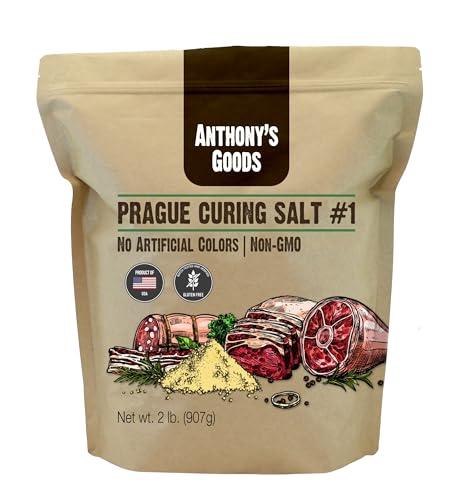
Two pounds in one bag and batch-tested gluten free, at the lowest cost per pound of cure on this page. It publishes neither the nitrite percentage nor a dose rate.
The only cure here that publishes its exact composition - 89.75% salt, 6.25% nitrite, 1% nitrate - and explains why the nitrate is there. Tinted without synthetic red dye.
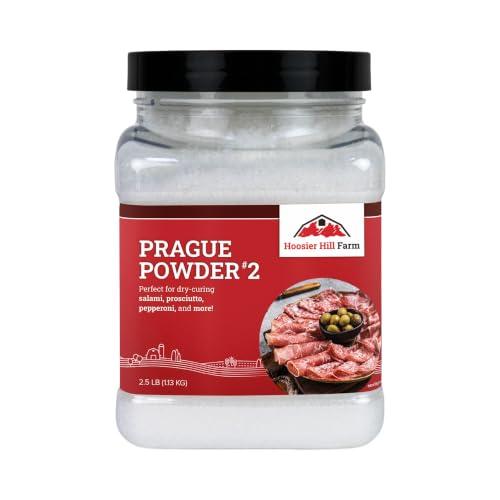
Cure #2 for long dry cures in a 2.5 lb bag, with the teaspoon dose stated and the specific products named. Far more than a home dry-curing program will use.
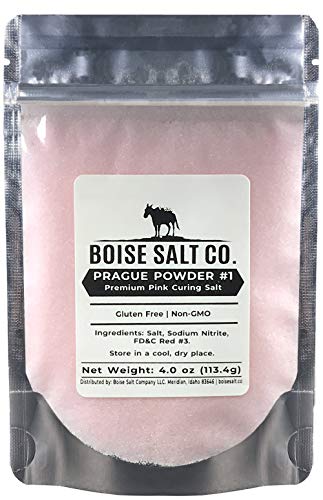
Four ounces, about 100 lb of meat, in a resealable pouch - and the only label here that states outright what it must NOT be used for. Costs the most per ounce.
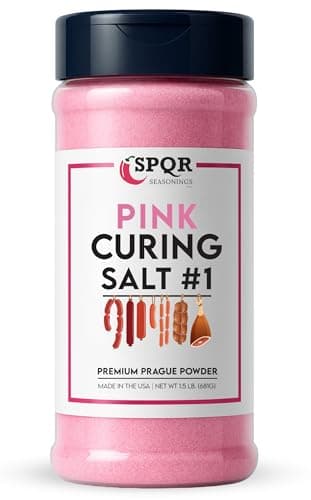
States its 6.25% sodium nitrite plainly and comes in a 1.5 lb bottle with a teaspoon cap, which is easier to store safely than a bag. Ignore its stray 'Salt Peter' line.
#ad · Prices come live from Amazon, last checked November 20, 2026; where we have no verified live price we show none. Scores are ours on a published 8.4-9.8 scale, compiled from manufacturer specs, manuals and warranty terms — see how we pick. Tap a row for the full write-up.
The best curing salt is Hoosier Hill Farm Prague Powder No. 1. Not because the powder is better — it is not, and we will explain why that is the point — but because its label is the most complete one on the shelf. It gives the dose two ways, by weight (1 oz per 25 lb of meat) and by volume (one level teaspoon per 5 lb), states the coverage per container at 100 pounds of meat, and tells you to weigh both the meat and the cure rather than scooping.
If you want to spend the least, The Spice Lab's Cure #1 prints the teaspoon rate and a clear warning about overuse. If you dry-cure — salami, pancetta, prosciutto — you need Cure #2 instead, and The Sausage Maker's Insta Cure #2 is the only bag on this page that publishes its exact composition to the decimal and explains what the nitrate in it is for.
Seven products, ranked on their labels. Every figure here is the maker's own, from the listing cited under Sources; the safety rules are from USDA and four university extension services, also cited.
Long, uncooked dry cures that hang for weeks or months: Cure #2. Buy The Sausage Maker Insta Cure #2, and read the extension caution below first.
You cure twice a year and the last bag went hard in the cupboard: the Boise Salt Co. 4-ounce pouch, which is about 100 pounds of meat.
You cure in volume: Anthony's 2 lb bag is the cheapest cure per pound here by a clear margin.
Why they are all the same formula
This is the part most “best curing salt” pages skip, and it changes how you should shop. Cure #1 is a standardized product: 6.25% sodium nitrite, the balance table salt, dyed pink so it cannot be mistaken for anything else. That is not a brand's recipe, it is the specification the whole category is built on, and it is why a recipe written for one brand works with any other at the same rate.
So there is no flavor ranking to be had here, and anyone offering you one is making it up. We have no test bench and would learn nothing from one if we did: two bags of 6.25% nitrite cure used at the same dose produce the same result. What genuinely differs between these seven is how much the label tells you, how much product is in the bag, and how safely it stores. Those are real differences and they are the whole of this ranking.
One consequence worth stating plainly: four of these seven do not print the 6.25% figure anywhere on the listing. That does not mean they are a different strength — Cure #1 is Cure #1 — but it does mean you cannot verify from the label what you are holding, and for a safety ingredient that is a real mark against a product. The two that publish it are SPQR, which states 6.25% sodium nitrite directly, and The Sausage Maker's Cure #2, which breaks out all three components.
What we ranked on
Clarity of the label (30%). Is the dose given? By weight, by teaspoon, or both? Is the nitrite percentage stated? Does the maker say what the product is not for? This is the heaviest weight because it is the only axis on which these products genuinely differ.
Batch coverage (25%). How much meat the container cures, which is the right way to compare price across a 4-ounce pouch and a 2.5-pound bag.
Fit to the job (25%). Whether this is the right cure for the work the reader is doing, and whether the maker is clear about which work that is.
Value at the live price (20%). Cost against coverage, read from the price pipeline at the last refresh and shown on the button, never typed here.
These are the hub's standing weights for consumables — the same ones used on casings and seasoning kits. See how we pick.
Cure #1 or Cure #2, in one paragraph
Cure #1 is nitrite only. It works over hours to days and is for anything that will be cooked, smoked to temperature or eaten soon: fresh and smoked sausage, snack sticks, summer sausage, jerky, bacon, corned beef. This is the cure a hunter needs, and five of the seven products here are Cure #1.
Cure #2 adds sodium nitrate on top of the same 6.25% nitrite — The Sausage Maker publishes the figure as 1% — and the nitrate is there as a reserve: it converts to nitrite slowly, which is what a cure running for weeks or months needs. It is for dry-cured products that are never cooked: pepperoni, hard and Genoa salami, prosciutto, capicola, pancetta.
How much to buy, honestly
Cure is the one item in home processing where almost everybody buys too much, because the per-pound price makes the big bag look obvious and the coverage figures are enormous. Work it the other way around: start from how much meat you cure in a year.
Container
Covers (per the maker)
Realistic for
4 oz pouch
About 100 lb of meat
A couple of batches of jerky and one bacon belly a year
1 lb bag
About 400 lb of meat
Two deer a season, sausage and sticks included
1.5 lb bottle
About 600 lb of meat
Several seasons
2 lb bag
About 800 lb of meat
A hunting camp, or a decade of household curing
1 lb Cure #2
About 480 lb of meat, per the maker
More dry curing than most homes will ever do
The coverage figures come from the makers that publish one: Hoosier Hill Farm states 1 oz per 25 lb and 100 lb per container, Boise Salt Co. states 1 oz per 25 lb, and The Sausage Maker states about 480 lb per pound of Cure #2. The 1.5 lb and 2 lb rows are the same 1 oz per 25 lb rate applied to their stated weights — neither of those two makers publishes a coverage figure, and Anthony's says only “hundreds of pounds.”
Against that, a household putting one or two deer through the bench a year uses cure on a fraction of the animal: the sausage, the sticks, the jerky, not the steaks and roasts. One pound of Cure #1 is several seasons. Two pounds is a decade. Buy the quantity you will use while it is still fresh, not the one with the best headline price — which, for most readers of this site, is the one-pound bag and not the two-pound one.
Curing salt for jerky specifically
Jerky is the most common reason people search for cure, and it has its own answer. You want Cure #1, at the standard rate, and you want it for a specific reason: USDA's guidance on jerky is that the meat should be heated to a safe internal temperature to kill pathogens before the drying step, because a dehydrator running at drying temperature is a very good incubator if anything survives into it. Cure is the second line of defense behind that heat step, not a replacement for it.
Which means two practical things. First, cure does not make an unsafe jerky process safe — the temperature step does, and the whole sequence is on how to make deer jerky and jerky dehydrator time and temperature. Second, if you are buying a seasoning kit anyway, the cure is usually already in the box and pre-portioned for the batch size, which removes the part of this job most likely to go wrong. Those kits are ranked on best jerky cure and seasoning kits, and for ground jerky the cure timing differs slightly — that is on ground venison jerky.
Buy loose cure when you are working from your own recipe, or when you want control over the salt and sugar separately from the nitrite. Buy a kit when you want the dose decided for you. Both are legitimate; the kit is the safer default for a first batch.
Storage is part of the purchase
Cure is hygroscopic — it pulls water out of the air and clumps — and it is pink specifically so nobody in your kitchen mistakes it for salt. Both of those make the container part of what you are buying, and it is the reason a bottle ranks differently from a bag on this page even when the powder is identical.
A screw-cap bottle with a teaspoon insert, like SPQR's, is the easiest to store safely and the hardest to spill. A resealable pouch, like Boise's, is next. A plain bag is the worst of the three: once it is open it wants decanting into something sealed and labeled, and a labeled jar of pink powder next to the salt is exactly the situation the dye exists to prevent. Hoosier Hill Farm's advice on its own listing is to keep cure in a cool, dry place and specifically not to refrigerate or freeze it, which is the opposite of what people assume.
What we did not rank
Morton Tender Quick. It appears in a lot of older recipes and it is not interchangeable with Cure #1: it is a blend containing salt and sugar alongside both nitrite and nitrate, at a much lower nitrite concentration, so it is used at a completely different rate. Swapping it one-for-one with Prague Powder in either direction is a dosing error. We left it off because we could not find a single-bag listing with a reliable in-stock offer at the time of writing, not because of the product.
Celery-powder and “natural” cures. These work by supplying nitrite from a vegetable source. The chemistry in the meat is the same, the concentration is far less consistent, and the dose is harder to control. For home work we would rather have a measured 6.25%.
Saltpeter (potassium nitrate) on its own. Historic, and not what current extension guidance has home cooks using. One of the listings on this page carries a stray “Salt Peter” line in its copy; ignore it, the product itself is standard Cure #1.
Pink Himalayan salt. Not a cure, despite the color. It contains no nitrite whatsoever. This confusion is common enough that it has its own section in the curing salt guide, and it is the single most dangerous mix-up in home curing.
The clearest Cure #1 label we cover: the dose given both by weight (1 oz per 25 lb) and by teaspoon, 100 lb of coverage stated, and an instruction to weigh the meat and the cure.
#ad · Price as of November 20, 2026 · Affiliate disclosure for the link to Hoosier Hill Farm Prague Powder No. 1 Curing Salt, 1 lb
2
Budget pick
The Spice Lab Pink Curing Salt No. 1 (Prague Powder 1), 1 lb
9.3 /10
The cheapest Cure #1 here, with the 1-teaspoon-per-5-lb rate printed and a clear overuse warning. Its listing muddles nitrite and nitrate in places, which is why it is not first.
#ad · Price as of November 20, 2026 · Affiliate disclosure for the link to The Spice Lab Pink Curing Salt No. 1 (Prague Powder 1), 1 lb
3
Biggest bag
Anthony's Prague Curing Salt No. 1, 2 lb
9.5 /10
Two pounds in one bag and batch-tested gluten free, at the lowest cost per pound of cure on this page. It publishes neither the nitrite percentage nor a dose rate.
Rubric inputs — criteria out of 10, weighted into the score above
Clarity of use / labeling
5.5 · 30%
Batch coverage
9.5 · 25%
Fit to the job
9 · 25%
Value
9.5 · 20%
What it gets right
+Two pounds in one bag, which is the lowest cost per pound of cure here
+Batch-tested gluten free, which no other cure on this page states
+States plainly that it is for meat that gets cooked before eating
Good to know
−Does not publish the nitrite percentage
−Does not publish a dose rate by weight or by teaspoon
−Coverage is given as "hundreds of pounds" rather than a number
Skip this if…
…you want the dose printed on the bag you are holding - Hoosier Hill Farm gives it by weight and by teaspoon, and at these quantities two pounds of cure is several years of home curing anyway
#ad · Price as of November 20, 2026 · Affiliate disclosure for the link to Anthony's Prague Curing Salt No. 1, 2 lb
4
Best Cure #2
The Sausage Maker Insta Cure #2, 1 lb
9.6 /10
The only cure here that publishes its exact composition - 89.75% salt, 6.25% nitrite, 1% nitrate - and explains why the nitrate is there. Tinted without synthetic red dye.
Rubric inputs — criteria out of 10, weighted into the score above
Clarity of use / labeling
9.5 · 30%
Batch coverage
8.5 · 25%
Fit to the job
8 · 25%
Value
8 · 20%
What it gets right
+Publishes the exact percentages of salt, nitrite and nitrate - the only cure here that does
+Explains why Cure #2 contains nitrate: it converts to nitrite slowly over a cure that can run six months
+Tinted without synthetic red dye, while still being distinguishable from table salt
Good to know
−One pound covers about 480 lb of meat, which is more than most homes will ever dry-cure
−Dose is given by teaspoon only, not by weight
−The lightest tint is still a tint: it must be stored where it cannot be mistaken for salt
Skip this if…
…you are curing anything that will be cooked, smoked to temperature or eaten within weeks - that is Cure #1, and using #2 instead adds nitrate you have no use for
Cure #2 for long dry cures in a 2.5 lb bag, with the teaspoon dose stated and the specific products named. Far more than a home dry-curing program will use.
Rubric inputs — criteria out of 10, weighted into the score above
Clarity of use / labeling
7 · 30%
Batch coverage
9 · 25%
Fit to the job
8 · 25%
Value
8.5 · 20%
What it gets right
+The dose is stated in teaspoons on the listing, which is what home recipes use
+The largest Cure #2 bag we found, at 2.5 lb
+Names the specific products it is for, rather than describing curing in general
Good to know
−Does not publish the nitrite and nitrate percentages
−A 2.5 lb bag of Cure #2 is far more than a home dry-curing program will use
−No by-weight dose, so you cannot check a recipe written in grams against the label
Skip this if…
…your sausage gets cooked or smoked to temperature - that is Cure #1 work, and Cure #2 in it does nothing useful. Extension services also steer home cooks away from uncooked dry-cured sausage entirely
#ad · Price as of November 20, 2026 · Affiliate disclosure for the link to Hoosier Hill Farm Prague Powder No. 2 Curing Salt, 2.5 lb
6
Smallest useful amount
Boise Salt Co. Prague Powder #1 Curing Salt, 4 oz
9.0 /10
Four ounces, about 100 lb of meat, in a resealable pouch - and the only label here that states outright what it must NOT be used for. Costs the most per ounce.
#ad · Price as of November 20, 2026 · Affiliate disclosure for the link to Boise Salt Co. Prague Powder #1 Curing Salt, 4 oz
7
Best bottle
SPQR Seasonings Curing Salt No. 1, 1.5 lb Bottle
9.5 /10
States its 6.25% sodium nitrite plainly and comes in a 1.5 lb bottle with a teaspoon cap, which is easier to store safely than a bag. Ignore its stray 'Salt Peter' line.
#ad · Price as of November 20, 2026 · Affiliate disclosure for the link to SPQR Seasonings Curing Salt No. 1, 1.5 lb Bottle
How to buy cure in four decisions
1. Cooked or hung? Anything that gets smoked or cooked to temperature, or eaten within weeks, takes Cure #1. Anything that hangs uncooked for weeks or months takes Cure #2. There is no overlap and no substitution in either direction.
2. How much meat a year? Multiply by the published rate of 1 ounce of cure per 25 pounds of meat, then buy the smallest container that covers a year or two. A four-ounce pouch is a hundred pounds of meat. Most households do not need a pound.
3. Does the label give you the dose? Prefer a bag that states the dose by weight as well as by teaspoon, because recipes come both ways and converting between them by eye is how people overdose cure. Three of the seven here give you both.
4. Where will it live? If the answer is a shelf near the table salt, buy the bottle with a cap, or decant immediately into a labeled sealed jar. Cure clumps in humid air and it looks like a seasoning.
What to buy with it
Cure never works alone. A batch needs casings matched to what you are making, a scale that reads in grams because that is how cure doses are written, and a thermometer you trust, because every safety rule behind cure is a temperature rule underneath.
The clearest Cure #1 label we cover: the dose given both by weight (1 oz per 25 lb) and by teaspoon, 100 lb of coverage stated, and an instruction to weigh the meat and the cure.
The cheapest Cure #1 here, with the 1-teaspoon-per-5-lb rate printed and a clear overuse warning. Its listing muddles nitrite and nitrate in places, which is why it is not first.
#ad · Price as of November 20, 2026 · Affiliate disclosure for the link to The Spice Lab Pink Curing Salt No. 1 (Prague Powder 1), 1 lb
How we picked
Every pick, scored on the same published rubric
Each machine here is read end to end: the maker's spec sheet, the owner's manual and the warranty terms. We pull out the figures that decide whether it keeps up with your season — size number, motor rating, rated pounds per minute, capacity, duty cycle, gearing — confirm parts are still available, and score every pick on the same weighted rubric, so a score on one page means the same thing on the next. Then we show the season math, pounds per deer from the Ohio Division of Wildlife's yield study, so you can run it against your own freezer.
Hoosier Hill Farm Prague Powder No. 1, on the strength of its label rather than its powder. It gives the dose by weight (1 oz per 25 lb of meat) and by teaspoon (1 level teaspoon per 5 lb), states 100 lb of coverage per container, and tells you to weigh both the meat and the cure. Every Cure #1 is the same 6.25% nitrite formula, so the label is the difference.
What curing salt should I use for jerky?+
Cure #1, at the standard rate. Remember that cure is the second line of defense: USDA's jerky guidance is that the meat should be heated to a safe internal temperature before drying, because drying temperatures alone do not reliably kill pathogens. If you are using a seasoning kit, the cure is usually already in the box and pre-portioned.
Is pink curing salt the same as pink Himalayan salt?+
No, and this is the most dangerous confusion in home curing. Pink curing salt is dyed pink precisely so it cannot be mistaken for table salt; it contains sodium nitrite. Pink Himalayan salt gets its color from trace minerals and contains no nitrite at all. Using it as a cure provides no protection whatsoever.
Cure #1 or Cure #2 for summer sausage?+
Cure #1. Summer sausage is smoked and cooked to a safe internal temperature, which is Cure #1 work. Cure #2 is for dry-cured products that are never cooked and hang for weeks or months, where the nitrate acts as a slow-release reserve.
How much curing salt do I need per pound of meat?+
The rate the makers that publish one state is 1 ounce of cure per 25 pounds of meat, or one level teaspoon per 5 pounds. Follow your recipe, weigh rather than scoop, and read the curing salt guide before your first batch — the dose is a safety limit, not a seasoning preference.
How big a bag of curing salt should I buy?+
Smaller than you think. At 1 ounce per 25 pounds of meat, a four-ounce pouch covers about 100 pounds and a one-pound bag about 400. A household curing the sausage and jerky off one or two deer a year will not finish a pound quickly, and cure clumps in humid air once opened.
Can I use Morton Tender Quick instead of Prague Powder?+
Not at the same rate. Tender Quick is a blend of salt and sugar with both nitrite and nitrate at a much lower nitrite concentration than Cure #1, so it is used in much larger amounts. Substituting one for the other one-for-one is a dosing error in whichever direction you do it.
Specs come from the maker's own pages, manuals and maker-supplied listing copy (labeled as such); food-safety figures from USDA and university extension publications; yield from the Ohio Division of Wildlife; prices live from Amazon. Where a figure isn't published, we say so. Read the full method.