Most home processors need one good hand saw, or none at all. Here's how to tell which, the saw to buy, and when an electric bandsaw starts to make sense.
#ad · Prices come live from Amazon, last checked Sep 19, 2026; where we have no verified live price we show none. Scores are ours, compiled from published specs, manuals and warranty terms, not bench tests. Tap a row for the full write-up.
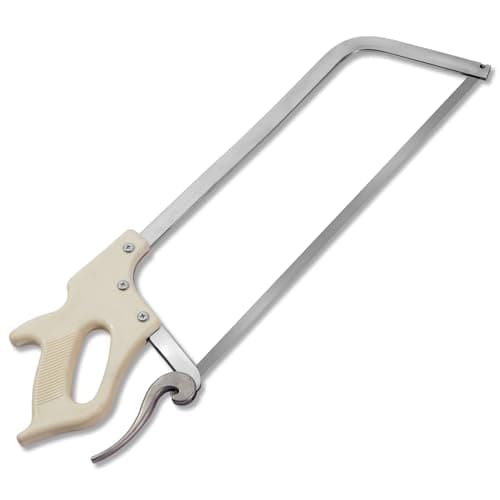
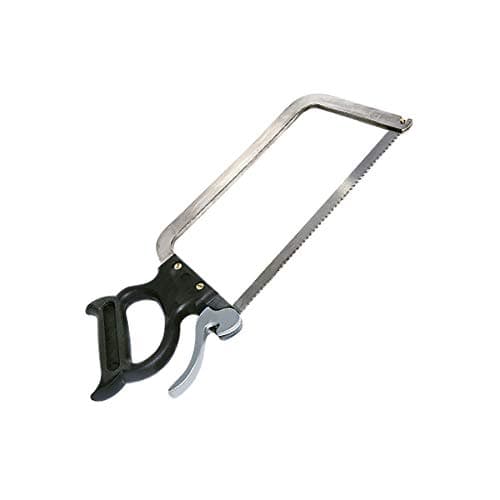
For most home processors the saw to buy is the Weston 22 in butcher saw (47-2201). Its listing describes a 22 in corrosion-resistant stainless serrated blade on a stainless frame, a trigger lock that holds blade tension, a quick-release handle for blade changes, and replacement blades. That last detail is the one most cheap saws skip. If you work on a kitchen counter, the KATA 20 in is easier to steer. If elk or beef is in the mix, the KATA 25 in gives you the longest stroke on this list.
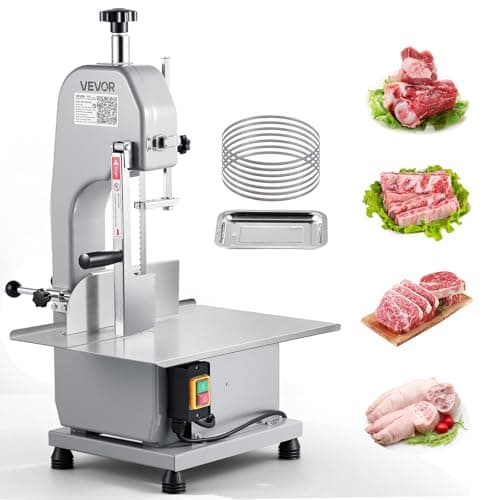
An electric bandsaw only makes sense in a heavy season with a lot of bone-in cuts, and only after you've confirmed the electrical specs that neither VEVOR listing we have publishes. We haven't bench-tested any of these. The specs come from each maker's listing copy, linked on every card.
Do you need a saw at all?
If you bone out your deer, maybe not. A boning knife can take off the shoulders, free the backstraps and tenderloins, separate the hindquarters at the joint and remove every muscle without touching bone with a saw. Our home processing guide walks through the knife-only route.
A saw earns its place when you want bone-in cuts: chops, shanks, rib sections, or a carcass split to fit a cooler. It also cuts frozen blocks. There's one more reason to think before you saw. Penn State Extension lists the spinal cord and backbone among the high-risk parts for chronic wasting disease (CWD). If you hunt in a CWD area, boning out keeps your blade away from the backbone. Check your state wildlife agency's guidance before you cut chops through the spine.
The saws in hunting kits are a different tool. Outdoor Edge's PR-1 carries a 10.2 in saw, the Game-Pro a 10.0 in and the WildPak a 6.0 in, per the maker. Those are sized for field work. For bone-in cuts on a table, you want a 20 in or longer frame saw. See our processing kit roundup for what the kits include.
The hand saws side by side
Saw
Blade
Blade steel (as listed)
Frame / holder
Tension
Listed weight
Weston 47-2201
22 in, serrated
Stainless
Stainless steel
Trigger lock
2.27 lb
KATA 20 in
20 in
SK5
Stainless steel
Not described
2.59 lb
KATA 25 in
25 in
SK5
Stainless steel
Not described
3.13 lb
Ceoighe 22 in
22 in, serrated
304 stainless (also called high speed steel)
Carbon steel
Trigger lock + cam
2.97 lb
Nobody on this list publishes teeth per inch, which is the spec that would tell you most about cut speed versus finish. Without it, the useful differences are blade length, whether the frame holds tension, and whether you can buy a new blade when this one dulls.
Why the Weston ranks first
Three things put it on top. Its listing is consistent: stainless blade, stainless frame, no contradictions. Its trigger lock is described as automatically maintaining blade tension, which is what keeps a frame saw cutting straight instead of wandering. And it lists replacement blades as available, so a dull blade doesn't retire the saw. The quick-release handle also means you can pull the blade for cleaning, which the listing sums up as easy cleanup.
What it doesn't tell you: tooth count, blade thickness and a warranty term. Those gaps apply to every saw here, so they don't change the ranking.
20, 22 or 25 inches
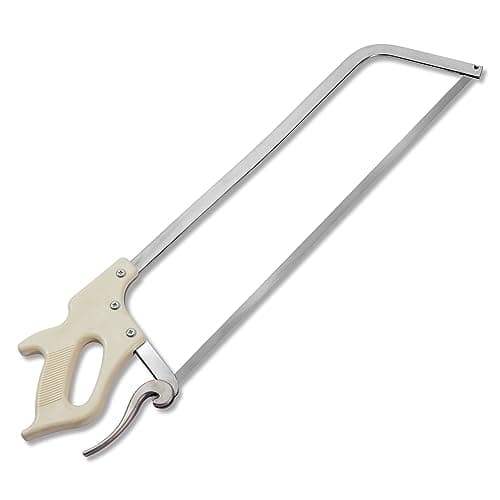
A longer blade gives a longer stroke, which means fewer strokes through a big bone. It also means more saw to control on a crowded surface and more to store. The KATA 20 in listing itself pitches its length as the balance between cutting capacity and easy handling, and at 25.98 in overall it's the saw for a kitchen counter and a one- or two-deer season. The Weston's 22 in blade is the all-rounder for whitetails and the occasional beef rib. The KATA 25 in, 31 in overall by its listed dimensions, wants a processing table and pays off on beef, big game and frozen blocks, all of which its listing mentions.
One caution on the KATA saws: the listings name SK5 blade steel but don't say whether the blade is stainless or coated. Until you know, wash and dry it right away rather than letting it air-dry.
The Ceoighe: familiar layout, muddled listing
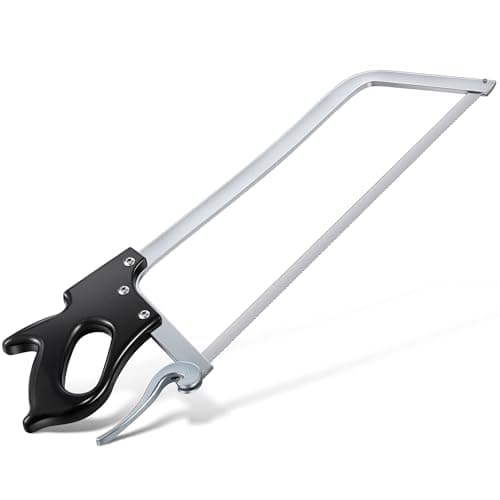
The Ceoighe copies the Weston's layout: 22 in serrated blade, trigger lock, quick-release cam lever and a molded ABS handle, 27.36 in overall. It ranks fourth because its listing contradicts itself on blade steel, calling it 304 stainless in one bullet and high speed steel in another, and it doesn't mention replacement blades. If it's well below the Weston on the day, it's a reasonable buy; if the gap is small, the Weston is the safer one.
The heavy-tier note: electric bandsaws
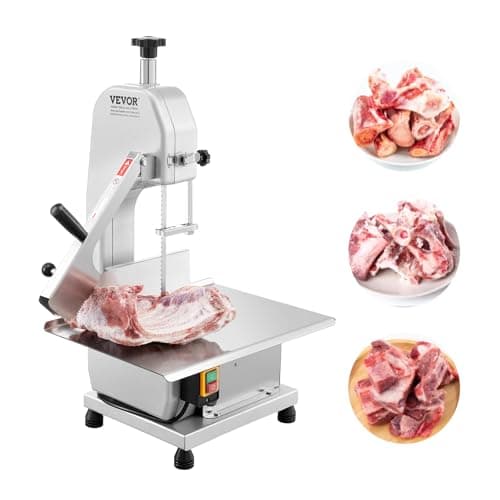
Both VEVOR bandsaws share a 12.4 x 18.1 in worktable and a maximum cut of about 4.3 in, per their listings. The 650W model's listing adds a scaled worktable for repeatable thickness, die-cast aluminum and stainless construction, a stainless pusher plate and pusher rod to keep hands away from the blade, a one-button switch, and a listed weight of 63.05 lb. The 1500W model's listing is a single bullet plus its title: a 1500W motor, seven spare blades, and a note that it handles hard bones and frozen meat but is not for boneless fresh meat.
When does one make sense? Not on pounds alone. Six deer is about 313 lb of venison at the Ohio DNR average of 52.19 lb per deer, and if all of it is boned out, a bandsaw does nothing for you. It makes sense when a heavy season is heavy on bone-in cuts: chops from several deer, beef or pork primals, or frozen blocks you need to portion. That's the buyer our 6+ deer setup is written for.
In detail
The picks, in full
1
Best meat saw for most hunters
Weston 22 in Butcher Meat and Bone Saw (47-2201)
7.7 /10
The default hand saw for home butchering: 22 in stainless blade, stainless frame, trigger-lock tension and replacement blades from the maker.
#ad · Price as of Sep 19, 2026 · Affiliate disclosure for the link to VEVOR 1500W Electric Meat Bandsaw with 7 Spare Blades
Buying a meat saw: the checklist
Blade length against your biggest bone
Twenty inches is enough for whitetails on a counter. Twenty-two is the all-rounder. Twenty-five is for elk, beef and frozen blocks. If you're splitting a half beef with family, our half-cow yield guide sets out what you'll be cutting.
Tension you can set and keep
A frame saw cuts straight only when the blade is tight. The Weston and Ceoighe both describe trigger locks for that job. The KATA listings describe a stable frame but not how tension is set.
Replacement blades
Blades dull. A saw whose maker lists replacements (the Weston) or ships spares (the 1500W VEVOR, with seven) will outlast one that says nothing about it.
Blade steel and drying
Stainless blades tolerate a wet processing day better. Where a listing names a steel without saying it's stainless, as with the KATA saws' SK5, dry it promptly.
Cleaning
A saw that drops its blade quickly is a saw you'll actually clean. The University of Arkansas Cooperative Extension advises sanitizing all preparation surfaces and tools with clean potable water at each step, and Penn State Extension recommends cleaning your knife frequently between cuts. The same logic applies to a saw blade moving from bone to meat.
A handle you can hold for an hour
Sawing through a stack of bone-in cuts is a grip workout. The Weston listing describes its handle as ergonomically designed to reduce fatigue over hours of work. The Ceoighe uses a molded ABS handle 0.79 in thick, and the KATA 20 in an ergonomic polypropylene handle. None of them publishes a grip size beyond that, so if you have large hands or wear gloves while you cut, the Ceoighe's stated thickness is the only number you can plan around.
For bandsaws only
Confirm voltage and amp draw against your circuit, ask for a safety certification, check how the blade guard and pusher work, and find out how the blade and wheels come apart for cleaning. Then check your bench: both VEVOR units list at over 62 lb.
Which saw for which season
Season tier
Venison at the Ohio DNR average
Saw
Light: 1-2 deer
about 52-104 lb
None if you bone out; KATA 20 in for bone-in cuts on a counter
Moderate: 3-5 deer
about 157-261 lb
Weston 22 in
Heavy: 6+ deer or a half beef
313 lb and up
KATA 25 in or Weston 22 in; a bandsaw only for heavy bone-in work
Your deer may yield more or less than the average; Ohio DNR notes that shot placement, size and butchering skill all change the number. The saw doesn't scale with pounds so much as with how many bone-in cuts you want. Our butcher knife sets cover the knives that do the rest.
How we picked
Units we claim to have bench-tested: none
Plenty of sites say they ground two hundred pounds through every grinder. We didn't, and we say so. What we do instead: read the maker's spec sheet, manual and warranty terms, record the figures that decide whether a machine keeps up with your season (size number, motor rating, rated pounds per minute, capacity, duty cycle, gearing), check parts availability, and score each pick on a published rubric. Then we show the season math — pounds per deer from the Ohio Division of Wildlife's yield study — so you can redo it with your own numbers.
The Weston 22 in butcher saw (47-2201): stainless blade and frame, a trigger lock that holds tension, and replacement blades listed as available.
Do you need a bone saw to process a deer?+
No, if you bone out the meat; a boning knife handles every step. You need a saw for bone-in chops, shanks and rib sections, or to split a carcass. In CWD areas, check your state's guidance on cutting through the backbone.
Hand saw or electric bandsaw for home butchering?+
A hand saw for almost everyone. A bandsaw makes sense only in a heavy season with a lot of bone-in or frozen cuts, and only after you confirm its electrical requirements, which the VEVOR listings we have don't publish.
What size meat saw do I need?+
A 20 in blade for whitetails on a kitchen counter, 22 in as an all-rounder, and 25 in for elk, beef and frozen blocks on a processing table.
Can a meat bandsaw cut meat?+
VEVOR's 1500W bandsaw listing says it handles hard bones and frozen meat but is not for boneless fresh meat. Use knives for boneless cuts.
We haven't bench-tested this gear and we don't pretend to. Specs come from the maker's own pages, manuals and maker-supplied listing copy (labeled as such); food-safety figures from USDA and university extension publications; yield from the Ohio Division of Wildlife; prices live from Amazon. Where a figure isn't published, we say so. Read the full method.