The FoodSaver is the machine most households already own, and most of what people want to leave it for is one spec it does not publish. Here is what to buy instead, and the one reason to switch that turns out not to be a reason at all.
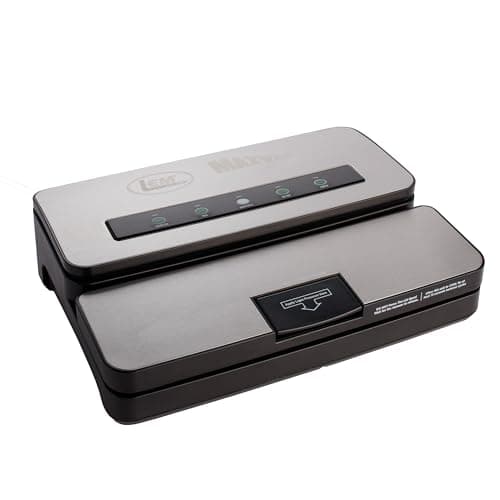
The closest like-for-like swap: same counter footprint, same 11-inch bags, same built-in roll holder and cutter - plus the published figure the FoodSaver does not have, at 250+ consecutive seals.
The closest like-for-like swap: same counter footprint, same 11-inch bags, same built-in roll holder and cutter - plus the published figure the FoodSaver does not have, at 250+ consecutive seals.
Built for over 100 continuous seals with a moist preset and a two-year warranty, and the cheapest machine here. The sensible swap if you are replacing a FoodSaver that died, not upgrading.
Does by hand what the FoodSaver does automatically, and takes it further: a dedicated LiquidLock mode, a removable drip tray and a double heat-seal bar. Slower between cycles, though.
If your real complaint is juice in the seal line, no external sealer fixes it. A chamber does, by removing the mechanism that causes it - and this one runs a dry pump, so there is no oil to change.
500 consecutive seals over as much as five hours, and 14-inch bags. This is the machine for the reader whose FoodSaver shut off halfway through the second deer.
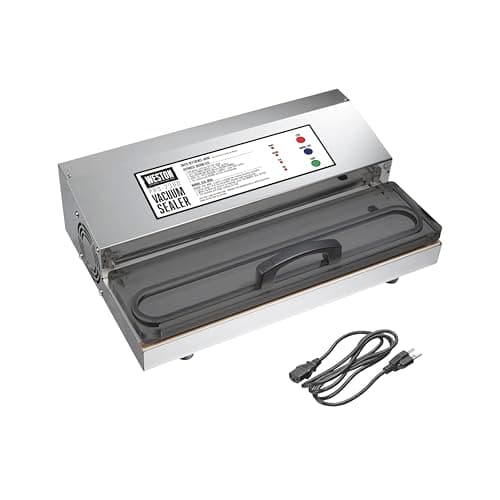
A 1,020-watt fan-cooled double-piston machine that takes 15-inch bags, the widest external here. It still wants 20 seconds between cycles, same as the FoodSaver.
#ad · Prices come live from Amazon, last checked November 20, 2026; where we have no verified live price we show none. Scores are ours on a published 8.4-9.8 scale, compiled from manufacturer specs, manuals and warranty terms — see how we pick. Tap a row for the full write-up.
The best FoodSaver alternative is the LEM MaxVac 250. It is the closest like-for-like swap on the market for a hunter: the same counter footprint, the same 11-inch bag width, the same built-in roll holder and cutter — and the one thing the FoodSaver has no published equivalent for, a rated run of 250 or more consecutive seals over as much as two and a half hours.
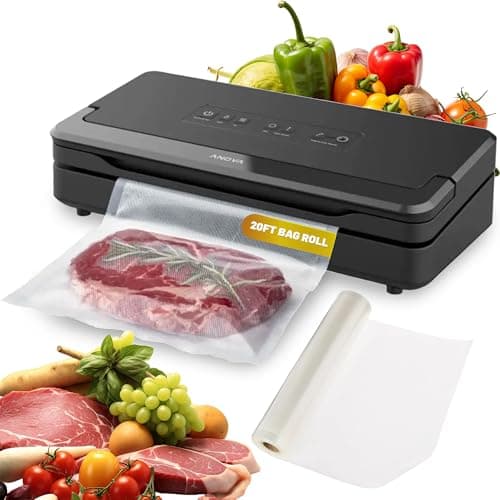
If you only want the machine replaced, take the Anova Precision Pro. It is the cheapest thing on this page, Anova says it was built for over 100 continuous seals, it has a moist preset, and it carries a two-year warranty. If your complaint is juice in the seal line, buy a chamber machine instead — the Avid Armor USV20 is the compact way into that class, and it is the only answer here that solves the problem rather than managing it.
Six machines, ranked on what their makers publish. Every figure on this page is the maker's own number from a product page or an owner's manual, cited under Sources. We have no test bench, so traceability is the whole claim.
The short answer
Most people searching for a FoodSaver alternative are in one of four situations, and the right machine is different in each:
Mine shut off halfway through the deer. You need a published run figure. The MaxVac 250 for one or two deer at a time, the MaxVac 500 if a whole season goes through the bench in a weekend.
Mine died and I want the same thing for less. The Anova Precision Pro.
It will not seal wet venison. The NESCO VS-22LB if you want to stay with an external machine, the Avid Armor USV20 chamber if you are done fighting it.
The bag is not wide enough for a boned-out hindquarter. The Weston Pro-2300 at 15 inches, or the MaxVac 500 at 14.
What none of them is: a fix for bag cost. That is the part of this question that gets answered wrongly most often, and it is worth a section of its own further down.
What the FoodSaver does well
The FoodSaver is the machine most people searching for an alternative already own, and it is worth being clear about why that is. Taking the V4400 as the representative model — it is the one we reviewed in full in our FoodSaver V4400 review — three things on its spec sheet are genuinely class-leading, and no machine on this page beats all three.
It is the most hands-off sealer we list. It detects the bag and starts on its own, and its drip-tray sensors detect moisture and choose the moist setting for you. Nothing else here decides for you.
Five-year limited warranty. Per FoodSaver's own manual. That is the longest warranty of any sealer in our catalog, and more than double what LEM gives the MaxVac 250.
A handheld sealer built into the lid and a 12-minute marinate cycle, which are real conveniences for kitchen work even if neither matters on a processing day.
If you have one and it suits you, this page is not an argument that you were wrong. It is an answer to a specific question: what do you buy when the FoodSaver is not the machine for the job in front of you?
The two real reasons to switch
First: a published seals-in-a-row figure. FoodSaver's manual specifies the opposite kind of number. It asks for at least 20 seconds between seals, and its own troubleshooting page says the machine shuts off under heavy use and wants about 20 minutes to cool before it will run again. That is honest documentation and we would rather have it than silence. But it is a rest interval, not a run, and the two tell you different things. A rest interval tells you how fast you may go. A run tells you how far you can get before the machine, rather than you, decides the session is over.
That difference is measurable in deer. At the Ohio Division of Wildlife's measured average of about 52 pounds of venison per animal, one deer packaged into one-pound bags is roughly 52 packages — one seal each from pre-cut bags, two each if you cut them off a roll.
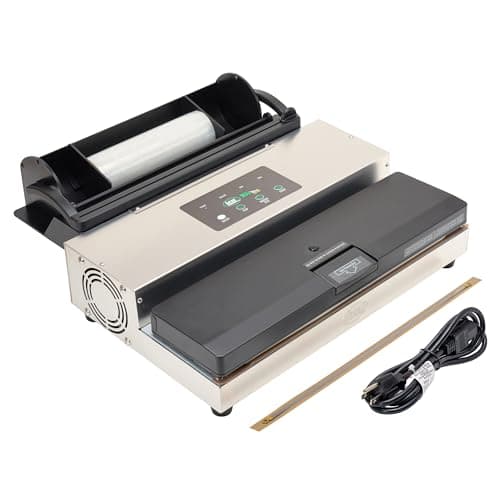
Second: seal bar width. FoodSaver tops out at its 11-inch roll. That is wide enough for one-pound packages, steaks, chops and burger — which is most of what comes off a deer — and it is not wide enough for a boned-out hindquarter laid flat or a whole subprimal. Two machines here go further: the MaxVac 500 at 14 inches and the Weston Pro-2300 at 15. If you have ever cut a muscle in half purely to make it fit a bag, that is the spec you are shopping for, and it is covered in depth on the best vacuum sealer for dry aging, where bar width is the organizing measurement.
The bag question, answered honestly
The most common reason people give for wanting out of FoodSaver is bag cost, and it is the one reason on the list that does not hold up. FoodSaver machines are external suction sealers, which means they need an embossed or channeled bag to draw air through — but they do not need a FoodSaver-branded one. Wevac states compatibility with FoodSaver, Weston, Seal-a-Meal and other suction sealers right on its own 11-inch roll listing, and that roll is the bag we recommend for external machines generally on best vacuum sealer bags for meat.
So if your FoodSaver is working and your complaint is that the bags are expensive, the fix is a cheaper third-party roll, not a new machine. Buying a $200 sealer to save on bags is a bad trade, and we would rather tell you that than sell you the sealer.
There is one real bag-economics argument for switching, and it is not about brand: chamber pouches are smooth, not embossed, and cost less per seal than channeled bags, according to Avid Armor. But that only applies if you move to a chamber machine, which is a bigger decision than a bag order. We work the whole running cost out per deer and per season on what sealer bags cost per season, and the format choice — rolls or pre-cut bags, which changes your seal count by half — is on rolls vs bags.
What we ranked on
Published duty cycle (30%). A stated seals-in-a-row figure beats a stated rest interval, and both beat silence. This is the spec that decides whether a processing day finishes in one sitting, and it is the spec that sends most people to this page in the first place.
Wet-meat handling (20%). Fresh venison weeps, and an external sealer pulls liquid toward the seal bar. A moisture mode helps; a chamber makes the question disappear.
Bar width and max bag (15%). Eleven inches is the FoodSaver's ceiling. Beating it is one of the two legitimate reasons to leave.
Bag cost per season (20%). Which bags the machine takes, and whether generic rolls fit.
Build (15%). Housing material, cooling and warranty length, which runs one to five years across the machines we cover.
These are the same weights the rest of this hub uses — see how we pick. We did not add a “beats FoodSaver” criterion, because that is the question, not a measurement.
The closest like-for-like swap
If you want the machine you already know, with the gap filled in, the LEM MaxVac 250 is it. Put the two spec sheets side by side and the family resemblance is obvious: both are countertop external suction sealers, both take bags up to 11 inches wide, both store a roll in the body with a cutter built in, both sit in the same patch of counter. The MaxVac adds a pulse function, which is the manual version of what the FoodSaver's moisture sensor does automatically — you watch the bag and stop the vacuum by hand the moment liquid starts to travel.
What you give up is real and worth stating: the MaxVac 250 carries a one-year warranty against the FoodSaver's five, it has no automatic bag detection, and LEM lists no dedicated moist mode. What you gain is the published run — 250 or more consecutive seals, up to two and a half hours — which is the thing you came here for.
If your season is bigger than that, the same argument scales: the MaxVac 500 doubles the rated run to 500 seals and widens the bar to 14 inches, with an aluminum housing, a cooling fan and a two-year warranty. It is also about twice the weight, which matters if the machine lives in a cupboard between Novembers. The full ranking of machines built for long sessions is on best vacuum sealers for heavy use.
When the alternative is a different category
If what actually drove you to search was juice in the seal line and failed seals on fresh-cut venison, then no external sealer is a fix — including every external sealer on this page. The mechanism causes the problem. An external machine draws air out through the open mouth of the bag, so it draws liquid that way too, and every feature built to deal with that — a moisture sensor, a drip tray, a LiquidLock mode, a pulse button — is a way of managing the consequence rather than removing the cause.
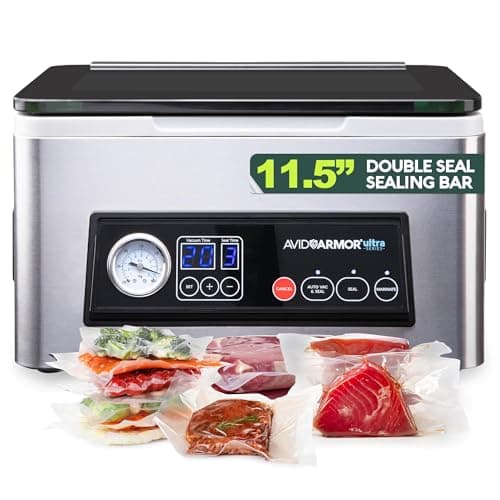
A chamber sealer works on a different principle. The whole bag sits inside a sealed box, the box is evacuated, and the bag seals while everything inside is at the same pressure. Liquid has nowhere to travel. The Avid Armor USV20 is the compact way into that class, and the one we would point a FoodSaver owner at first: Avid Armor says it runs a dry double-piston pump, so unlike the cheap oil-pump chambers there is nothing to fill or change. The trades are a chamber of 12.25 x 8.5 x 3 inches and pouches up to 11 x 10 inches, which means a whole backstrap gets cut to fit, and a one-year warranty that excludes the seal bar and gaskets. It also runs on smooth chamber pouches rather than embossed bags — cheaper per seal, per Avid Armor, but not interchangeable if you ever go back to a suction machine.
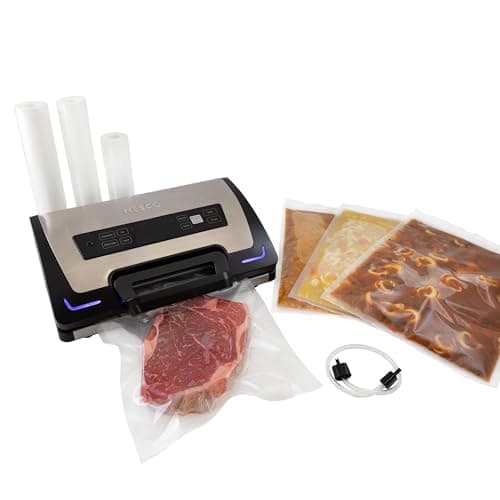
If you would rather stay external, the NESCO VS-22LB is the machine on this page that takes wet trim most seriously: a dedicated LiquidLock mode, a removable drip tray and a double heat-seal bar on 250 watts. Read its duty cycle first, though — NESCO's own guide limits it to one operating cycle every two minutes, which on a 52-package deer is an afternoon.
If you just want it replaced
Not every search for an alternative is an upgrade. A fair number of people arrive here because a FoodSaver failed outside warranty and they are deciding whether to buy the same thing again. For that reader the answer is the Anova Precision Pro: it is the cheapest machine on this page, it publishes a continuous-seal figure (over 100, which is about two deer of one-pound packages), it has a moist preset that uses lower suction and a double seal, and it stores a full roll with a sliding cutter. Anova's own spec list calls out a plastic body and does not publish a maximum bag width, and both of those are worth knowing before you buy.
Below that price the decision stops being which sealer and starts being whether to own one at all, which is the argument on vacuum sealer vs Ziploc bags. And if a whole bench is being assembled rather than one machine replaced, the 1-2 deer setup spends the budget in the order that matters — the sealer is not first in that order. The band immediately above these machines, where a chamber first becomes affordable, is ranked on best vacuum sealer under $300.
When to keep the one you have
Three situations, and they are common enough to say out loud on a page whose business model is selling you a different machine.
You seal one deer a year, in one-pound packages, from a tray-frozen pile. Twenty seconds between seals is not a constraint at that volume, 11 inches is wide enough, and a five-year warranty is worth more to you than a run rating you will never approach. Spend the money on bags.
Your bags are the complaint. Buy a cheaper third-party embossed roll. The machine is not the problem.
You want the convenience features. Automatic bag detection, automatic moisture detection and the handheld sealer in the lid are genuinely FoodSaver's own, and nothing here replaces all three. Every machine on this page asks you to make a decision the FoodSaver makes for you.
Whatever you seal with, the packaging is only half the job. The USDA's position is that freezing keeps food safe indefinitely and that packaging protects quality — getting air off the surface is what stops freezer burn. The technique that does it is on how to package deer meat for the freezer, and the wet-meat routine that saves most external-sealer failures is on how to vacuum seal wet meat.
In detail
The picks, in full
1
Best FoodSaver alternative
LEM MaxVac 250 Vacuum Sealer
9.2 /10
The closest like-for-like swap: same counter footprint, same 11-inch bags, same built-in roll holder and cutter - plus the published figure the FoodSaver does not have, at 250+ consecutive seals.
#ad · Price as of November 20, 2026 · Affiliate disclosure for the link to LEM MaxVac 250 Vacuum Sealer
2
Best value alternative
Anova Precision Vacuum Sealer Pro
9.0 /10
Built for over 100 continuous seals with a moist preset and a two-year warranty, and the cheapest machine here. The sensible swap if you are replacing a FoodSaver that died, not upgrading.
#ad · Price as of November 20, 2026 · Affiliate disclosure for the link to Anova Precision Vacuum Sealer Pro
3
Best for wet trim
NESCO VS-22LB Premium Vacuum Sealer (LiquidLock)
8.7 /10
Does by hand what the FoodSaver does automatically, and takes it further: a dedicated LiquidLock mode, a removable drip tray and a double heat-seal bar. Slower between cycles, though.
#ad · Price as of November 20, 2026 · Affiliate disclosure for the link to NESCO VS-22LB Premium Vacuum Sealer (LiquidLock)
4
The different-category answer
Avid Armor USV20 Chamber Vacuum Sealer
9.3 /10
If your real complaint is juice in the seal line, no external sealer fixes it. A chamber does, by removing the mechanism that causes it - and this one runs a dry pump, so there is no oil to change.
#ad · Price as of November 20, 2026 · Affiliate disclosure for the link to Avid Armor USV20 Chamber Vacuum Sealer
5
Best for a whole season in one day
LEM MaxVac 500 Vacuum Sealer
9.4 /10
500 consecutive seals over as much as five hours, and 14-inch bags. This is the machine for the reader whose FoodSaver shut off halfway through the second deer.
#ad · Price as of November 20, 2026 · Affiliate disclosure for the link to LEM MaxVac 500 Vacuum Sealer
6
Widest bags
Weston Pro-2300 Vacuum Sealer
9.3 /10
A 1,020-watt fan-cooled double-piston machine that takes 15-inch bags, the widest external here. It still wants 20 seconds between cycles, same as the FoodSaver.
Rubric inputs — criteria out of 10, weighted into the score above
Duty cycle (manual)
8 · 30%
Wet-meat handling
6 · 20%
Bar width / max bag
10 · 15%
Bag cost per season
5.5 · 20%
Build
9 · 15%
What it gets right
+15-inch bag capacity is the widest of any external sealer we list
+5 mm seal bar and a double-piston pump rated to 28 in. Hg
+Manual mode lets you seal early; the manual says to use Manual Seal for liquids
Good to know
−No roll storage or cutter listed, so you cut bags off a separate roll
−Weston hasn't posted a manual for this 65-0220-W version that we could fetch; the rest rule comes from the 65-0201 manual
Skip this if…
…your packages are one-pound bricks of burger — you're paying for a 15-inch bar you'll never fill, and the MaxVac 500 publishes a longer continuous rating
#ad · Price as of November 20, 2026 · Affiliate disclosure for the link to Weston Pro-2300 Vacuum Sealer
How to pick your replacement in three questions
1. How many animals go across the bench at once? One deer a year and almost anything works, including what you already own. Two or three in a weekend and you want a published run figure: the MaxVac 250. A whole season in one day and you want the MaxVac 500, whose 500-seal rating covers roughly 9.6 deer of one-pound packages without stopping.
2. How wet is the meat when it goes in the bag? If you tray-freeze packages firm first, which costs nothing but a sheet pan and an hour, moisture stops being a deciding spec and you can buy purely on duty cycle. If you bag fresh-cut venison straight off the table, buy the NESCO for its LiquidLock mode or the Avid Armor chamber to remove the problem.
3. What is the biggest single thing you will ever seal? Measure it. One-pound packages and steaks need 11 inches, the same as the FoodSaver. A boned-out hindquarter laid flat or a subprimal needs 14 or 15, which means the MaxVac 500 or the Weston Pro-2300, and nothing cheaper will do it at any price.
What does not decide this
Vacuum strength in inches of mercury. Every machine here pulls far more vacuum than a freezer package needs. A difference of a few inches of mercury changes nothing about how long a bag of burger keeps.
Bag brand. Covered above. Any embossed roll fits any external suction sealer, including the FoodSaver you may be replacing.
Mode count. Seven functions sounds better than three. On a processing day you will use one.
The specs that do decide it are the run figure, the bar width and whether the machine is a chamber — in that order for most hunters, and in a different order only if your packages are wet.
The closest like-for-like swap: same counter footprint, same 11-inch bags, same built-in roll holder and cutter - plus the published figure the FoodSaver does not have, at 250+ consecutive seals.
Built for over 100 continuous seals with a moist preset and a two-year warranty, and the cheapest machine here. The sensible swap if you are replacing a FoodSaver that died, not upgrading.
#ad · Price as of November 20, 2026 · Affiliate disclosure for the link to Anova Precision Vacuum Sealer Pro
How we picked
Every pick, scored on the same published rubric
Each machine here is read end to end: the maker's spec sheet, the owner's manual and the warranty terms. We pull out the figures that decide whether it keeps up with your season — size number, motor rating, rated pounds per minute, capacity, duty cycle, gearing — confirm parts are still available, and score every pick on the same weighted rubric, so a score on one page means the same thing on the next. Then we show the season math, pounds per deer from the Ohio Division of Wildlife's yield study, so you can run it against your own freezer.
The LEM MaxVac 250. It is the closest like-for-like swap — same footprint, same 11-inch bags, same built-in roll holder and cutter — and it publishes a rated run of 250 or more consecutive seals over up to two and a half hours, which is the figure FoodSaver has no equivalent for.
Do I have to use FoodSaver-brand bags in a FoodSaver?+
No. FoodSaver machines need an embossed or channeled bag, not a branded one. Wevac states FoodSaver, Weston and Seal-a-Meal compatibility on its own 11-inch roll listing. If bag price is your only complaint, buy a cheaper third-party roll rather than a new machine.
Why does my FoodSaver stop working partway through a deer?+
Because it is built to a rest interval rather than a run. FoodSaver's manual asks for at least 20 seconds between seals, and its troubleshooting page says the machine shuts off under heavy use and needs about 20 minutes to cool. At roughly 52 one-pound packages per deer, that is the behavior you are running into.
What is the cheapest decent FoodSaver alternative?+
The Anova Precision Vacuum Sealer Pro. Anova says it was built for over 100 continuous seals, roughly two deer of one-pound packages, and it has a moist preset, a built-in roll cutter and a two-year warranty. Its body is plastic and its maximum bag width is not published.
Is a chamber sealer worth it instead of a FoodSaver?+
It is if your problem is liquid. A chamber evacuates the whole box, so juice cannot travel toward the seal, which is something no external sealer can claim. The costs are counter space, an oil pump to service on the cheapest models, and a package size limited by the chamber rather than the bar.
Which FoodSaver alternative takes the widest bags?+
The Weston Pro-2300, at bags up to 15 inches across, with the LEM MaxVac 500 next at 14. The FoodSaver tops out at its 11-inch roll, which is wide enough for one-pound packages and not wide enough for a boned-out hindquarter laid flat.
Should I keep my FoodSaver?+
If you seal one deer a year in one-pound packages, yes — the 20-second rest is not a constraint at that volume and its five-year warranty is the longest of any sealer we list. Switch when you need a published run figure, a wider bar, or a chamber.
Specs come from the maker's own pages, manuals and maker-supplied listing copy (labeled as such); food-safety figures from USDA and university extension publications; yield from the Ohio Division of Wildlife; prices live from Amazon. Where a figure isn't published, we say so. Read the full method.