Ground Jerky vs Whole Muscle Jerky: Which One Your Deer Is For
One turns the trim pile into jerky with a $30 gun. The other needs a whole muscle and a slicer, and gives you the texture most people picture. The deer decides more of this than you do.
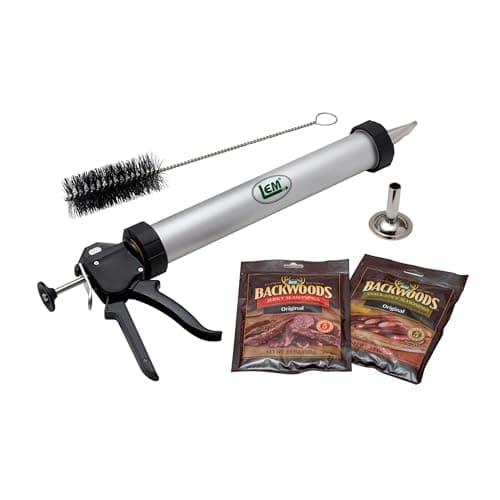
An anodized aluminum barrel that holds 1½ lb of ground meat, with stainless flat and snack-stick nozzles. It's the gun to buy if you make ground jerky more than once a season.
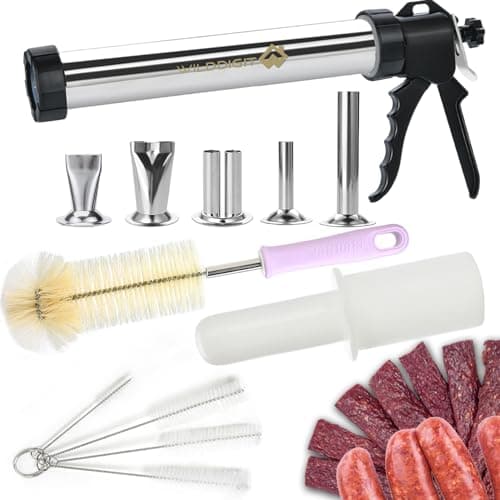
A stainless barrel, five stainless nozzles and five cleaning brushes. The listing's 2.1 lb figure is the largest on this page, but no warranty is published.
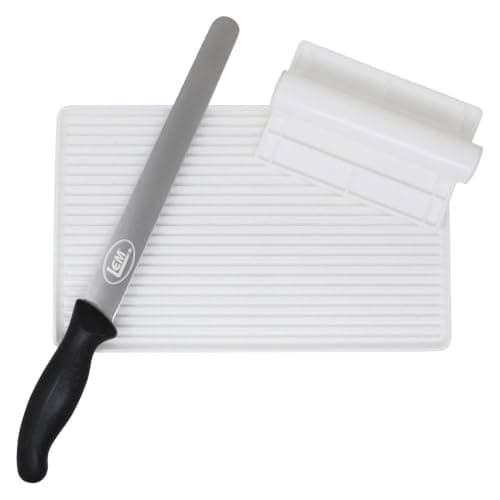
A double-sided board that sets ¼-inch or ⅛-inch slabs, a 10-inch knife, a pressing plate and a grip mat. It's one of the least expensive ways to get uniform jerky thickness.
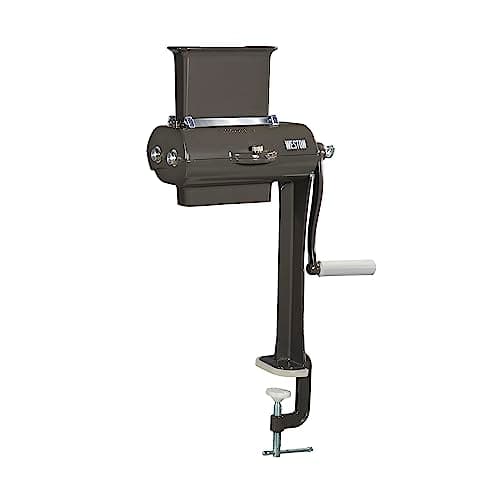
#ad · Price as of November 6, 2026 · Affiliate disclosure for the link to Weston Manual Beef Jerky Slicer
Make ground jerky if you want to use the trim pile. Make whole-muscle jerky if you have a solid muscle you are willing to spend on it. That is the real split, and it is decided by what comes off the animal rather than by preference. A whitetail gives you a lot of trim and only a few muscles big and clean enough to slice into strips, so most home processors end up doing both — whole muscle from the hams, ground from everything else.
The gear follows the method, not the other way round. Ground jerky needs a gun and nothing else. Whole muscle needs a way to cut even strips, which is a board or a slicer. Buying the tool before you have decided the method is how people end up with a jerky gun they never use.
What actually differs
Ground jerky
Whole muscle jerky
Starting meat
Trim, scraps, shanks, neck — anything that grinds
Solid, clean muscle: hams, sometimes loin
Tool needed
Jerky gun (plus a grinder you likely own)
Jerky board and knife, or a slicer
Texture
Even, tender, snaps rather than tears
Chewy, fibrous, pulls apart along the grain
Silver skin and sinew
Must be trimmed out before grinding
Must be trimmed off the muscle
Cure distribution
Mixed through the meat
Surface marinade, needs time to penetrate
Speed to the tray
Faster — mix, load, extrude
Slower — trim, firm, slice, marinate
Uniformity
Every strip identical
Varies with your knife work
Entry cost
Lowest — a gun and nozzles
Low (board) to higher (powered slicer)
What your deer gives you
This is the part that settles the argument for most people, and it comes down to anatomy rather than taste.
At the Ohio Division of Wildlife's measured average a whitetail yields about 52 pounds of venison. Only a fraction of that is in pieces big enough, and clean enough, to slice into jerky strips: realistically the two hams, and the backstraps if you are willing to spend them on jerky rather than eat them as steaks. Most people are not. Everything else — neck, shanks, flank, rib trim, the scraps off the hams — is destined for the grinder regardless.
So the honest framing is not “which method is better.” It is: whole muscle is what you make from the parts of the animal that are good enough to slice, and ground jerky is what lets the rest of the animal become jerky too. If you want jerky from a deer and you are not prepared to give up a backstrap, you want a gun.
Texture, and which one people prefer
Whole muscle is what most people picture when they say jerky: fibrous, chewy, pulling apart along the grain. Ground jerky is a different eat — even, tender, closer to a snack stick flattened out. It snaps rather than tears.
Neither is a compromise. Ground jerky is genuinely easier to eat, which matters more than it sounds if you are making it for a family or for anyone who finds whole muscle hard work. It is also consistent in a way hand-sliced strips never are, because an extruded strip is exactly as thick as the nozzle.
Where ground loses is in how forgiving it is of mistakes. Over-dry a whole-muscle strip and it is tough; over dry a ground strip and it crumbles. And ground jerky needs lean meat — fat does not dry, it goes rancid, so trim harder than feels necessary before it goes through the grinder. Venison is naturally lean, which is exactly why it makes better ground jerky than beef does.
Cure and safety are not the same job
This is the most important practical difference and the one most comparisons skip.
With whole muscle, the cure and the marinade sit on the surface and have to work inward. With ground, the cure is mixed through the meat before it is ever extruded, so distribution is even from the start — but grinding also takes whatever was on the surface of the meat and distributes that through the batch too.
That is why the USDA's jerky guidance matters more for ground than for whole muscle, not less. FSIS recommends heating meat to 160°F — 165°F for poultry — before the drying step, because a dehydrator alone may never reach a temperature that kills pathogens while the surface is still moist enough for that heat to do anything. Our jerky time and temperature page works through what that means on a machine with a dial, and best dehydrators for jerky ranks the field on whether a machine will actually hold the number.
What each method costs to start
Prices are live on the buttons below and we do not type numbers into prose, but the shape of the spend is worth knowing before you choose.
Ground is the cheapest entry by a clear margin, assuming you already own a grinder — and if you are processing your own deer, you do. A jerky gun is a barrel, a plunger and a couple of nozzles. There is no second machine.
Whole muscle splits in two. A jerky board and knife is in the same bracket as a gun: a slotted board that sets the thickness for you, a long blade, and your own hands. A manual slicer with a bank of blades costs more and does fifteen strips in one pull. A powered slicer costs considerably more again and belongs to people slicing a lot of something. We compare the two whole-muscle routes directly in electric jerky slicer vs jerky board.
One thing worth noting about guns: the nozzle count is the spec that matters, not the barrel capacity. A flat nozzle makes strips and a round nozzle makes sticks, and most of the difference between a cheap gun and a good one is how many shapes it can make and whether the barrel is stainless or aluminum. LEM's Jerky Cannon is hand wash only and carries a one-year warranty; the stainless kits typically ship with more nozzles and more cleaning brushes.
How each one keeps
The two methods do not store identically, and the reason is surface area. An extruded ground strip is porous all the way through; a whole-muscle strip has a dense, closed fiber structure with its cut faces as the only way in. More exposed surface means ground jerky picks up moisture from the air faster, goes soft sooner, and has more surface for anything to grow on if it was not dried far enough.
In practice that means two things. First, ground batches are less forgiving of being pulled early: a whole-muscle strip that is slightly underdone is chewy, where an underdone ground strip is a food-safety problem rather than a texture one. Second, ground jerky benefits more from being vacuum sealed, because getting the air off it is doing more work.
Both keep far better sealed than bagged, and both keep far better cold than at room temperature. We put the actual numbers, with their sources, in how long homemade jerky lasts rather than repeating them here — and if you are sealing jerky, it is worth knowing that a vacuum sealer will crush a brittle strip before it finishes the cycle unless you use the pulse control or a chamber machine.
What we would do with one deer
Take the two hams. Trim them hard, partly freeze them, and slice them for whole-muscle jerky — that is the best jerky the animal has in it, and it is a few hours of work for a real result. Leave the backstraps alone and eat them as steaks.
Grind the rest of the trim and run a batch of ground jerky from it, or turn it into snack sticks, which is the same gun, the same cure and a round nozzle instead of a flat one. The shanks and neck that would otherwise be stew meat make perfectly good ground jerky.
If you are only going to buy one tool this season, buy the gun. It is cheaper, it works on the part of the animal you have most of, and it does double duty for snack sticks. Then add a board next year when you have decided you prefer the whole-muscle texture — our ground venison jerky walkthrough covers the first batch, and how to make deer jerky covers the whole-muscle route start to finish.
In detail
The contenders, in full
Ground: the standard gun
LEM Jerky Cannon
9.6 /10
An anodized aluminum barrel that holds 1½ lb of ground meat, with stainless flat and snack-stick nozzles. It's the gun to buy if you make ground jerky more than once a season.
#ad · Price as of November 6, 2026 · Affiliate disclosure for the link to LEM Jerky Cannon
Ground: most nozzles
WILDDIGIT 2.1 lb Stainless Steel Jerky Gun Kit
9.5 /10
A stainless barrel, five stainless nozzles and five cleaning brushes. The listing's 2.1 lb figure is the largest on this page, but no warranty is published.
#ad · Price as of November 6, 2026 · Affiliate disclosure for the link to WILDDIGIT 2.1 lb Stainless Steel Jerky Gun Kit
Whole muscle: board and knife
LEM Jerky Knife and Board Kit
9.4 /10
A double-sided board that sets ¼-inch or ⅛-inch slabs, a 10-inch knife, a pressing plate and a grip mat. It's one of the least expensive ways to get uniform jerky thickness.
#ad · Price as of November 6, 2026 · Affiliate disclosure for the link to Weston Manual Beef Jerky Slicer
How we picked
Every pick, scored on the same published rubric
Each machine here is read end to end: the maker's spec sheet, the owner's manual and the warranty terms. We pull out the figures that decide whether it keeps up with your season — size number, motor rating, rated pounds per minute, capacity, duty cycle, gearing — confirm parts are still available, and score every pick on the same weighted rubric, so a score on one page means the same thing on the next. Then we show the season math, pounds per deer from the Ohio Division of Wildlife's yield study, so you can run it against your own freezer.
It is different rather than worse. Ground jerky is even and tender and snaps when you bite it; whole muscle is fibrous and pulls apart along the grain. Ground is easier to eat and perfectly consistent; whole muscle is what most people picture when they say jerky.
What cuts of deer should I use for each?+
Whole muscle wants the hams — solid, clean and big enough to slice into strips. Ground jerky takes everything else: neck, shanks, flank and the trim off the hams. Most people leave the backstraps for steaks rather than spending them on jerky.
Do I need curing salt for ground jerky?+
Use it for both, and treat it as essential for ground. Grinding distributes whatever was on the surface of the meat through the whole batch. Follow the kit ratio by weight — see the curing salt guide.
Does ground jerky need the USDA 160°F step?+
Yes, and arguably more than whole muscle does. FSIS recommends heating meat to 160°F (165°F for poultry) before the drying step, because a dehydrator may not reach a pathogen-killing temperature while the meat is still moist enough for heat to work.
Can I make ground jerky without a jerky gun?+
You can press the mixture flat between parchment and cut strips with a knife or a pizza wheel. It works, but the strips vary in thickness, which means they dry at different rates. A gun exists to make every strip the same.
Which is cheaper to start?+
Ground, if you already own a grinder — and if you process your own deer, you do. A jerky gun is the only purchase. Whole muscle needs a board and knife at a similar price, or a slicer for more.
Specs come from the maker's own pages, manuals and maker-supplied listing copy (labeled as such); food-safety figures from USDA and university extension publications; yield from the Ohio Division of Wildlife; prices live from Amazon. Where a figure isn't published, we say so. Read the full method.